
Why go
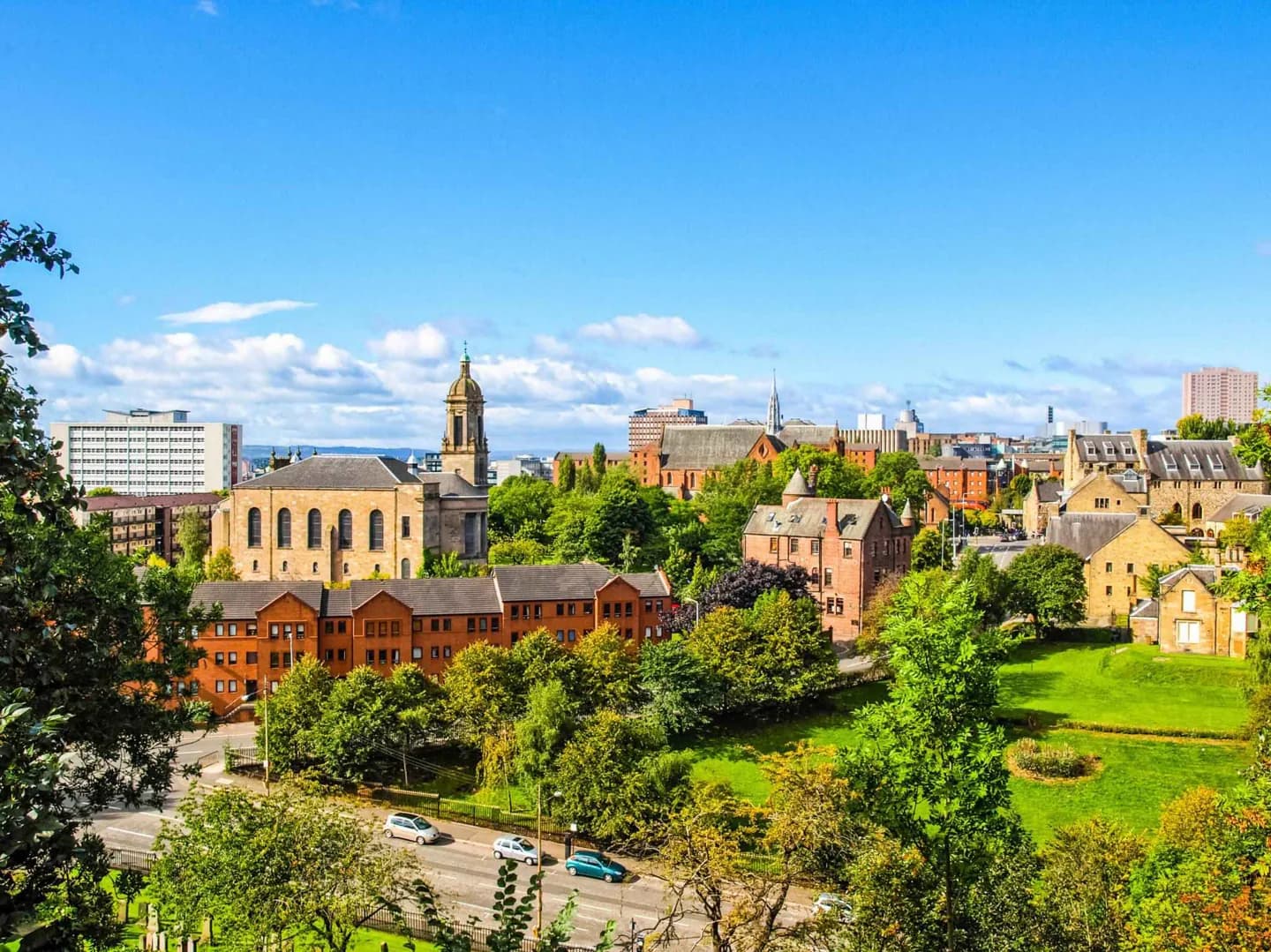
A little context makes the city easier to read. The medieval Cathedral precinct, Georgian and Victorian streets, and former working riverfront belong to different phases of Glasgow’s growth. See at least two of them together and the city’s scale becomes more intelligible.
The full story
Glasgow began around a religious centre beside the Clyde and became a bishopric, a royal burgh and a university town. From the eighteenth century, Atlantic trade increased its wealth, much of it tied to tobacco, sugar, cotton and slavery. Industry then enlarged the city at extraordinary speed. Engineering, textiles and especially shipbuilding drew people and investment, leaving a dense legacy of tenements, civic buildings and working riverfronts. Twentieth-century decline changed that economy again, while later cultural and urban renewal gave older buildings new uses. A first visit can follow this sequence without becoming a formal history tour: the Cathedral precinct shows an early core, George Square presents nineteenth-century civic confidence, and a Clyde walk reveals the river that supported trade and industry. These places also show that Glasgow’s history is not one upward story; prosperity, exploitation, labour and reinvention all shaped what remains visible.