
Why go
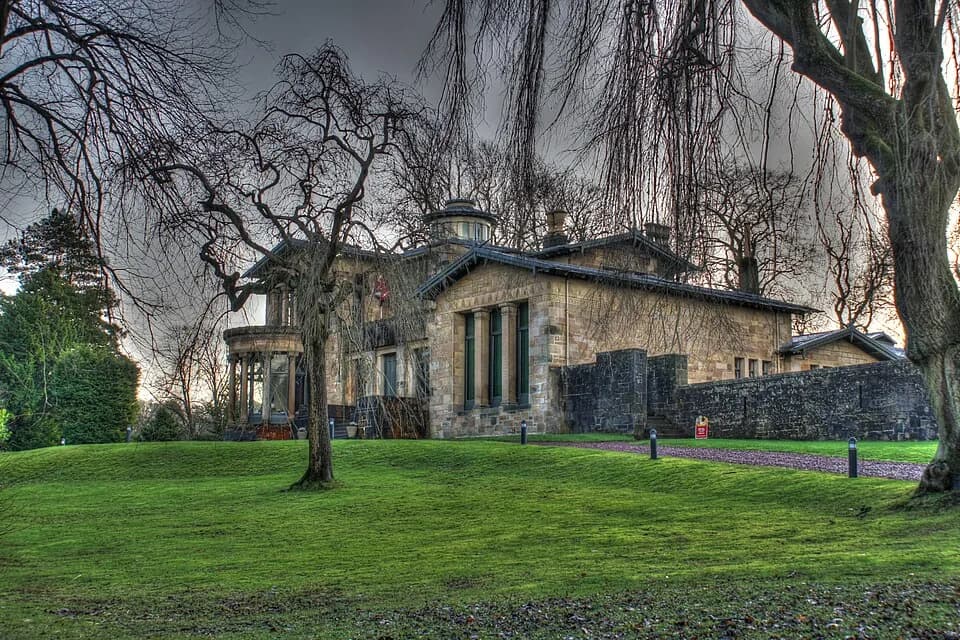
Holmwood is a focused way to understand Thomson’s Grecian approach beyond Glasgow’s grand commercial buildings. Rooms retain decorative detail, and the nearby White Cart Water gives the house its landscape context. Look closely at how architecture and ornament work together, then take a short grounds walk.
What to look for
- Grecian decoration inside Thomson’s villa
- The villa’s form and exterior detailing
- Riverside grounds by the White Cart Water
The full story
Alexander “Greek” Thomson designed Holmwood as a suburban villa for paper manufacturer James Couper in the mid nineteenth century. Unlike a formal civic monument, it was intended for domestic life, yet it gave Thomson room to develop an unusually complete architectural idea. The building is notable for the relationship between its exterior forms and interior decoration, much of which survives. The nearby White Cart Water and grounds also matter: they place the villa in a landscape rather than a dense city street. On a visit, follow the design from outside to inside and notice how ornament changes the feel of each room. Holmwood’s seasonal visitor pattern means the house should be treated as a planned stop, not an assumed year-round open attraction. The architecture rewards the extra preparation.
Useful to know
- Check the current seasonal opening before planning an interior visit.
- Leave time for the riverside grounds after seeing the rooms.
Your next visit
Estimated · Declared scenario and planning estimates; no live opening, weather, queue or booking service.
Outdoor visit · 30–45 min
World planning estimate; admission, opening, visit duration and access need checking.