
Why go
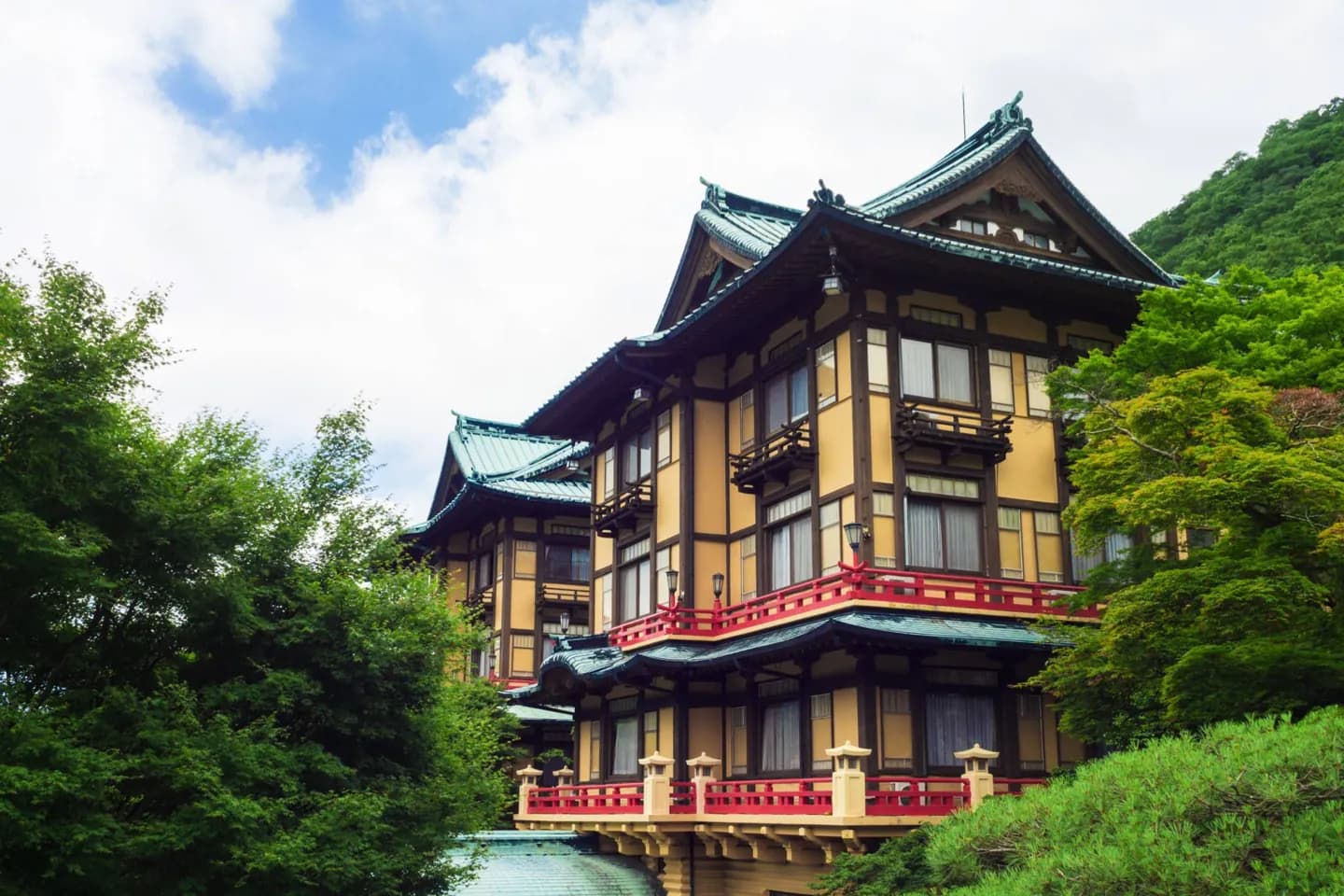
The hotel shows how Hakone's resort culture welcomed foreign visitors in the Meiji period. Different building sections blend Japanese and Western design, while the Hotel Museum gives context to the property and its guests. It is a focused architecture and history stop rather than a substitute for Hakone's outdoor sights.
What to look for
- The 1891 Main Building mixes Japanese and Western architectural details.
- The Hotel Museum traces Fujiya's history in Miyanoshita.
The full story
Fujiya Hotel grew with Hakone's role as a mountain resort in the Meiji period. Its 1891 Main Building and later sections make the property's changing taste visible: Japanese forms sit beside Western hotel design rather than replacing it. Look at the buildings as a group, not as one uniform facade. The hotel also recorded aspects of Japanese culture for its international guests. Beginning in 1934, it published volumes called We Japanese, describing customs, ceremonies and arts. The Hotel Museum brings this longer story into view. The guest list is part of its reputation, but the building itself is the stronger reason to stop: it shows how a Hakone hotel presented Japanese hospitality to visitors from abroad while adopting the style and amenities of a modern resort.
Useful to know
- Treat the Hotel Museum as a distinct visit; lodging and dining have their own arrangements.
- Check current museum access before making a special trip to Miyanoshita.
Your next visit
Estimated · Declared scenario and planning estimates; no live opening, weather, queue or booking service.
Outdoor visit · 30–45 min
World planning estimate; admission, opening, visit duration and access need checking.