
Why go
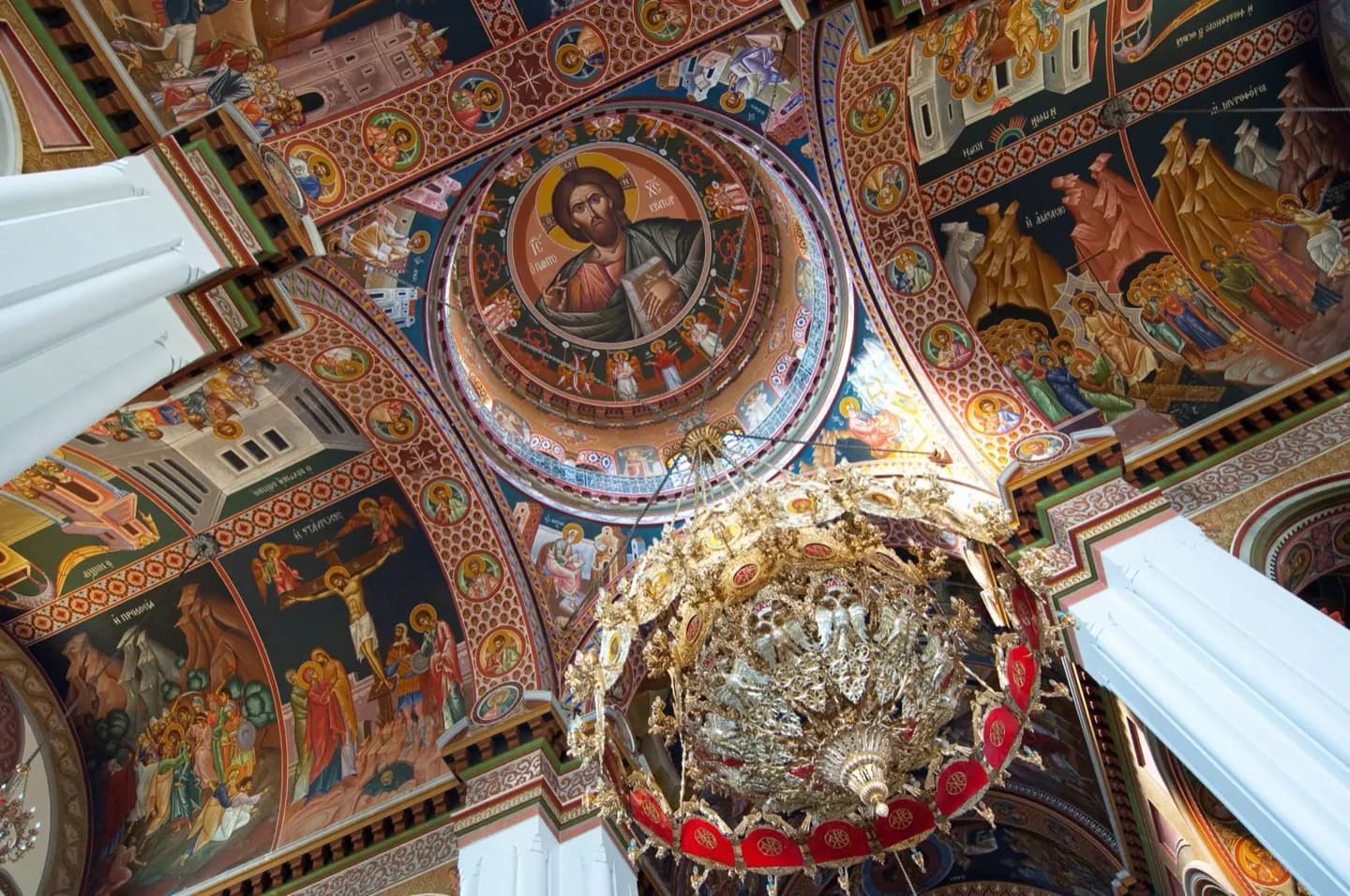
The cathedral shifts attention from Heraklion's Venetian monuments to the Cretan Christian community under Ottoman rule. The building's scale, central dome and basilica-like interior give that history a physical form, especially when viewed after the compact lanes and squares of the old centre.
What to look for
- The high central dome over a cross-shaped plan.
- Three-aisle basilica elements inside the cathedral.
The full story
Construction of Agios Minas Cathedral began in 1862 and continued through the 1890s. Work was interrupted during the Cretan uprising of 1866–69, one of the major revolts against Ottoman rule. That interruption places the building within the island's nineteenth-century political and religious struggle, rather than treating it simply as a large church. The cathedral became the seat of the Archbishop of Crete. Its architecture also rewards a slow look: the plan is cruciform, with a dome raised over the crossing, while parts of the interior recall a three-aisle basilica. From outside, the dome establishes the building's presence in Heraklion's centre; inside, the arrangement makes its ceremonial purpose easier to grasp. The cathedral speaks to a period much later than the city's Venetian walls or the Bronze Age sites beyond it, and helps connect those different chapters of Crete's past.
Useful to know
- Check current visiting access before planning an interior visit, especially around services.
- Take a moment outside to read the cross-shaped mass and dome before entering.
Your next visit
Estimated · Declared scenario and planning estimates; no live opening, weather, queue or booking service.
Outdoor visit · 30–45 min
World planning estimate; admission, opening, visit duration and access need checking.