
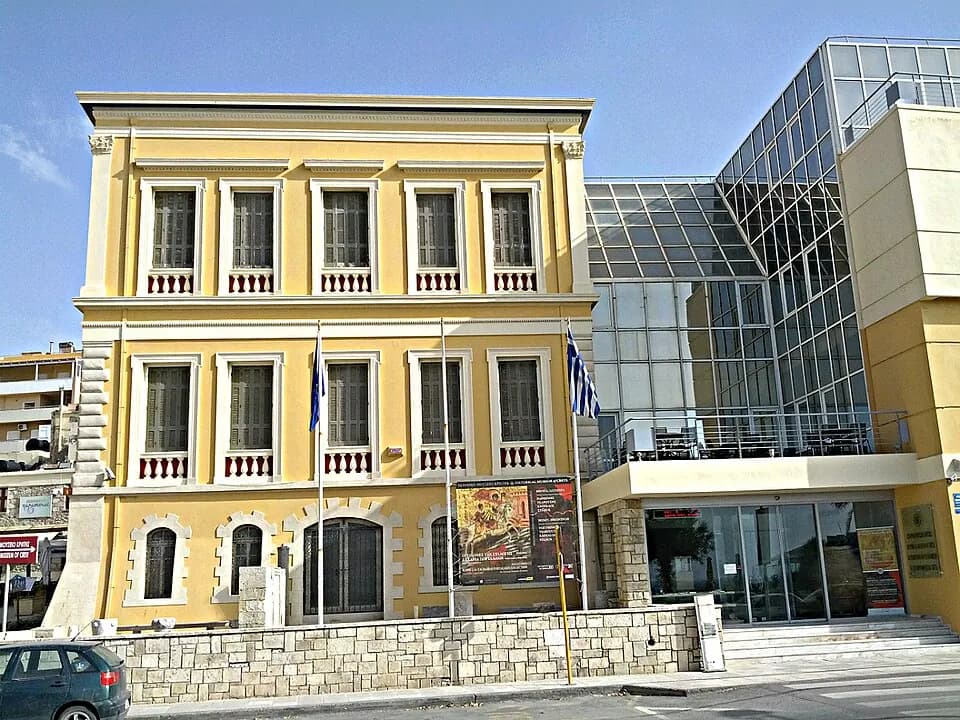
Why go
A model of Venetian Chandax, paintings by Cretan-born El Greco and the Nikos Kazantzakis collection make later Cretan history unusually tangible. The museum is especially useful if Heraklion's walls and churches have raised questions that ancient artefacts cannot answer on their own.
What to look for
- A large model of seventeenth-century Chandax, the Venetian city.
- Two paintings by Doménikos Theotokópoulos, known as El Greco.
- Nikos Kazantzakis's study and personal material.
The full story
Founded in 1953 by the Society of Cretan Historical Studies, the museum takes up the island's story where an ancient collection leaves off. Its displays cover the early Christian period through the Second World War, bringing together art, household objects, manuscripts and other evidence of daily and political life. The model of seventeenth-century Chandax is particularly useful after walking Heraklion: it shows the Venetian city within its defences and gives the surviving walls a fuller setting. Two paintings by Doménikos Theotokópoulos, or El Greco, connect Crete to an artist whose later career unfolded elsewhere. The Kazantzakis collection makes another outward connection through the writer's study and belongings from his home in Antibes. Seen together, these exhibits show that Crete's history did not stop with the Minoan palaces; the island kept changing under new rulers, beliefs and artistic currents.
Useful to know
- Visit after seeing the city walls to compare today's streets with the model of Venetian Chandax.
- Pair it with the Archaeological Museum if you want a broad chronology of Crete.
Your next visit
Estimated · Declared scenario and planning estimates; no live opening, weather, queue or booking service.
Outdoor visit · 30–45 min
World planning estimate; admission, opening, visit duration and access need checking.