
Why go
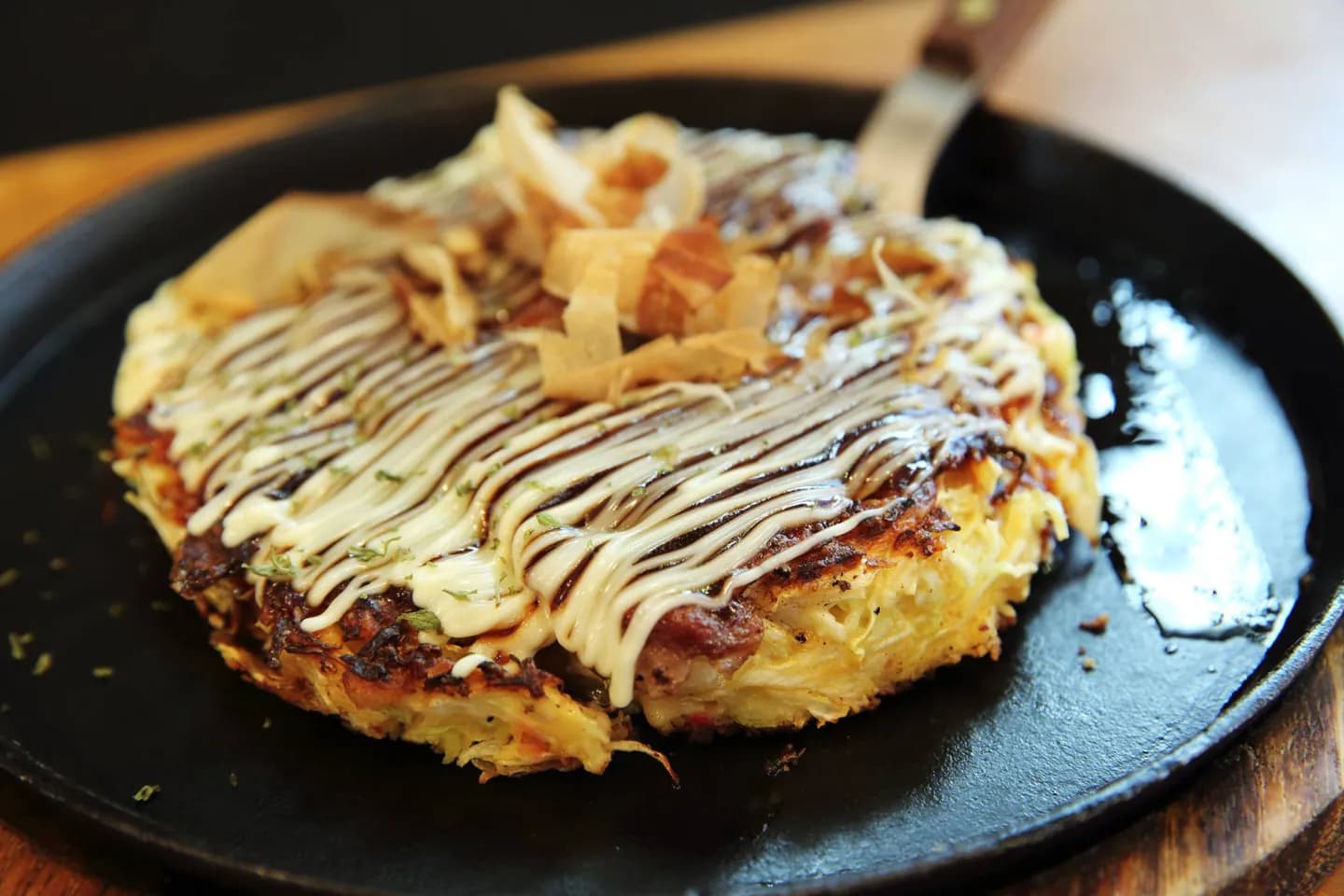
Hiroshima-style okonomiyaki is cooked in layers, commonly with cabbage, egg and noodles, so watching it come together on the griddle is part of the meal. The city's oyster dishes and momiji manjū sweets give you two other distinct choices without relying on a particular restaurant listing.
The full story
Okonomiyaki means roughly “grilled as you like it,” but Hiroshima's version has a recognizable structure. The cook builds separate layers on a hot plate, often adding cabbage, egg and soba noodles, then finishes the dish with a savory sauce. A common order is niku-tama soba, with meat, egg and noodles. This differs from Osaka-style okonomiyaki, where ingredients are generally mixed into the batter before cooking. The contrast is easiest to understand when you can watch the preparation rather than judging only the finished plate. Oysters are another Hiroshima specialty, especially in the cooler part of the year. For a small sweet, look for momiji manjū: its maple-leaf shape is the identifying feature, and it makes a different kind of food stop from a full griddle meal.
Useful to know
- Order niku-tama soba if you want the familiar meat, egg and noodle combination.
- Leave room for okonomiyaki as a full meal rather than treating it as a small snack.