
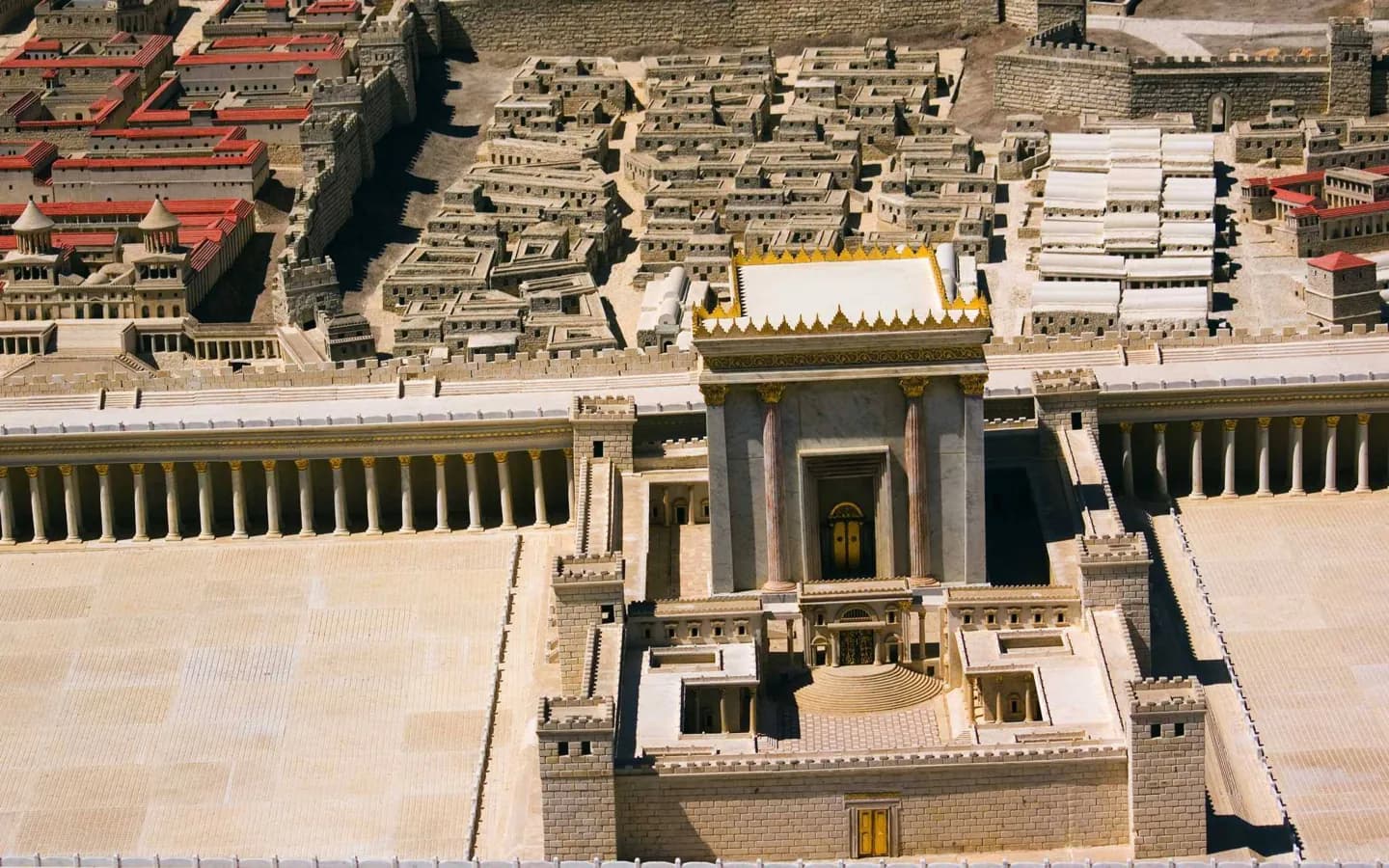
Why go
Knowing what stood on the platform changes the way you read nearby places. The Western Wall formed part of a retaining structure around the Temple Mount, not the Temple building itself. The ancient Temples were centers of Jewish worship; their absence and memory shape the meaning of the wall and the platform today. Use this context while visiting surviving places rather than seeking a separate Temple entrance.
The full story
Jerusalem's ancient Temples are central to Jewish religious history, but neither survives as a building that can be visited today. The First Temple is associated with Solomon in biblical tradition. The Second Temple stood on the Temple Mount until its destruction in the Roman period. The platform has since carried other sacred buildings, including the Dome of the Rock and Al-Aqsa Mosque. This sequence matters when looking at the site now: the Western Wall is part of a retaining wall around the expanded platform, not an intact wall of either Temple. Jewish traditions about the Temple continue to shape prayer, memory and hopes for the future. The most useful way to encounter this history on the ground is to distinguish the vanished sanctuaries from the structures and spaces that remain visible.
Your next visit
Estimated · Declared scenario and planning estimates; no live opening, weather, queue or booking service.
Outdoor visit · 30–45 min
World planning estimate; admission, opening, visit duration and access need checking.