
Why go
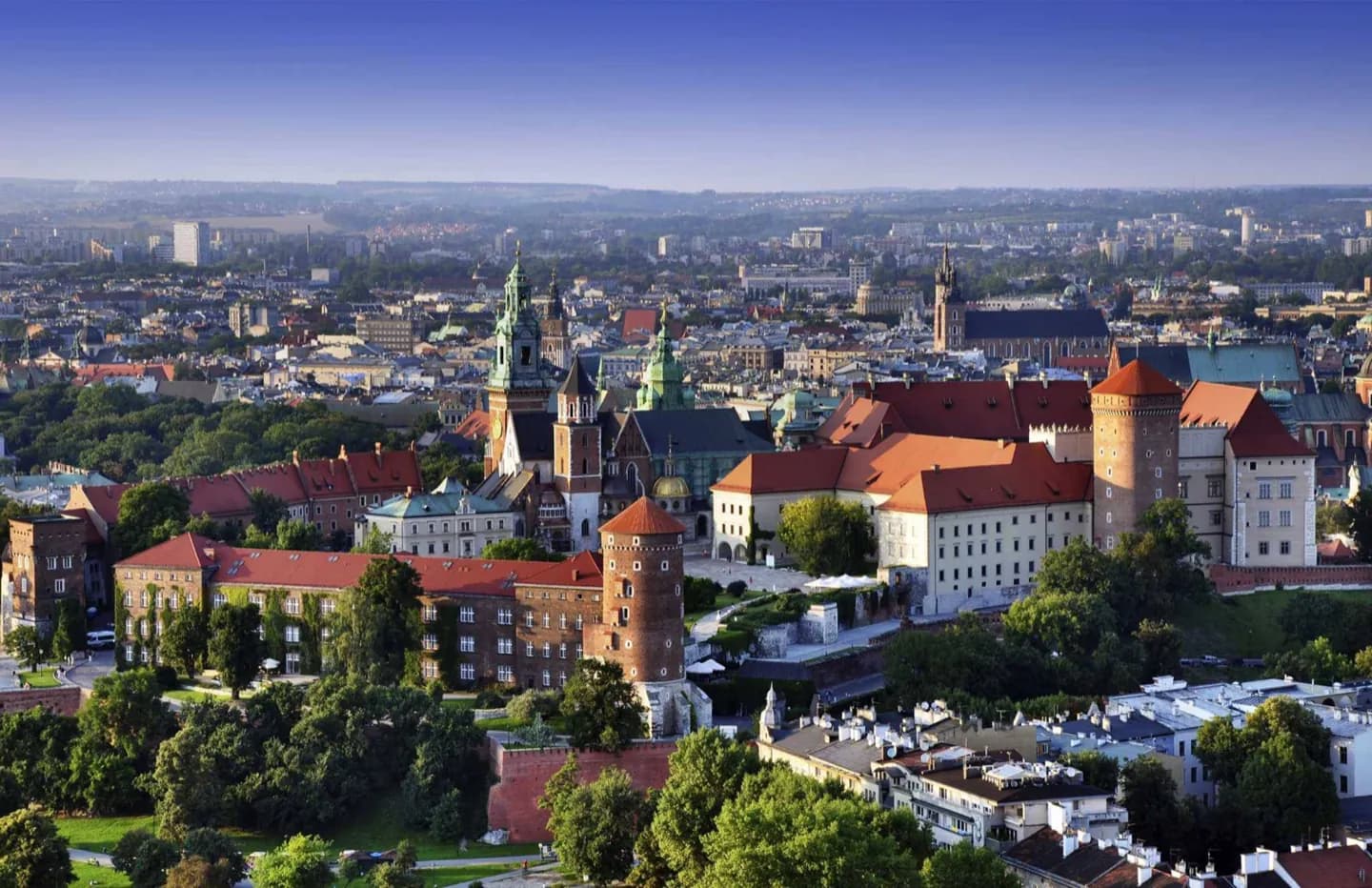
This background makes the city easier to read on foot. Wawel explains its early political role, the Old Town shows the commercial city, and the university quarter reflects a long academic tradition. The story also frames the sites that address the Nazi German occupation and the destruction of Kraków's Jewish community.
The full story
Kraków developed beside the Vistula in Lesser Poland, with Wawel Hill as its early royal centre. By 966 it was recorded as a notable trading place, and its later market square and streets connected the fortified hill to a planned medieval town. The city served as Poland's capital from 1038 to 1596 and remained a national centre of learning, art and culture after the court moved elsewhere. Its historic centre was inscribed on the UNESCO World Heritage List in 1978. During the Nazi German occupation, Kraków became the seat of the General Government. Jewish residents were forced into the Kraków Ghetto and then deported or murdered in places including Płaszów and Auschwitz. That history is essential context for Kazimierz, the ghetto sites and the city's memorials.