
Why go
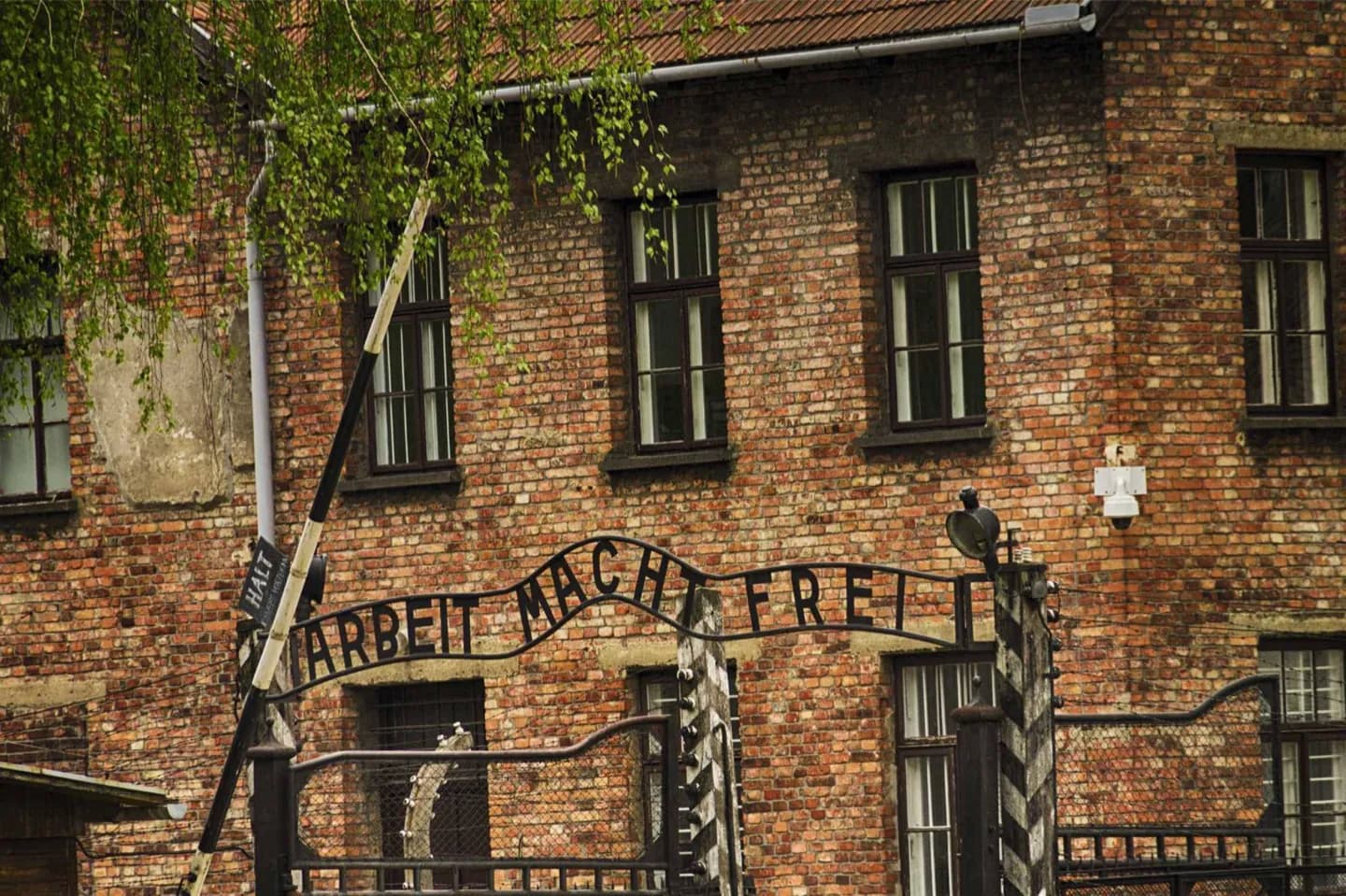
Auschwitz was the largest complex of German Nazi concentration and extermination camps. The memorial preserves evidence of mass murder alongside the physical differences between Auschwitz I and the vast Birkenau site: brick blocks, barrack remains, fences, tracks and personal possessions make the scale and mechanisms of persecution tangible.
What to look for
- Auschwitz I preserves brick blocks, exhibitions and the gate bearing “Arbeit macht frei.”
- Birkenau’s entrance, railway tracks, barrack remains and chimneys reveal the camp’s scale.
- Collections of shoes, suitcases and household objects document individual victims.
Useful to know
- Reserve only through the official booking site and recheck the date-specific entrance hours.
- Allow time for both Auschwitz I and Auschwitz II-Birkenau, including the transfer between them.
- Arrive at least 30 minutes before the reserved visit for security checks.
Your next visit
Estimated · Declared scenario and planning estimates; no live opening, weather, queue or booking service.
Indoor visit · 30–45 min
World planning estimate; admission, opening, visit duration and access need checking.