
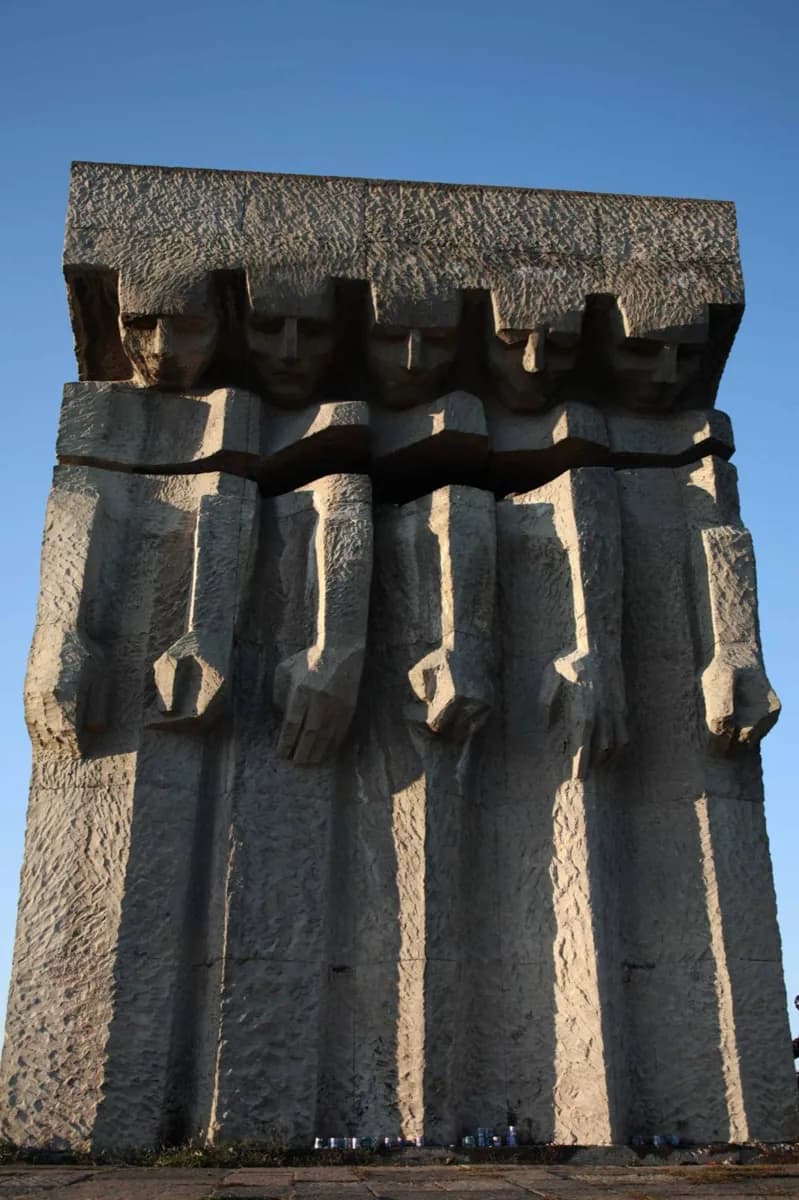
Why go
The largely open landscape makes absence central to the visit: German forces dismantled the camp before Soviet troops arrived in January 1945. Fourteen media displays, 41 field points and three archaeological windows now identify structures, violence and prisoner experience across ground once occupied by the camp and two Jewish cemeteries.
What to look for
- Fourteen outdoor displays interpret the former camp landscape.
- Forty-one field points mark significant locations across the site.
- Three archaeological windows reveal material traces below ground.
Useful to know
- Allow about an hour for the outdoor route and dress for exposed ground and changing weather.
- Follow the numbered field points; much of the former camp survives as landscape rather than standing buildings.
- Approach the site as a memorial and place of mass death, not as a film-location stop.
Your next visit
Estimated · Declared scenario and planning estimates; no live opening, weather, queue or booking service.
Outdoor visit · 15–25 min
World planning estimate; admission, opening, visit duration and access need checking.