
Why go
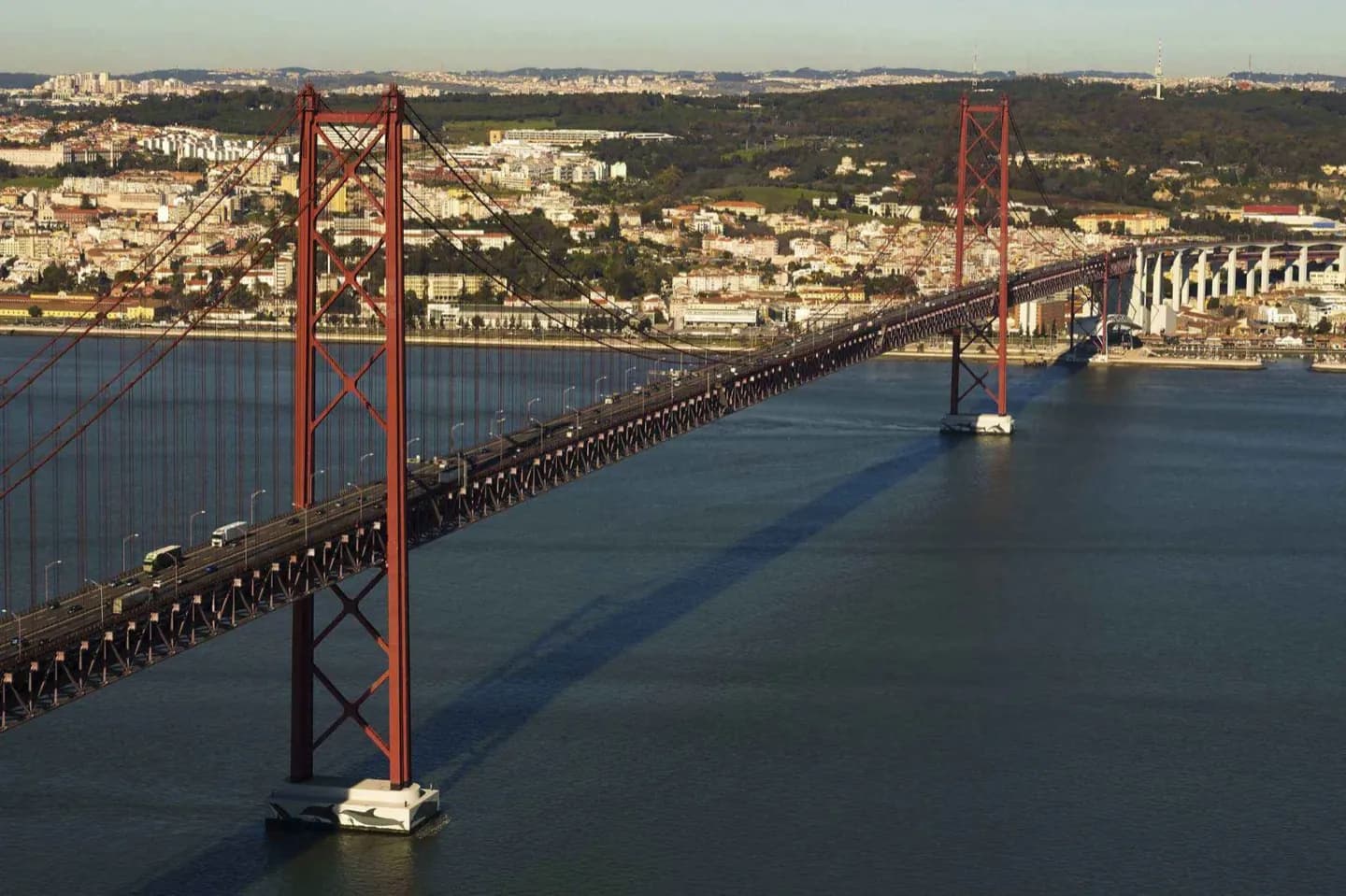
The bridge gives the Tagus estuary a powerful visual axis and links Lisbon by road and rail with Almada. Its present name adds political meaning: it commemorates the Carnation Revolution that ended Portugal’s dictatorship on 25 April 1974 and reshaped the country.
What to look for
- A red suspension span carries road traffic above railway tracks across the Tagus.
- Cristo Rei rises near the southern anchorage, creating a broad panorama of the bridge and Lisbon riverfront.
- The bridge’s revolutionary name replaced its original dedication to Salazar.
The full story
The bridge opened in 1966 as the first fixed road crossing between Lisbon and the south bank of the Tagus. Its upper deck carries road traffic, while a railway platform added later runs beneath it. The structure was originally named Ponte Salazar for the authoritarian prime minister whose regime oversaw its construction. That identity changed after the Carnation Revolution of 25 April 1974. Citizens removed the large Salazar lettering from a bridge pillar and painted the revolutionary date in its place; the official name soon followed. The renaming turned a major piece of transport infrastructure into a public marker of Portugal’s democratic transition. Its red suspension form is often compared with San Francisco’s Golden Gate Bridge, but the American Bridge Company that built it had worked on the San Francisco–Oakland Bay Bridge, not the Golden Gate.
Useful to know
- View the bridge from the Lisbon riverfront or from Cristo Rei; do not plan on pedestrian access to the deck.
- Use it as a visual anchor when combining Alcântara’s waterfront with a south-bank viewpoint.
Your next visit
Estimated · Declared scenario and planning estimates; no live opening, weather, queue or booking service.
Outdoor visit · 30–45 min
World planning estimate; admission, opening, visit duration and access need checking.