
Why go
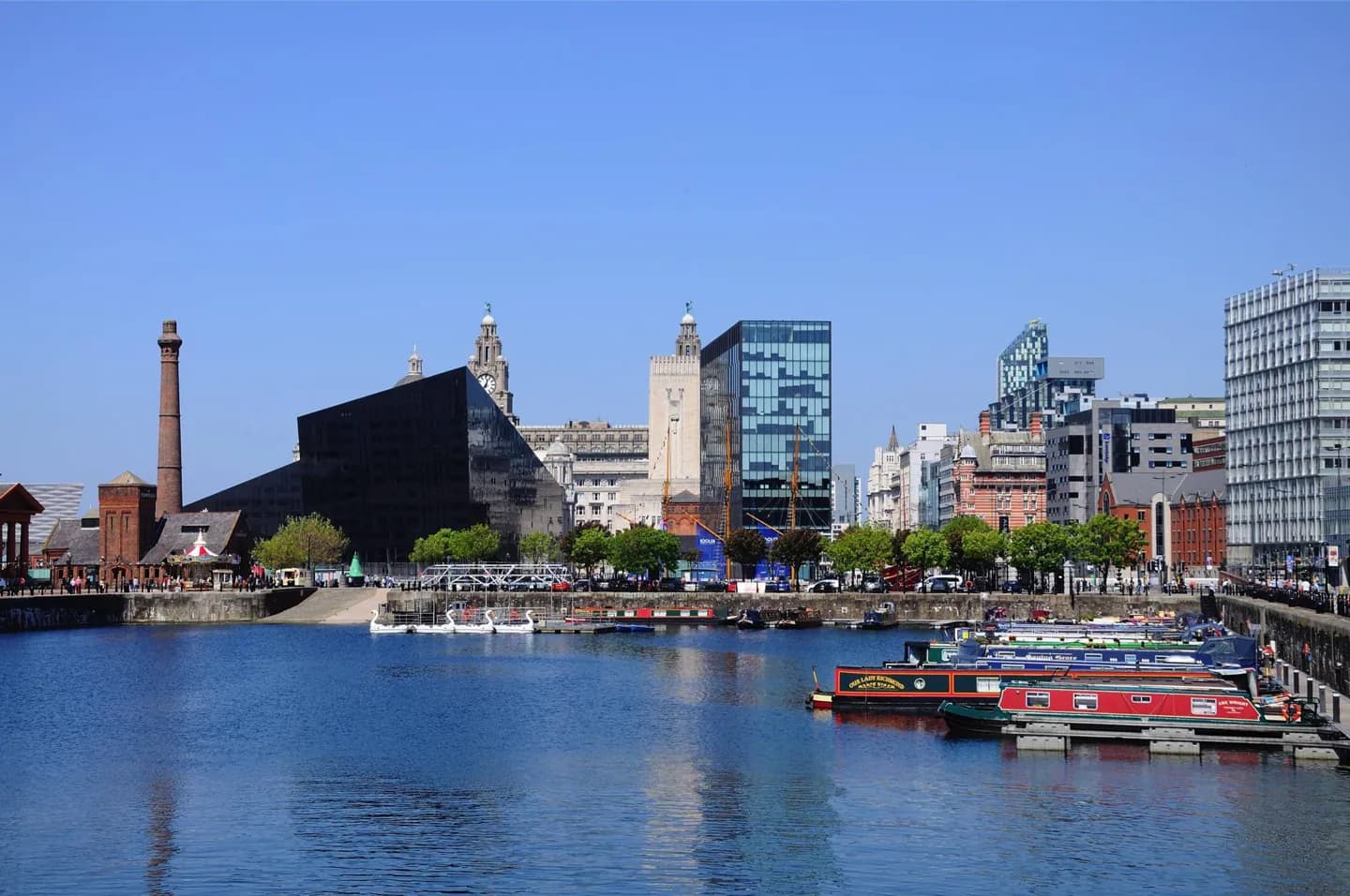
Start at the enclosed dock landscape around Royal Albert Dock, then look north towards Pier Head’s Three Graces. The contrast between working water infrastructure and grand commercial façades explains how maritime business reshaped the city, while the history of transatlantic slavery belongs in that account.
The full story
Liverpool’s docks made the Mersey more than a shoreline. The enclosed wet dock opened in 1715 and helped ships load and unload in a sheltered basin. In the nineteenth century, the dock system expanded as Liverpool became a major Atlantic port. Jesse Hartley’s Royal Albert Dock, opened in 1846, used fireproof brick and iron construction on a remarkable scale. Its warehouses and quays remain legible even as the uses of individual buildings change. North of the centre, Stanley Dock and its vast Tobacco Warehouse show the later industrial scale of storage. Pier Head tells the commercial side of the same story. The Royal Liver Building, Cunard Building and Port of Liverpool Building became known together as the Three Graces. Their grandeur was built amid imperial trade and wealth, including wealth connected to the transatlantic slave trade. Look at the docks and office buildings together rather than treating the skyline as a detached postcard.