
Why go
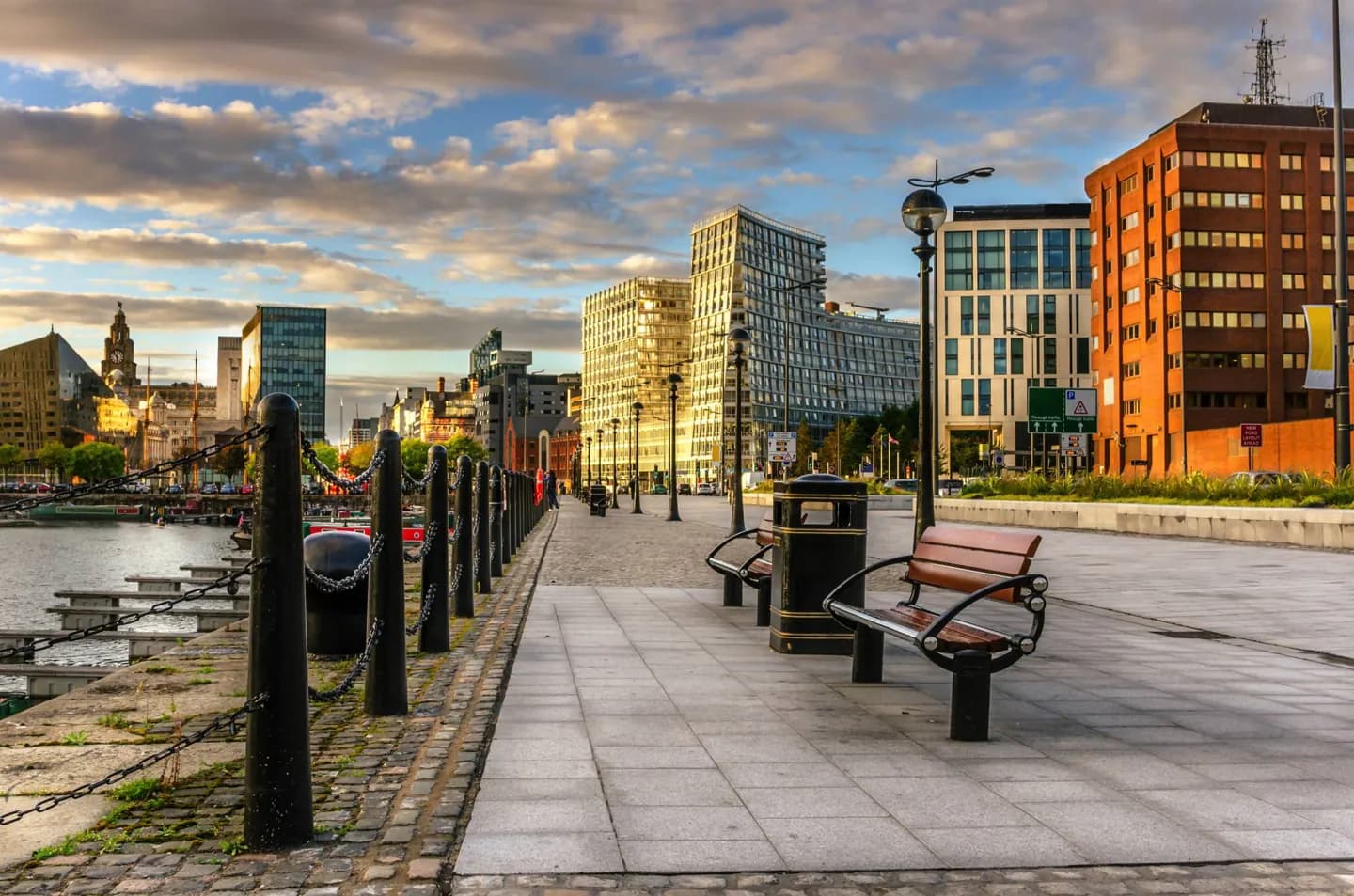
Understanding the city as a port makes the grand offices at Pier Head and the warehouses at Albert Dock more meaningful. The same connections brought people from Ireland and farther afield, while also tying Liverpool’s wealth to the Atlantic trade in enslaved people. Use that fuller history when reading the skyline.
The full story
Liverpool grew on the eastern side of the Mersey Estuary, where a small borough became a major port during the industrial age. Shipping linked the city to Atlantic routes, drawing merchants, workers and migrants from many places. Irish migration is especially important to its history, and longstanding Black and Chinese communities are part of Liverpool’s identity. Port wealth also came from participation in the trade in enslaved people; the imposing waterfront buildings cannot be understood fully without that human cost. In the twentieth century the docks changed, industry declined and the city developed a cultural reputation that reached far beyond the Mersey through music, especially the Beatles. “Scouse” can mean a local stew, a way of speaking and a sense of belonging; “Scousers” is a familiar name for Liverpool people. A visit can hold all these strands at once: look at the river and warehouses, then make room for the stories of the people who built, travelled through and lived in the city.