
Why go
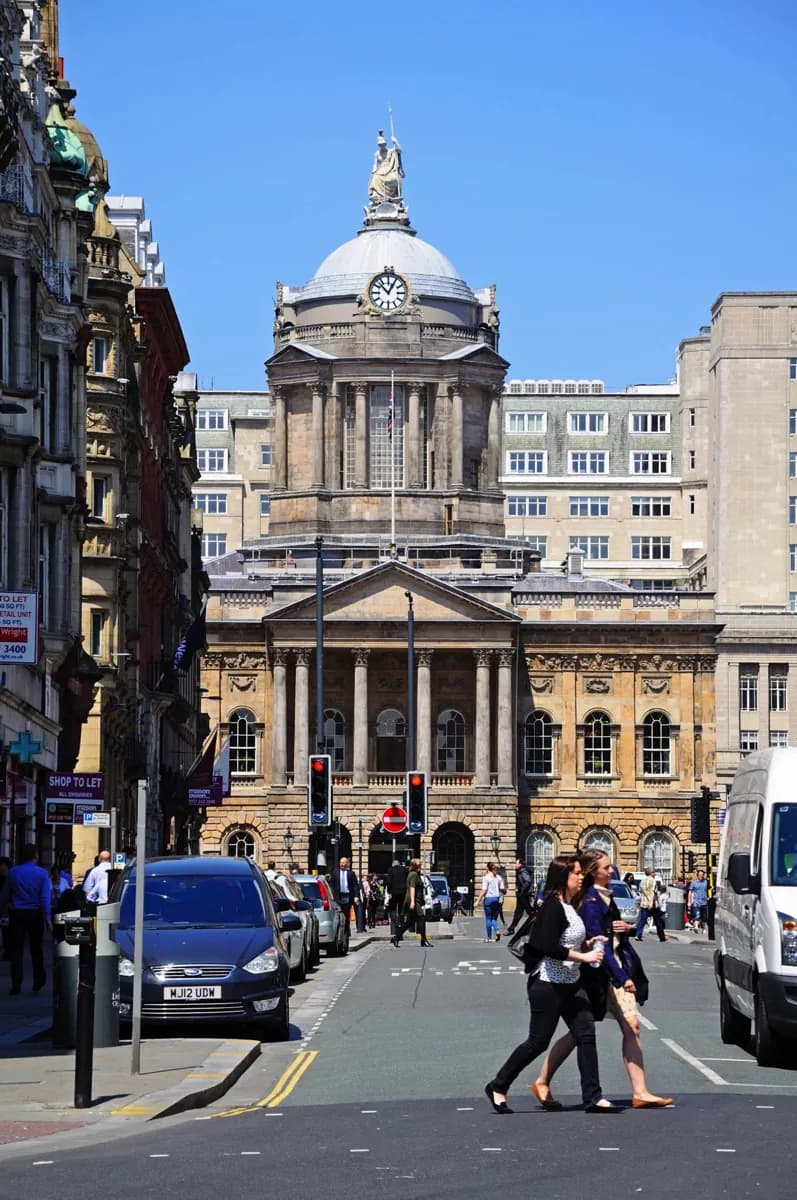
Liverpool Town Hall, the Bank of England Building and Oriel Chambers make a useful comparison of civic, classical and experimental office architecture. Water Street and Dale Street extend that picture, while Exchange Flags helps place the buildings in a connected commercial centre.
The full story
Liverpool’s commercial quarter grew around streets that reach back towards the borough’s early plan. Castle Street remains a useful spine, with the Town Hall at one end and a concentration of banking and office buildings nearby. As the port expanded, financial and shipping businesses needed addresses that expressed trust and scale. Some chose heavy classical stone, as at the Bank of England Building; others experimented with light and glass, as Peter Ellis did at Oriel Chambers on Water Street. Dale Street adds insurance offices and civic buildings, while Exchange Flags opens another space within the same network. The district’s interest lies in these differences, not in a list of famous names. Walk a few connected streets and compare the materials, window patterns and entrances. The result is a clearer account of how maritime trade shaped the city inland from the river, and how an older street pattern absorbed increasingly ambitious commercial architecture.