
Why go
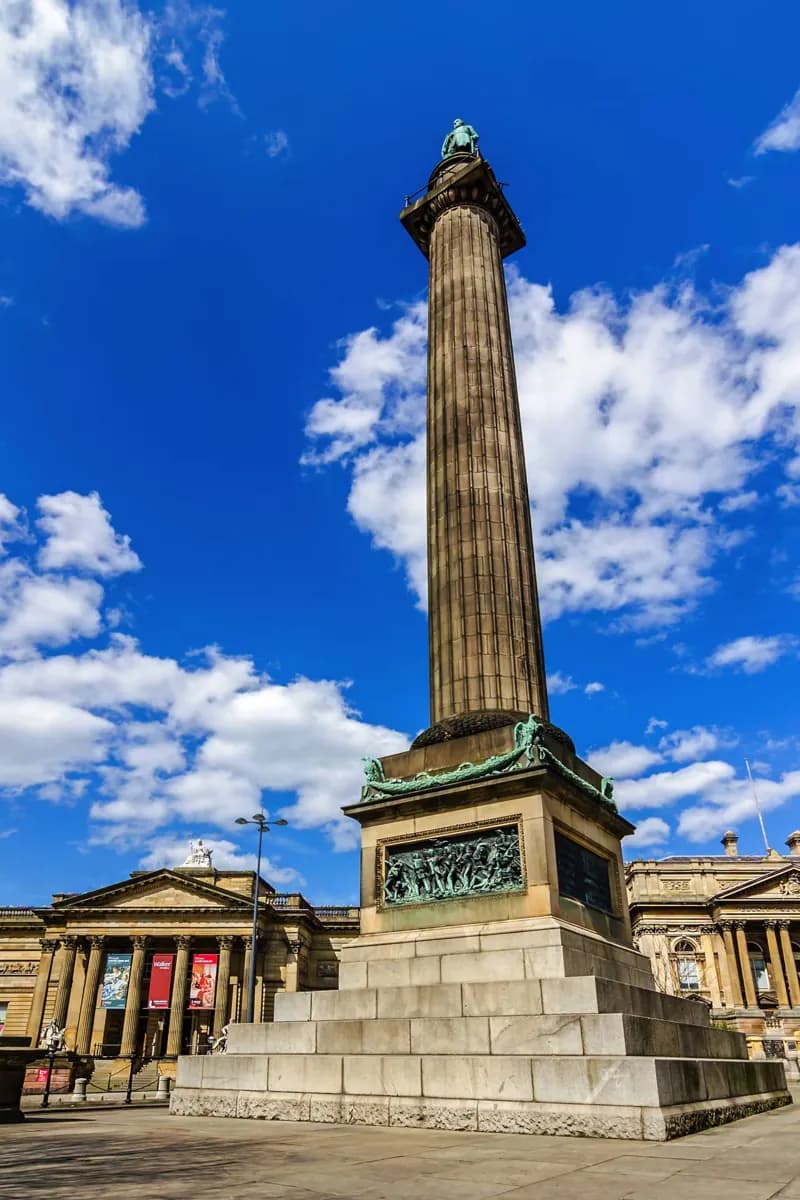
The column provides a clear point from which to read the surrounding group of St George's Hall, the gallery, library and nearby fountain. Its height and elevated statue make it visible before its details come into focus. Spend a moment at street level rather than expecting a climb or an interior visit, then continue along William Brown Street.
What to look for
- The Duke of Wellington's statue stands above the column at the street corner.
- Bronze panels decorate the pedestal below the tall stone shaft.
The full story
Liverpool decided to commemorate the Duke of Wellington after his death in 1852. Public subscriptions, design competitions and debate over a location stretched the project over more than a decade. Architect Andrew Lawson won the competition for the column, while his brother George Anderson Lawson designed the statue above it. The foundation stone was laid in 1861, but construction was slowed by ground problems, and the monument was completed in 1865. The result stands at a hinge between Lime Street and William Brown Street, where travellers arriving near the station can turn towards Liverpool's museums and library. Its very scale speaks to nineteenth-century civic commemoration: a military figure raised well above ordinary street life, with a decorated pedestal below. The column is best read alongside the other grand public works here, especially St George's Hall and Steble Fountain. Together they show how this part of the city was shaped as a ceremonial setting.
Useful to know
- Combine this short exterior stop with Steble Fountain and the William Brown Street buildings.
- Look from the pavement; no climb or interior visitor experience is established.
Your next visit
Estimated · Declared scenario and planning estimates; no live opening, weather, queue or booking service.
Outdoor visit · 30–45 min
World planning estimate; admission, opening, visit duration and access need checking.