
Why go
Early Anglo-Saxon London belonged to a people known as the Middle Saxons, from whom the name of the county of Middlesex is derived, but who probably also occupied the approximate area of modern Hertfordshire and Surrey. Around this time the focus of settlement moved within the old Roman walls for the sake of defence, and the city became known as Lundenburh.
What to look for
- In around AD 60, it was destroyed by the Iceni led by their queen Boudica.
- Its population was around 60,000 inhabitants.
- In 604 King Saeberht of Essex converted to Christianity and London received Mellitus, its first post-Roman bishop.
The full story
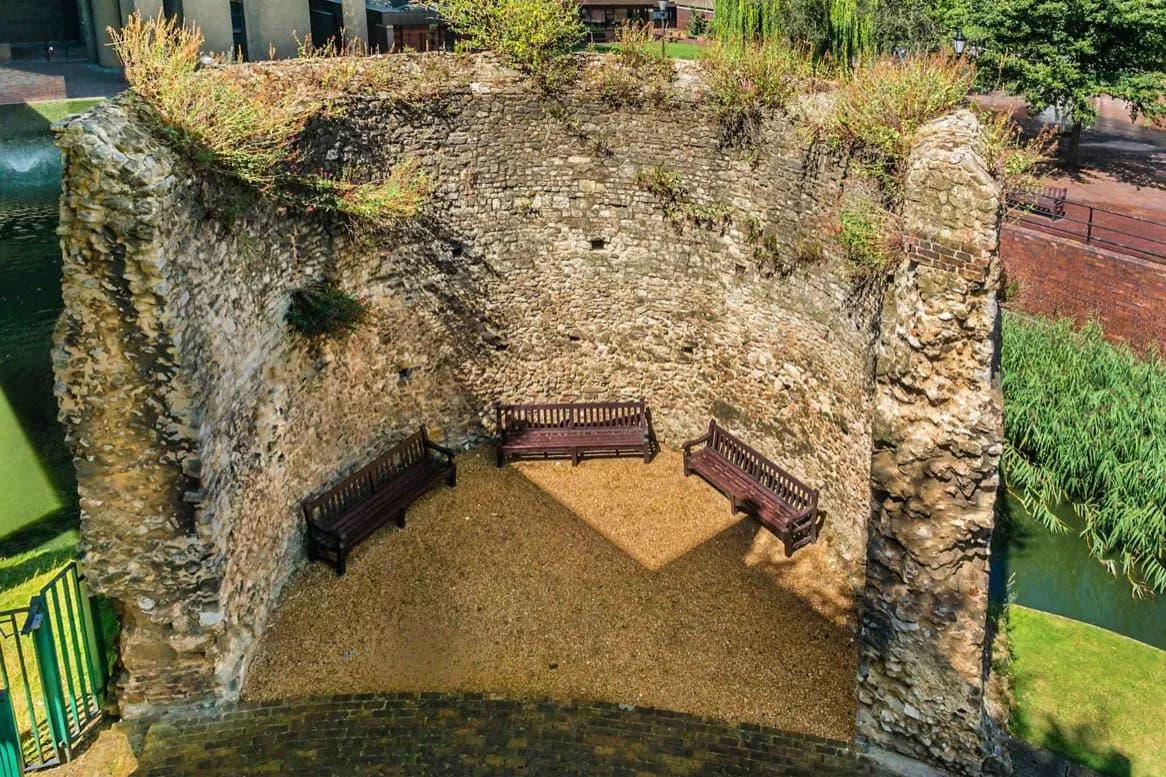
Roman London Londinium was established as a civilian town by the Romans about seven years after the invasion of AD 43. London, like Rome, was founded on the point of the river where it was narrow enough to bridge and the strategic location of the city provided easy access to much of Europe. The city was quickly rebuilt as a planned Roman town and recovered after perhaps 10 years, the city growing rapidly over the following decades. During the 2nd century Londinium was at its height and replaced Colchester as the capital of Roman Britain (Britannia). Political instability and recession from the 3rd century onwards led to a slow decline. At some time between 180 and 225 AD the Romans built the defensive London Wall around the landward side of the city.