Chapter 1 / London
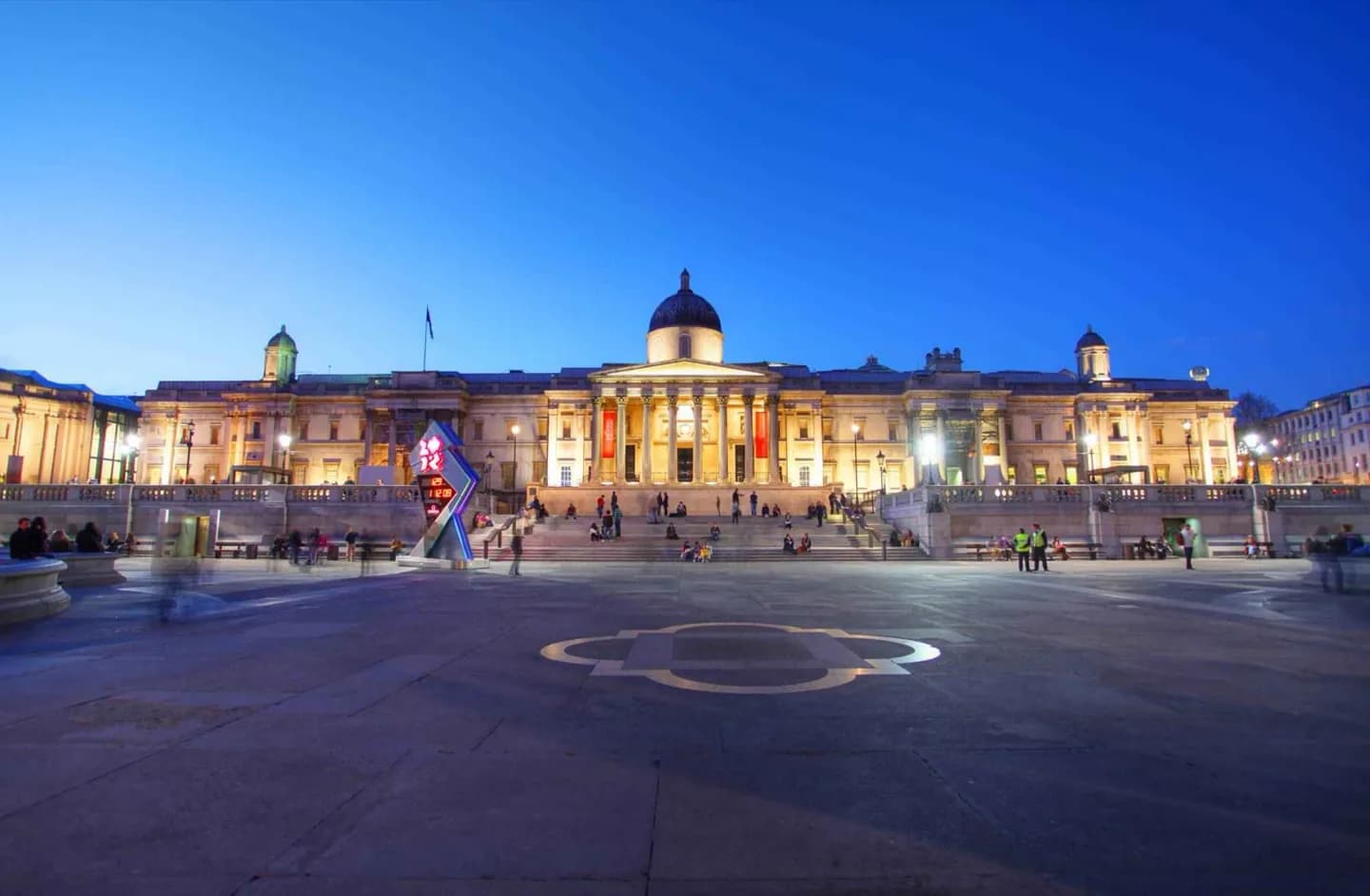
Trafalgar Square.
Start with Trafalgar Square. Let a detail decide which thread you follow next.
Pause here. What detail would you keep from this place?
Outdoor walks and façade observations. Interior admission is not included.
The full story
Trafalgar Square is a public square in the City of Westminster, Central London, built around the area formerly known as Charing Cross.
National Heroes Square in Bridgetown, Barbados, was named Trafalgar Square in 1813, before its better-known British namesake. The site of Trafalgar Square had been a significant landmark since the 13th century and originally contained the King's Mews. London bus routes 3, 6, 9, 11, 12, 13, 15, 23, 24, 29, 53, 87, 88, 91, 139, 159, 176, 453 pass through Trafalgar Square.
Its name commemorates the Battle of Trafalgar, a British naval victory in the Napoleonic Wars with France and Spain that took place on 21 October 1805 off the coast of Cape Trafalgar, Spain. After George IV moved the mews to Buckingham Palace, the area was redeveloped by John Nash but progress was slow after his death and the square did not open until 1844. The 169-foot (52 m) Nelson's Column at its centre is guarded by four lion statues. A number of commemorative statues and sculptures occupy the square but the Fourth Plinth, left empty since 1840, has been host to contemporary art since 1999. The square has been used for community gatherings and political demonstrations including Bloody Sunday, the first Aldermaston March, anti-war protests, and campaigns against climate change.
- Fans camped in Trafalgar Square for up to three days before the premiere, despite torrential rain.
- Trafalgar Square was opened to the public on 1 May 1844.
- Statues and monuments Plinths Barry's scheme provided two plinths for sculptures on the north side of the square.
What is pulling you next?
Another door into this story