
Why go
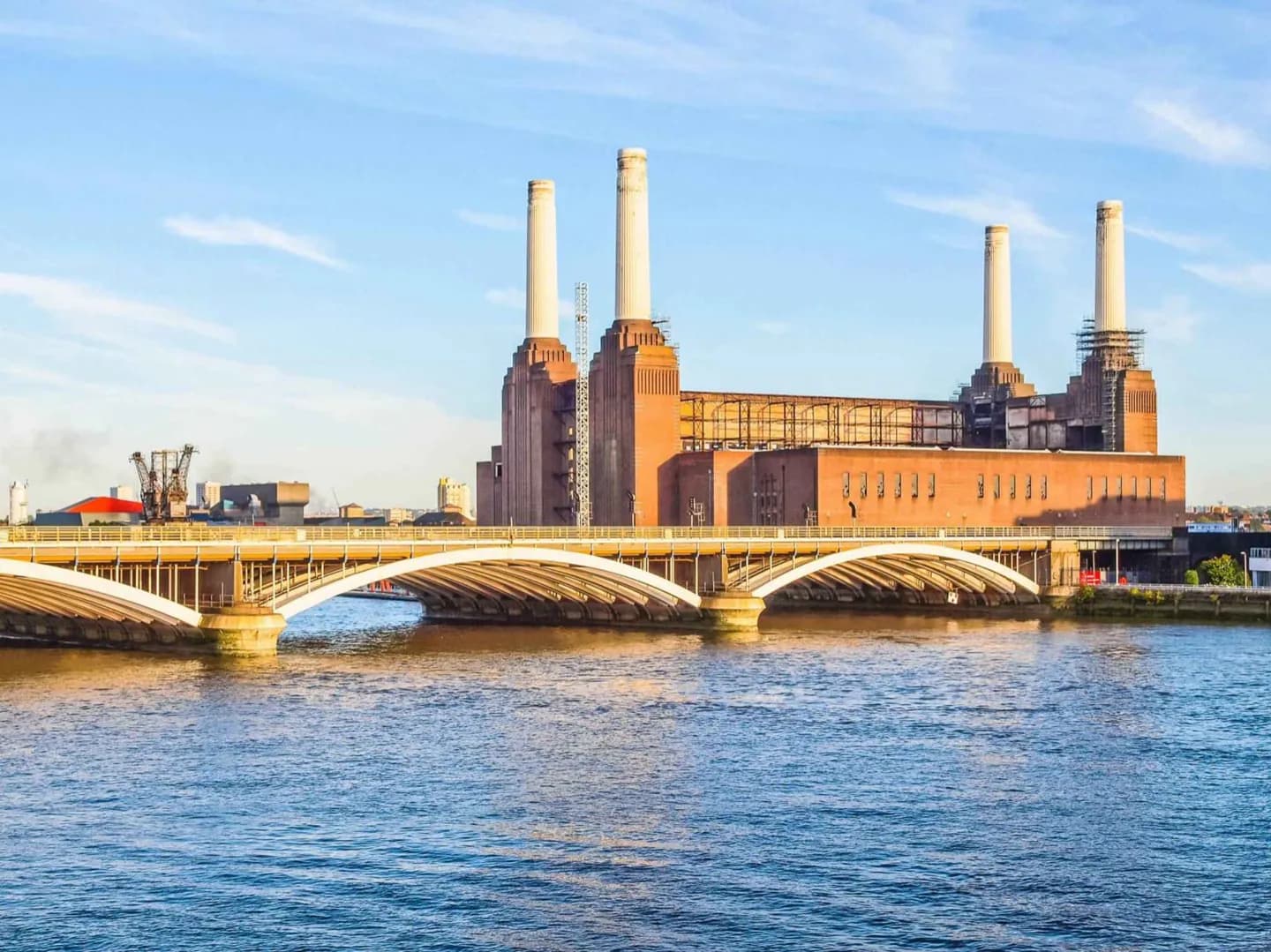
The Battersea Power Station Community Group campaigned against the Parkview plan and argued for an alternative community-based scheme to be drawn up. Battersea A Power Station was built in the 1930s, with Battersea B Power Station to the east in the 1950s.
What to look for
- He would go on to design another London power station, Bankside, which now houses Tate Modern art gallery.
- The A Station's control room was given many Art Deco fittings by architect Halliday.
- The restoration of the power station building would cost £150 million.
The full story
The two stations were built to a nearly identical design, providing the long-recognized four-chimney layout. The station ceased generating electricity in 1983, but over the past 50 years it has become one of the best known landmarks in London and is Grade II* listed. The station is one of the largest brick buildings in the world and is notable for its original, lavish Art Deco interior fittings and decor. The building has remained largely unused since its closure and the condition of the structure has been described as "very bad" by English Heritage, which included it in its Heritage at Risk Register. The site was also listed on the 2004 World Monuments Watch by the World Monuments Fund. Since the station's closure numerous redevelopment plans were drawn up from successive site owners.
Your next visit
Estimated · Declared scenario and planning estimates; no live opening, weather, queue or booking service.
Outdoor visit · 37–75 min
World planning estimate; admission, opening, visit duration and access need checking.