
Why go
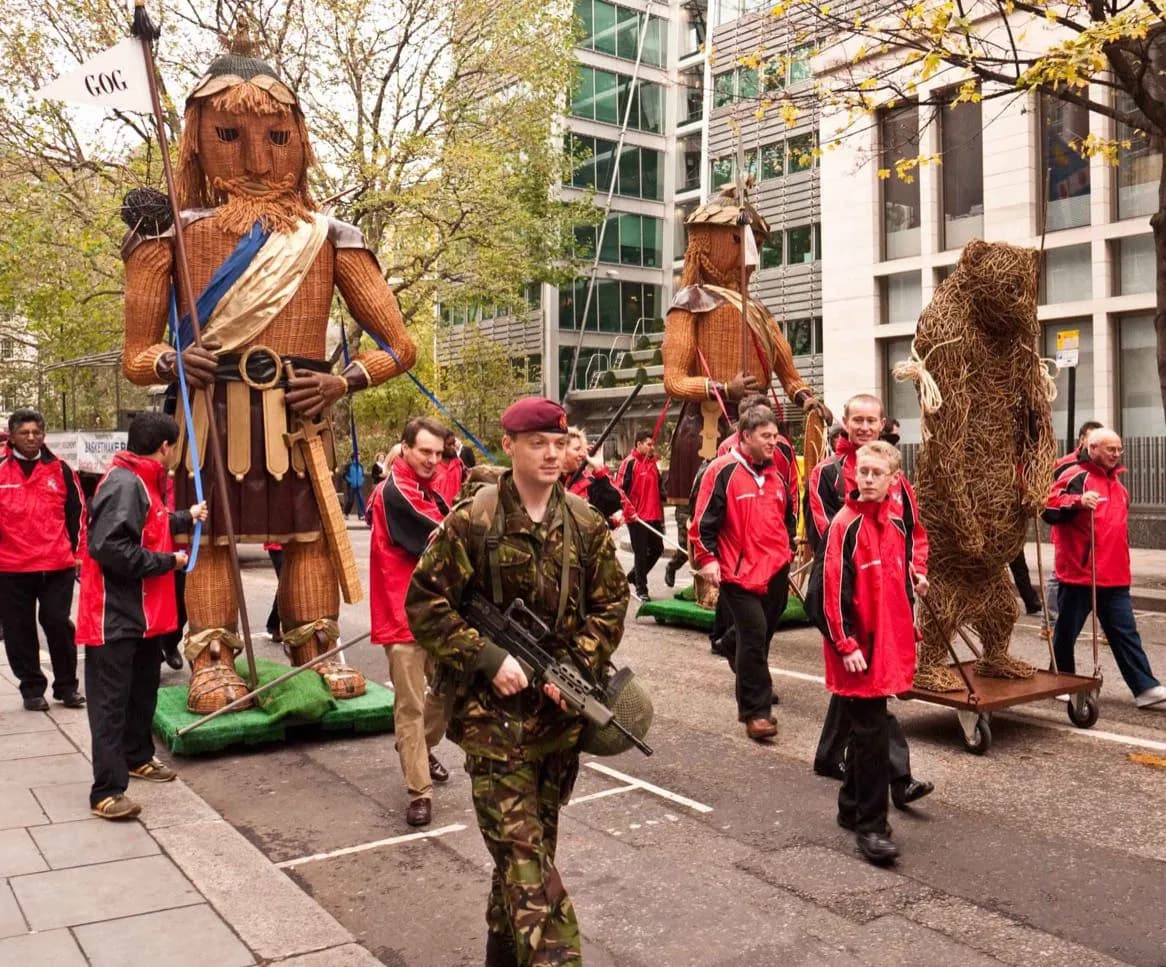
Legendary foundations and prehistoric London According to the legendary Historia Regum Britanniae, by Geoffrey of Monmouth, London was founded by Brutus of Troy about 1000–1100 B.C. after he defeated the native giant Gogmagog; the settlement was known as Caer Troia, Troia Nova (Latin for New Troy), which, according to a pseudo-etymology, was corrupted to Trinovantum.
The full story
The City of London is its historic core and today is its primary financial district, though it now represents a tiny part of the wider metropolis of Greater London. Trinovantes were the Iron Age tribe who inhabited the area prior to the Romans. Geoffrey provides prehistoric London with a rich array of legendary kings, such as Lud (see also Lludd, from Welsh mythology) who, he claims, renamed the town Caer Ludein, from which London was derived, and was buried at Ludgate. There have been scattered prehistoric finds, evidence of farming, burial and traces of habitation, but nothing more substantial. London was most likely a rural area with scattered settlement. Rich finds such as the Battersea Shield, found in the Thames near Chelsea, suggest the area was important; there may have been important settlements at Egham and Brentford, and there was a hillfort at Uphall Camp, Ilford, but no city in the area of the Roman London, the present day City of London.