
Why go
Prince Albert's vision built the Victoria and Albert Museum, Science Museum, Natural History Museum, Geological Museum, Royal College of Science, Royal College of Art, Royal School of Mines, Royal School of Music, Royal College of Organists, Royal School of Needlework, Royal Geographical Society, Institute of Recorded Sound, Royal Horticultural Gardens, Royal Albert Hall and the Imperial Institute.
What to look for
- In 2004, Queen Elizabeth II opened the Imperial College Business School.
- They were incorporated into Imperial College a few years later in 1910.
- On 9 December 2005, Imperial announced that it would commence negotiations to secede from the University of London.
The full story
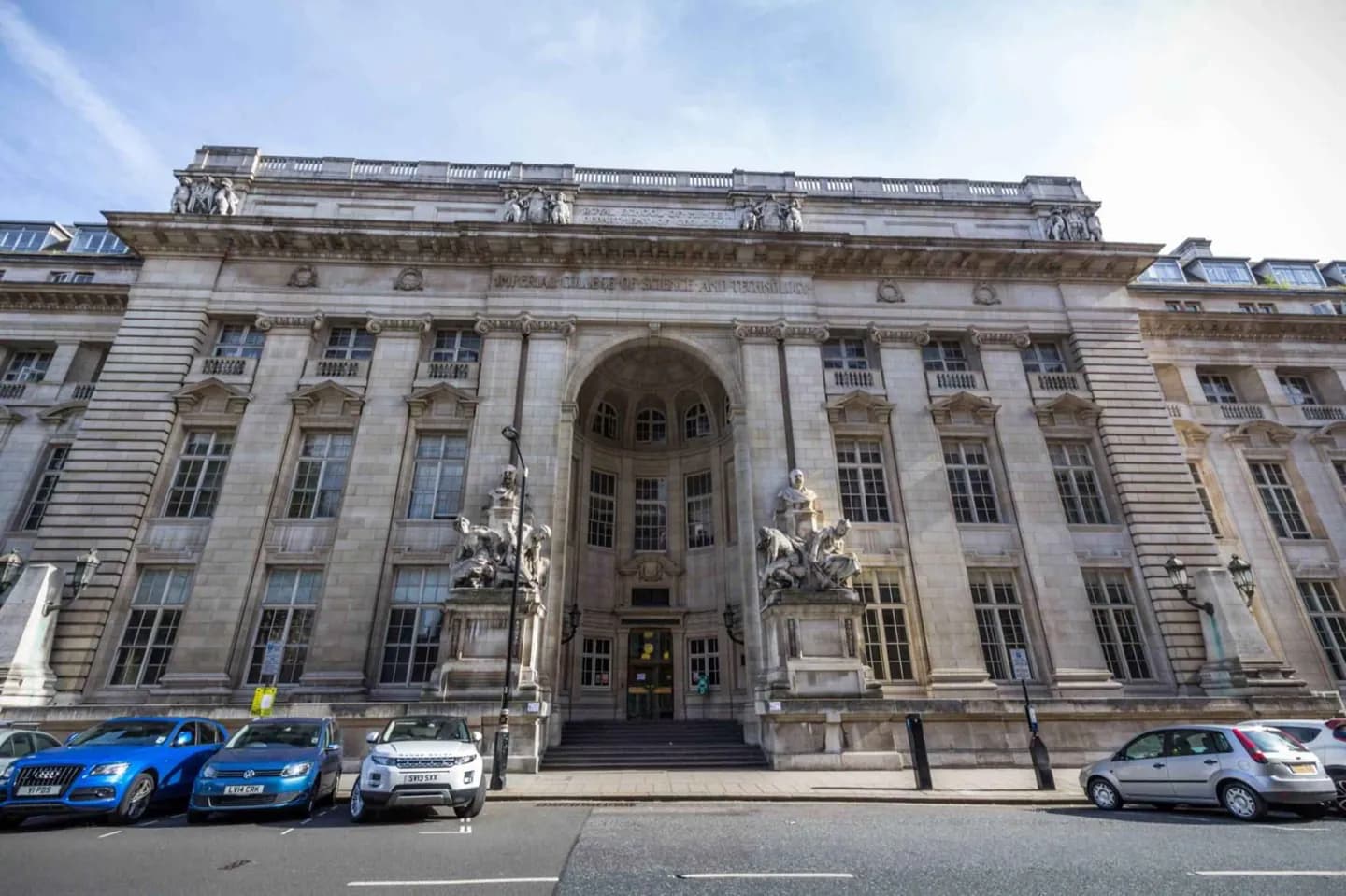
Its founder, Prince Albert, envisioned a cultural area composed of the Victoria and Albert Museum, Natural History Museum, Science Museum, Royal Albert Hall, and the Imperial Institute. The Imperial Institute was opened by Queen Victoria, his wife, who laid the foundation stone in 1887. The curriculum was expanded to include medicine after mergers with several historic medical schools. Imperial is organised into faculties of science, engineering, medicine, and business. The main campus is located in the Royal Borough of Kensington and Chelsea. The university has an emphasis on science and technology and their practical application. Imperial's contributions to society include the discovery of penicillin, the development of holography, and of fibre optics. Imperial is consistently ranked among the world's top universities: In 2016/17 Imperial ranked 22nd in the world in the ARWU, 9th in the world in the QS, and 8th in the world in the THE rankings.
Useful to know
- Confirm current admission and opening times before leaving.
Your next visit
Estimated · Declared scenario and planning estimates; no live opening, weather, queue or booking service.
Outdoor visit · 37–75 min
World planning estimate; admission, opening, visit duration and access need checking.