
Why go
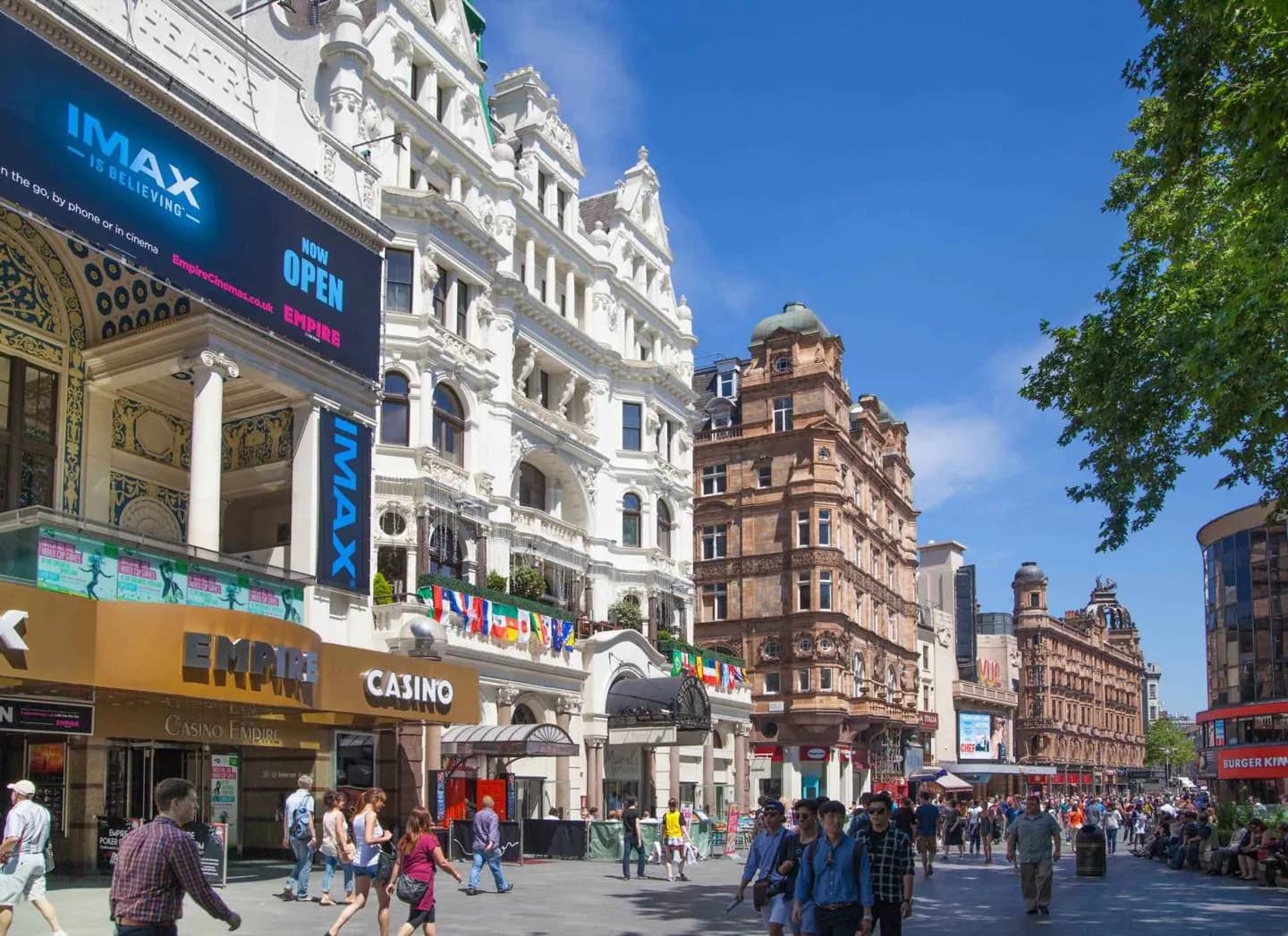
Lord Leicester was ordered to keep part of his land (thereafter known as Leicester Fields and later as Leicester Square) open for the parishioners. Leicester Square holds a number of nationally important cinemas such as the Odeon Leicester Square, Empire, Leicester Square and the now closed Odeon West End, which are frequently used for film premieres, The nearby Prince Charles Cinema is popular for showing cult films and marathon film runs.
What to look for
- The nearest tube station is Leicester Square tube station, which opened in 1906.
- The square is named after Robert Sidney, 2nd Earl of Leicester, who purchased this land in 1630.
- In 1790, a new Royal Opera House was proposed to be built in Leicester Square.
The full story
The square was originally a gentrified residential area, with tenants including Frederick, Prince of Wales and artists William Hogarth and Joshua Reynolds. Several major theatres were established in the 19th century, which were converted to cinemas towards the middle of the next. The square remains a popular tourist attraction, including hosting events for the Chinese New Year. The square has always had a park in its centre, which was originally Lammas land. The park's fortunes have varied over the centuries, reaching near dilapidation in the mid-19th century after changing ownership several times. The square was extensively refurbished and remodelled for the 2012 London Olympics, costing more than £15m and taking over 17 months to complete. Geography The square lies within an area bound by Lisle Street, to the north; Charing Cross Road, to the east; Orange Street, to the south; and Whitcomb Street, to the west.
Your next visit
Estimated · Declared scenario and planning estimates; no live opening, weather, queue or booking service.
Outdoor visit · 22–45 min
World planning estimate; admission, opening, visit duration and access need checking.