
Why go
The west side of the base displays a sculpture, by Caius Gabriel Cibber, in alto and bas relief, of the destruction of the City; with Charles II and his brother, James, the Duke of York (later James II), surrounded by liberty, architecture, and science, giving directions for its restoration.
What to look for
- The top of the Monument is reached by a narrow winding staircase of 311 steps.
- Another monument, the Golden Boy of Pye Corner, marks the point near Smithfield where the fire was stopped.
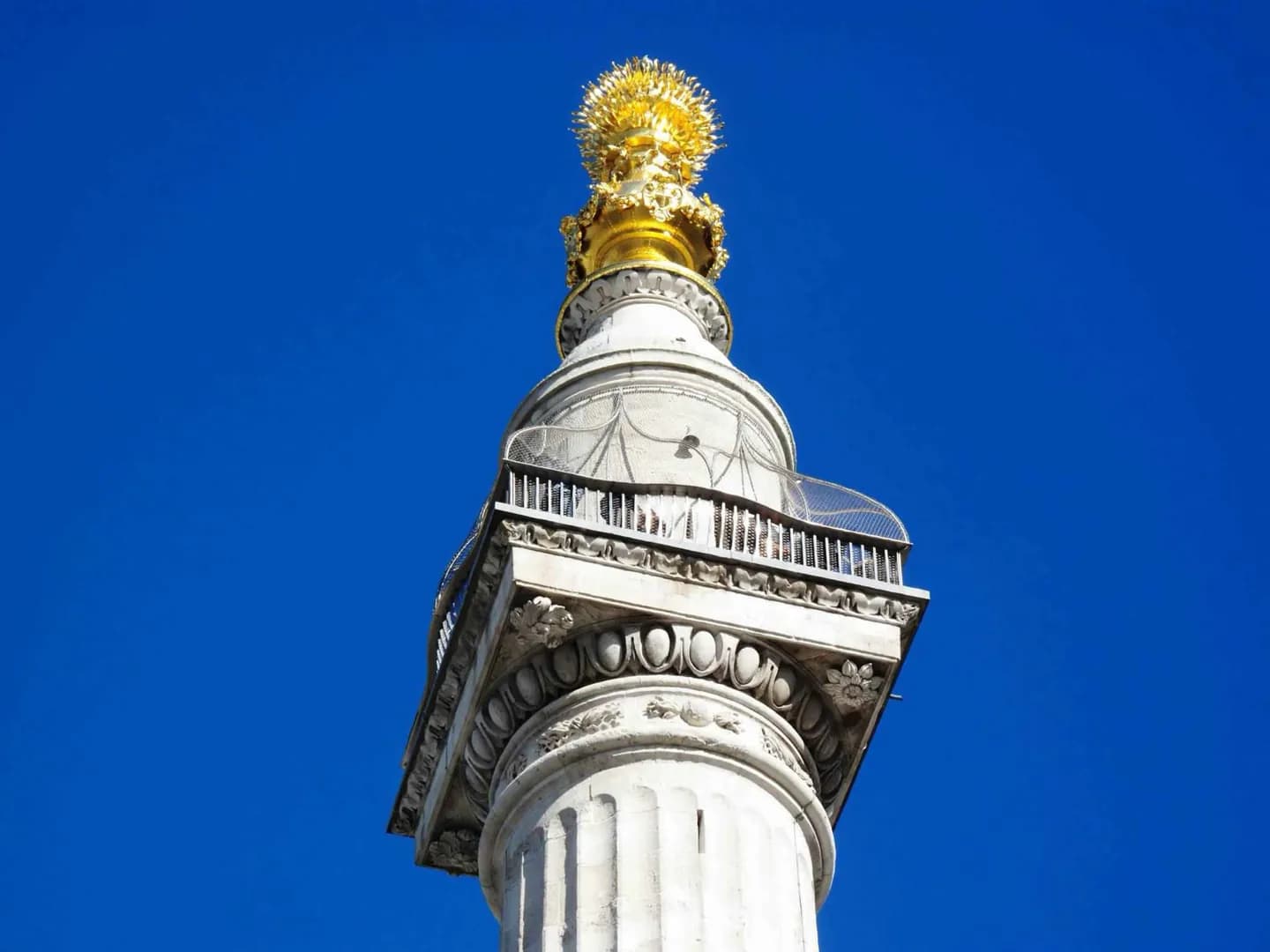
- The Monument comprises a fluted Doric column built of Portland stone topped with a gilded urn of fire.
The full story
Constructed between 1671 and 1677, it was built on the site of St. Margaret's, Fish Street, the first church to be burnt down by the Great Fire. Its height marks its distance from the site of the shop of Thomas Farriner (or Farynor), the king's baker, where the Great Fire began. A mesh cage was added in the mid-19th century at the top to prevent people jumping off, after six people had committed suicide from the structure between 1788 and 1842. Three sides of the base carry inscriptions in Latin. The one on the south side describes actions taken by King Charles II following the fire. The one on the east describes how the Monument was started and brought to perfection, and under which mayors.
Useful to know
- Confirm current admission and opening times before leaving.
Your next visit
Estimated · Declared scenario and planning estimates; no live opening, weather, queue or booking service.
Outdoor visit · 37–75 min
World planning estimate; admission, opening, visit duration and access need checking.