
Why go
Late 20th century gentrification By the 1980s, single-occupation houses began to return to favour with families who could afford to occupy them, and because of the open spaces and stylish architecture Notting Hill is today one of London's most desirable areas.
What to look for
- In late August and early September 1958, the Notting Hill race riots occurred.
- The name was changed in 1919 to avoid confusion with the new Notting Hill Gate station.
- In 2003 Carnival was run by a limited company, the Notting Hill Carnival Trust Ltd.
The full story
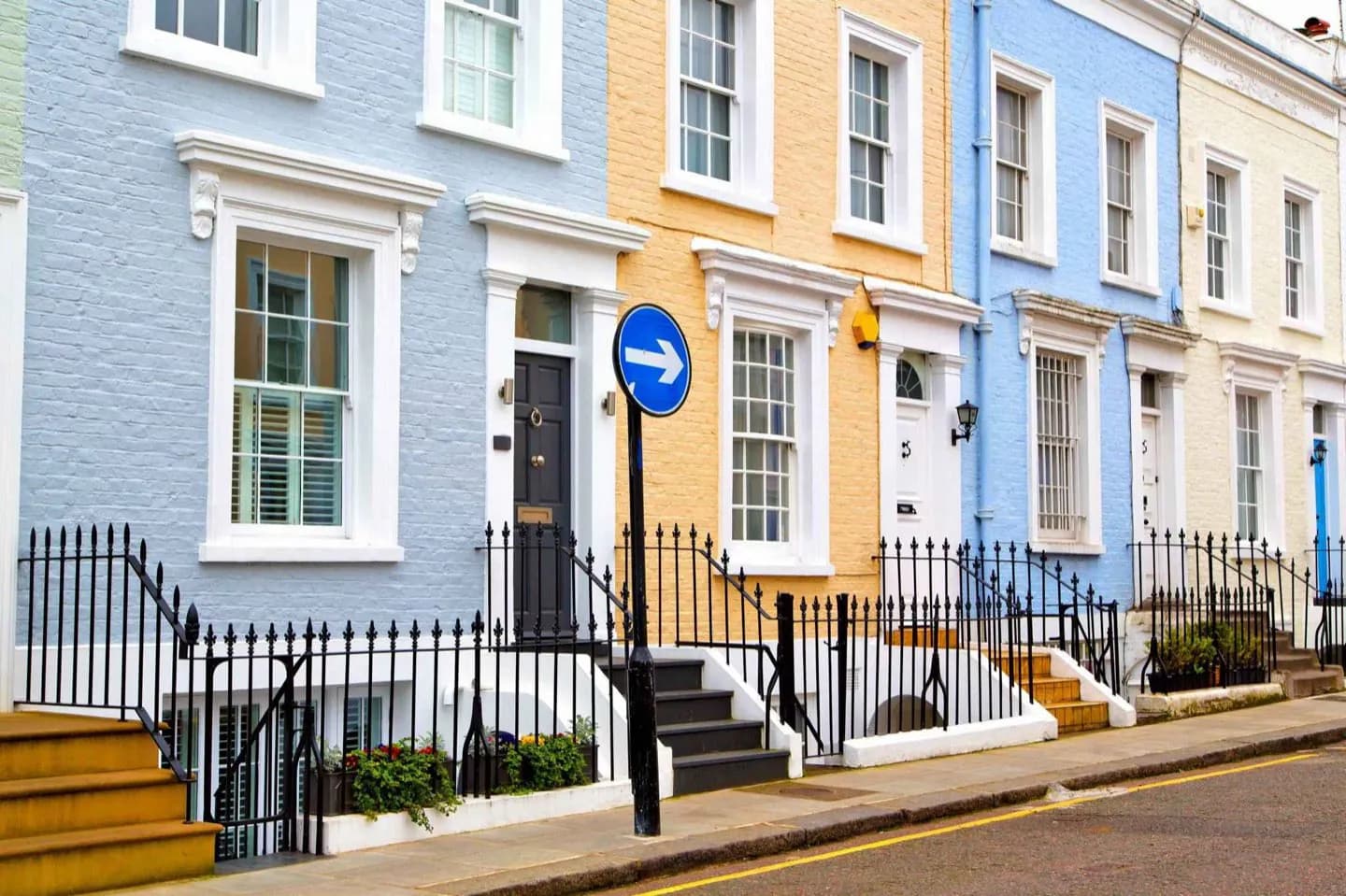
Notting Hill is known for being a cosmopolitan neighbourhood, hosting the annual Notting Hill Carnival and Portobello Road Market. Very run-down until the 1980s, Notting Hill now has a contemporary reputation as an affluent and fashionable area; known for attractive terraces of large Victorian townhouses, and high-end shopping and restaurants . A Daily Telegraph article in 2004 used the phrase the 'Notting Hill Set' to refer to a group of emerging Conservative politicians, such as David Cameron and George Osborne, who would become respectively Prime Minister and Chancellor of the Exchequer and were once based in Notting Hill. For much of the 20th century the large houses were subdivided into multi-occupancy rentals. Caribbean immigrants were drawn to the area in the 1950s, partly because of the cheap rents, but were exploited by slum landlords like Peter Rachman, and also became the target of white Teddy Boys in the 1958 Notting Hill race riots.
Your next visit
Estimated · Declared scenario and planning estimates; no live opening, weather, queue or booking service.
Outdoor visit · 45–90 min
World planning estimate; admission, opening, visit duration and access need checking.