
Why go
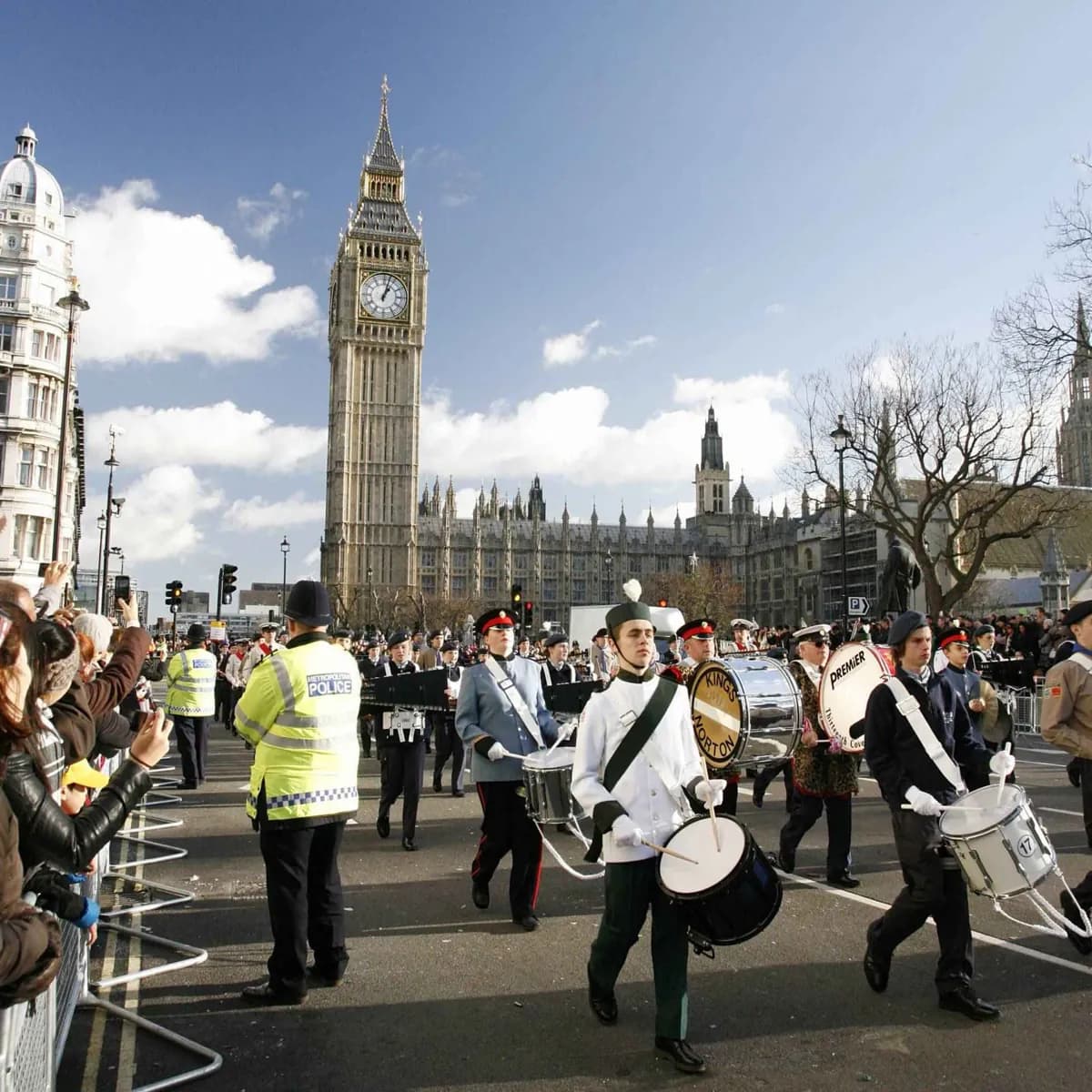
Parliament Square was laid out in 1868 in order to open up the space around the Palace of Westminster and improve traffic flow, and featured London's first traffic signals. The central garden of the square was transferred from the Parliamentary Estate to the control of the Greater London Authority by the Greater London Authority Act 1999.
What to look for
- In 1950 the square was redesigned by George Grey Wornum.
- Statues The square is home to eleven statues of British, Commonwealth, and foreign statesmen.
- They are listed here in anti-clockwise order, beginning with Winston Churchill's statue which faces Parliament.
The full story
As well as being one of London's main tourist attractions, it is also the place where many demonstrations and protests have been held. The square is overlooked by various official buildings: legislature to the east , executive offices to the north (on Whitehall), the judiciary to the west (the Supreme Court), and the church to the south (with Westminster Abbey). Location Buildings looking upon the square include the churches Westminster Abbey and St Margaret's, Westminster, the Middlesex Guildhall which is the seat of the Supreme Court of the United Kingdom, Government Offices Great George Street serving HM Treasury and HM Revenue and Customs, and Portcullis House. Roads that branch off the Parliament Square are St. Margaret Street (towards Millbank), Broad Sanctuary (towards Victoria Street), Great George Street (towards Birdcage Walk), Parliament Street (leading into Whitehall), and Bridge Street (leading onto Westminster Bridge).
Your next visit
Estimated · Declared scenario and planning estimates; no live opening, weather, queue or booking service.
Outdoor visit · 22–45 min
World planning estimate; admission, opening, visit duration and access need checking.