
Why go
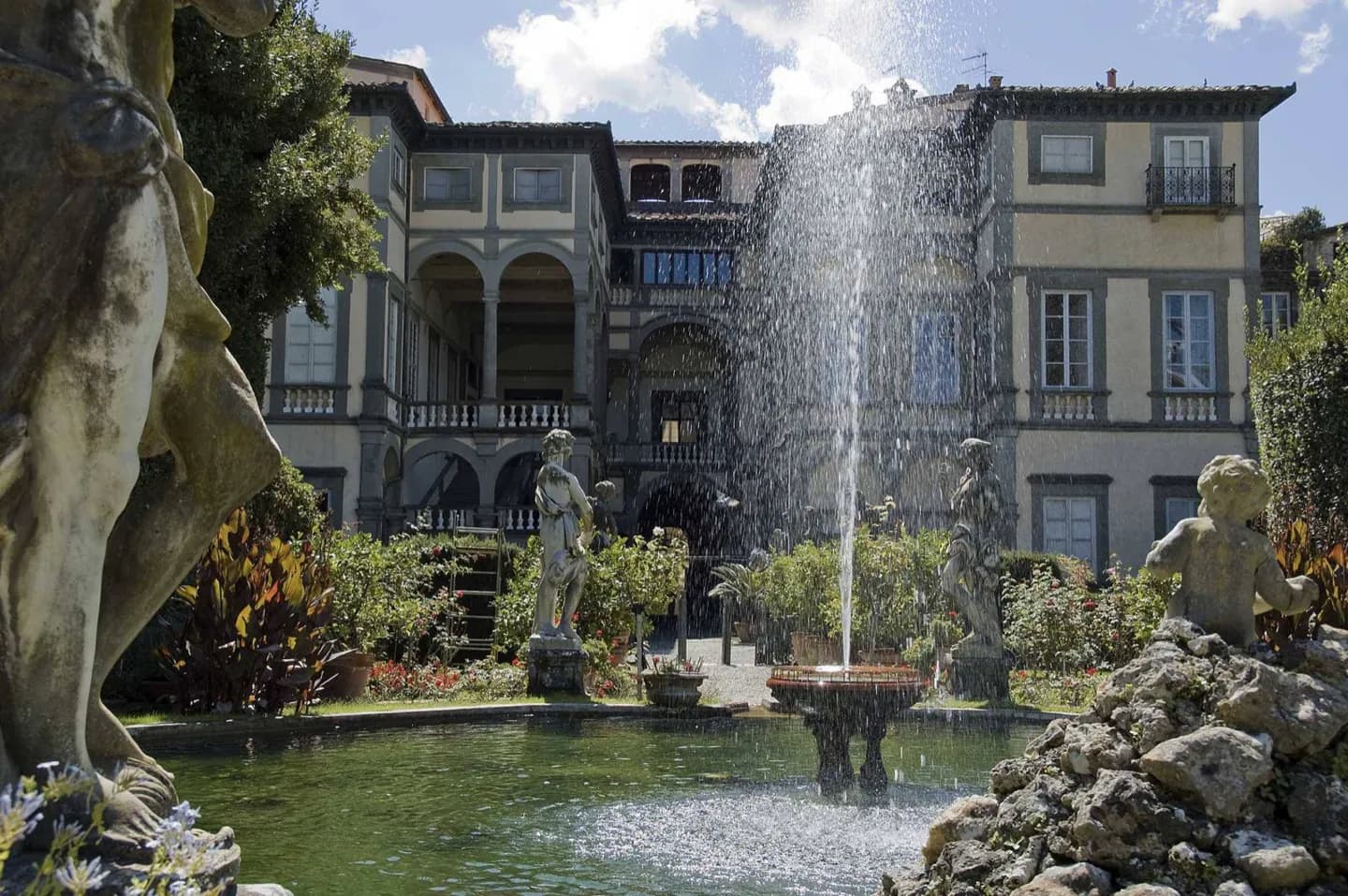
The garden’s fountain, statues and lemon trees make an unusually clear contrast with medieval Lucca. Inside, frescoed rooms and medical instruments add a later family story, though current opening should be checked before planning both parts. The palace’s brewery history further complicates the noble-house picture.
What to look for
- An octagonal fountain anchors the formal garden paths.
- Statues, citrus pots and a lemon house shape the Baroque garden.
- Museum rooms contain frescoes, furnishings and medical instruments.
The full story
The Moriconi family commissioned the palace in the 17th century, then sold it to the silk-merchant Controni family in 1680. The Controni enlarged the residence, adding a monumental stair and developing the formal garden behind it. Its paths meet at an octagonal fountain, with statues, lemon trees and a lemon house turning a small city plot into a stage for display. The Pfanner name arrived in the 19th century. Felix Pfanner established a brewery here in 1846, and the family gradually acquired the property; the brewery operated until 1929. That shift from noble residence to business and family home is visible in the museum rooms, where furnishings and medical instruments sit alongside the frescoed interior. The visit works on two scales: first the ordered garden against Lucca’s dense urban fabric, then the rooms that tell how this palace continued to change after its Baroque garden was laid out.
Useful to know
- Check official opening details before planning the rooms and garden together.
- Allow time to compare the garden’s central axis with views from the palace.
Your next visit
Estimated · Declared scenario and planning estimates; no live opening, weather, queue or booking service.
Outdoor visit · 30–45 min
World planning estimate; admission, opening, visit duration and access need checking.