
Why go
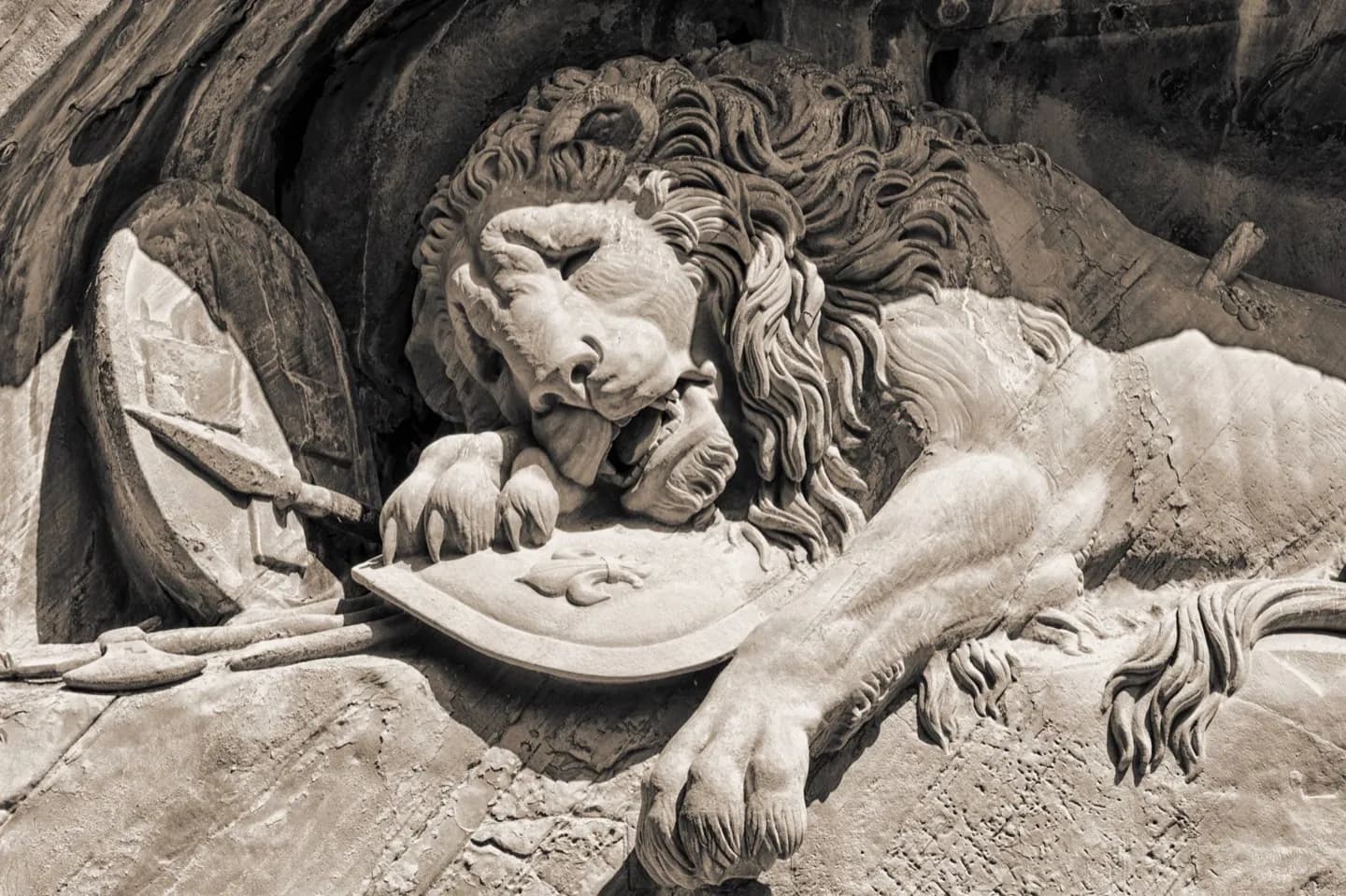
The sculpture is more than a striking image in a grotto. It connects Lucerne to the French Revolution, when Swiss Guards defending the Tuileries Palace were killed. Read the panels around the monument to understand whom it commemorates and how its meaning has been interpreted, then take in the lion, rock face and pool together.
What to look for
- The dying lion is carved into a rocky grotto above a pool.
- Interpretation panels explain the Guards and the memorial’s changing meanings.
- The scale of the carving becomes clear when seen against the quarry wall.
The full story
Swiss Guards serving the French royal household defended the Tuileries Palace during the uprising of 10 August 1792. Many died in the fighting or were killed after surrender. Karl Pfyffer von Altishofen, a Guards officer who had been away from Paris, later led the effort to create a memorial. Danish sculptor Bertel Thorvaldsen designed the wounded lion, and Lukas Ahorn carved it into the rock in 1820–21. The former quarry setting is part of the effect: the animal seems to recede into the stone above the pool. The monument honors the Guards, but the interpretation panels also invite visitors to consider the political and historical meanings attached to their service. That context makes the lion’s sorrow more specific than a general image of loss.
Useful to know
- Read the interpretation panels before returning to the sculpture for a second look.
- Combine the monument with the nearby Church of St. Leodegar on a walk beyond the riverfront.
Your next visit
Estimated · Declared scenario and planning estimates; no live opening, weather, queue or booking service.
Outdoor visit · 30–45 min
World planning estimate; admission, opening, visit duration and access need checking.