
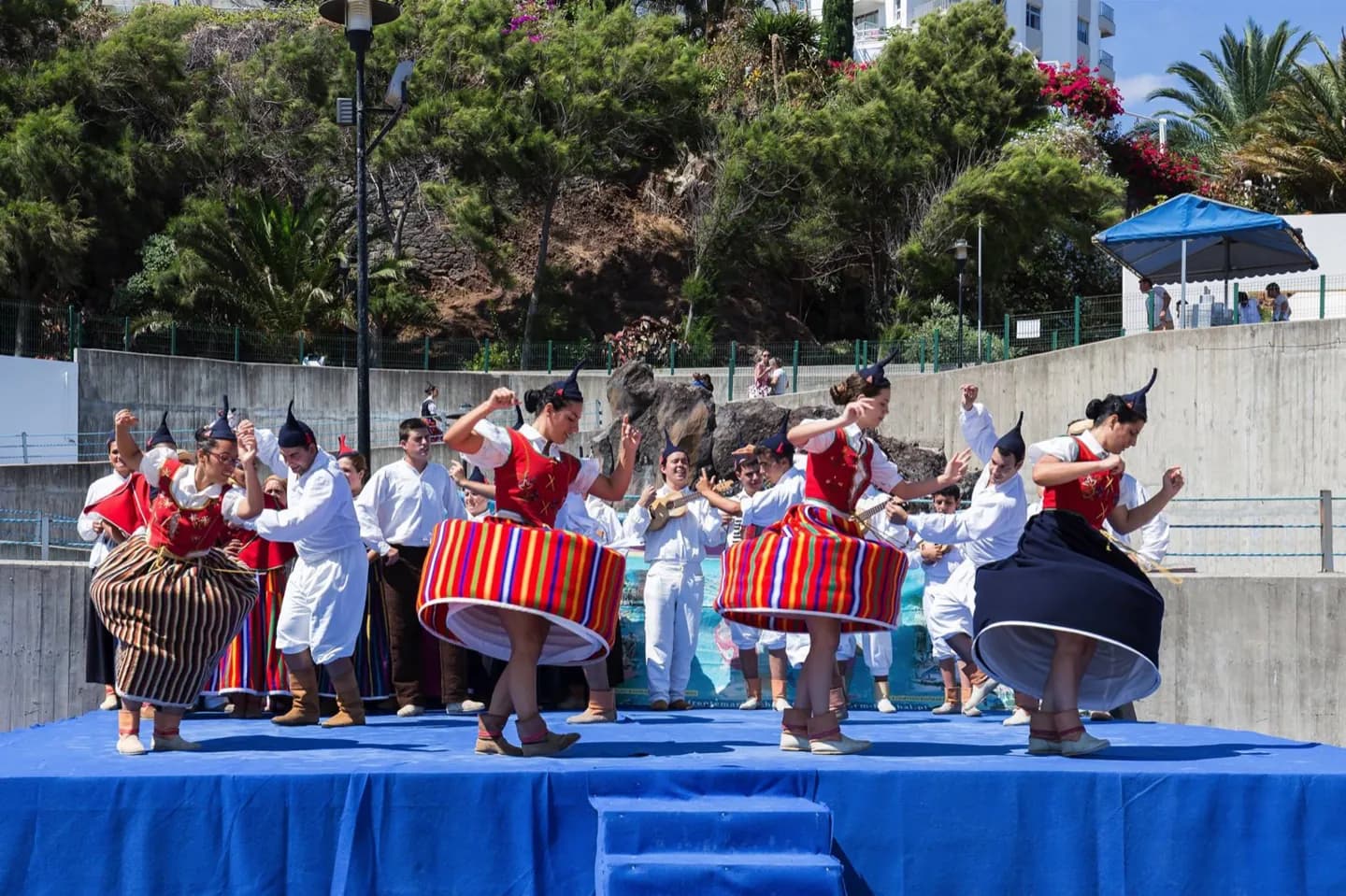
Why go
A folk performance gives the island's music a context that a recording cannot: dancers move to the bailinho while the machete, rajão, cavaquinho and brinquinho give the rhythm its different textures. The story also reaches beyond Madeira through the instruments carried to Hawaii.
The full story
The bailinho da Madeira is a traditional folk dance accompanied by instruments including the machete, rajão, cavaquinho and brinquinho. The names are worth recognising before a performance: they point to a musical tradition built around distinct local sounds, rather than a single generic guitar accompaniment. The connection to the ukulele adds another layer. In the nineteenth century, Portuguese migrants from Madeira and Cape Verde brought small guitar-like instruments to Hawaii. The ukulele developed there from instruments of Madeiran origin, particularly the cavaquinho and rajão. Three Madeiran cabinet makers, Manuel Nunes, José do Espírito Santo and Augusto Dias, are commonly credited among its early makers. A Madeiran dance or instrument demonstration therefore tells two related stories: music kept alive on the island and musical ideas carried across the ocean by emigrants. When watching a bailinho, notice how the compact instruments support the steps and changes of rhythm.