
Why go
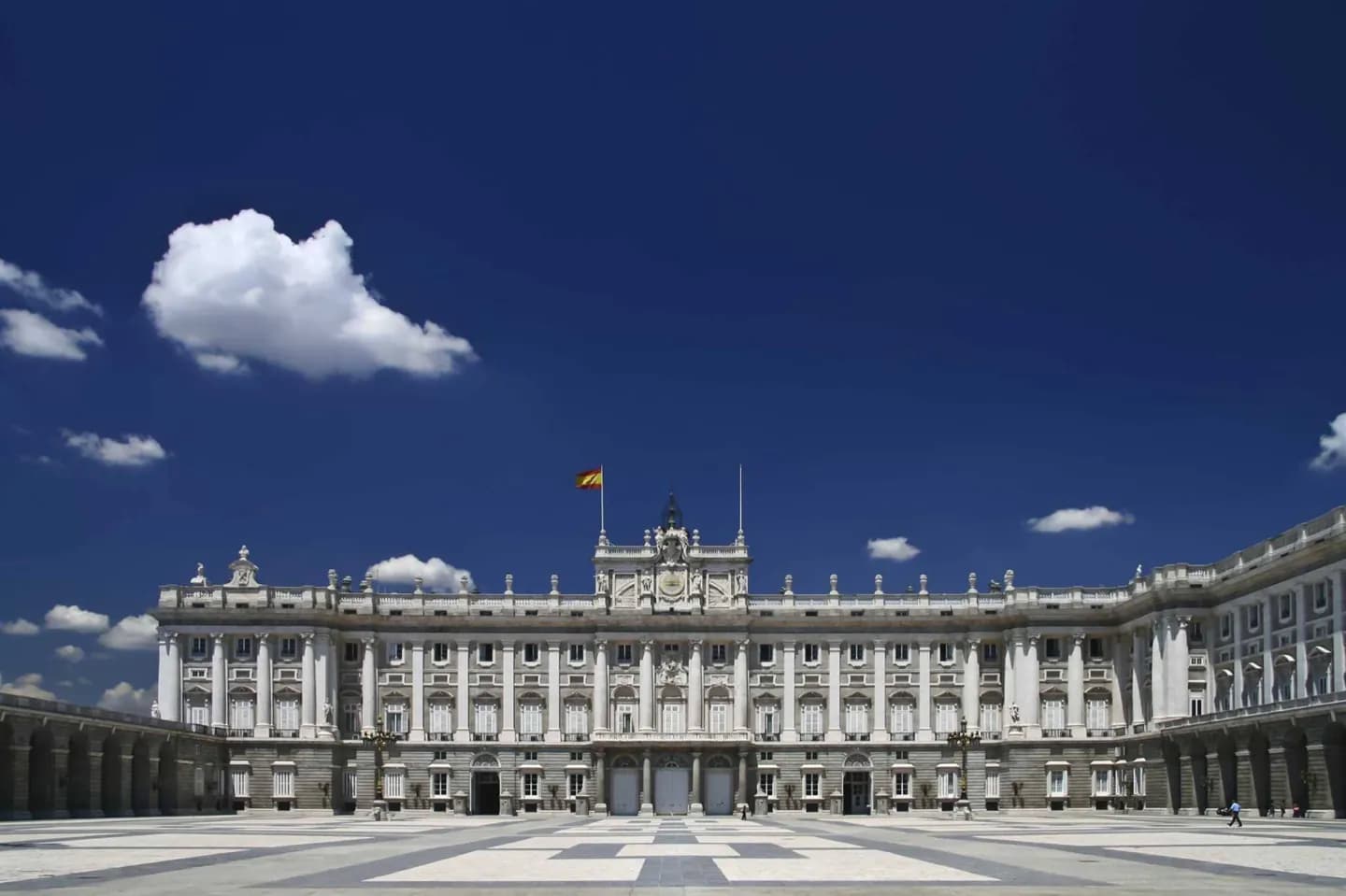
Architecture is easiest to read in contrasts: the Royal Palace and Catedral de la Almudena face one another, Gran Vía turns the walk east toward commercial façades, and Paseo de la Castellana leads to the city's modern expansion. It gives a useful structure to a city walk beyond individual monuments.
The full story
The first historical references to Madrid date to the ninth century, when Muhammad I ordered a small palace and citadel above the Manzanares. The name developed from Mayrit, an Arabic term linked to water. The later city repeatedly built beside and beyond that royal nucleus. Catedral de la Almudena makes the relationship visible: its exterior was adapted to a neoclassical character that would sit opposite the Palacio Real, although its earlier design was Gothic Revival. Plaza Mayor and nearby streets preserve the tighter scale of the Habsburg centre. Gran Vía then introduces a broader commercial avenue lined with assertive early twentieth-century façades, while Paseo de la Castellana continues north through later civic and office districts. Moving between these areas reveals expansion by layers rather than one uniform architectural style.