
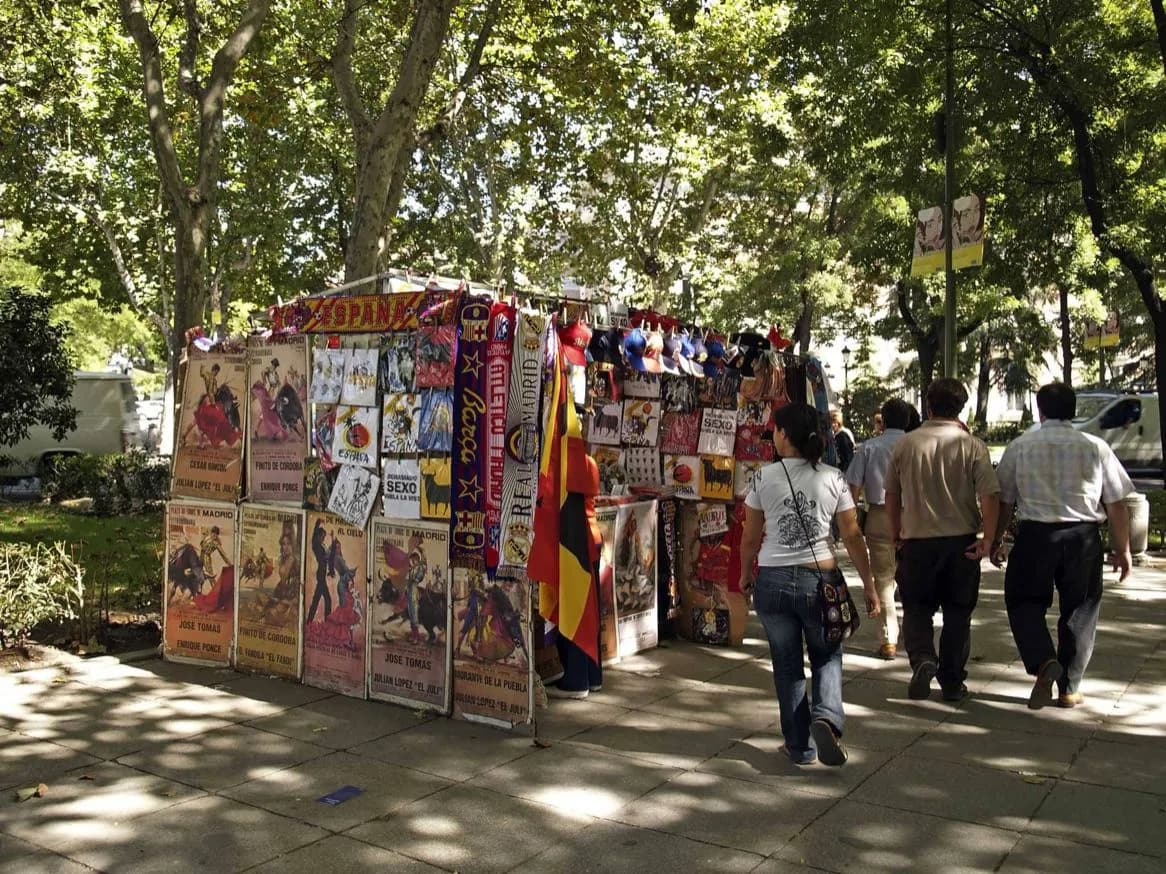
Why go
The city rewards an approach that alternates between streets and interiors: begin around Puerta del Sol and Plaza Mayor, then decide between the Royal Palace to the west or the Prado and Retiro to the east. Those clusters reveal very different sides of Madrid without long cross-city journeys.
The full story
Madrid's political role helps explain the scale of its central landmarks. The Royal Palace and Teatro Real represent the courtly city; Plaza Mayor and Puerta del Sol are the public squares at its core; and the Prado, Reina Sofía and Thyssen-Bornemisza show how the city developed a major museum district. Retiro adds a landscaped pause to that cultural corridor. Rather than treating these as isolated sights, read the centre as a sequence from royal precinct to commercial streets and then to the art-and-garden axis of the Paseo del Prado. Gran Vía provides the clearest east-west link through the commercial centre, while the Castellana extends the city's civic scale northward. This structure makes it possible to understand several periods of Madrid without turning the day into a series of disconnected transfers.