
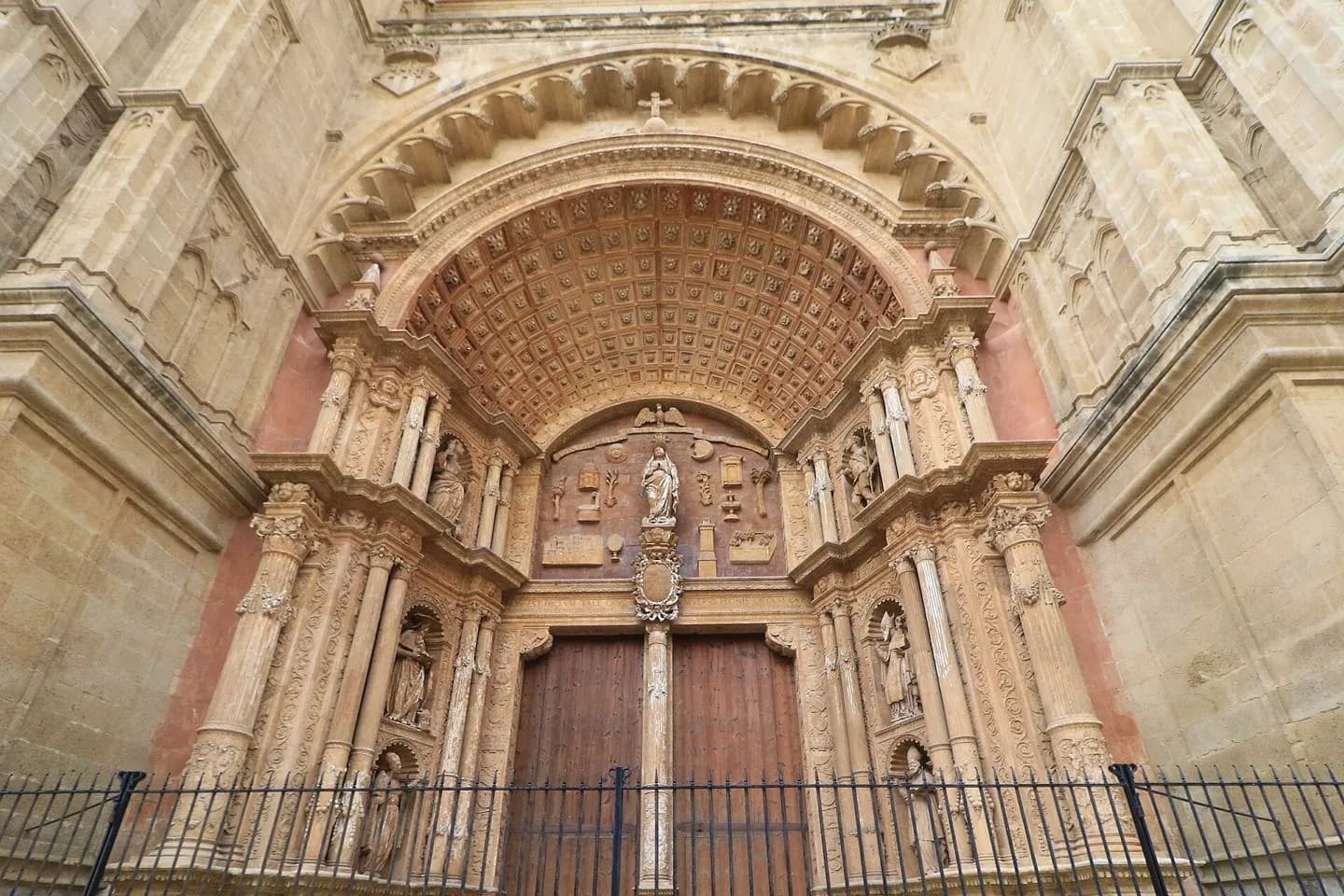
Why go
Construction began after the Christian conquest of 1229 and continued for centuries, producing a Gothic landmark later reshaped by Antoni Gaudí and Miquel Barceló. The visit connects the rose window, Gaudí’s canopy and Barceló’s ceramic chapel. It suits a history-and-architecture day, especially when the larger setting matters as much as individual details.
What to look for
- The rose window.
- Gaudí’s canopy and barceló’s ceramic chapel.
The full story
Construction began after the Christian conquest of 1229 and continued for centuries, producing a Gothic landmark later reshaped by Antoni Gaudí and Miquel Barceló. Today, Cathedral of Mallorca is best understood through the rose window, Gaudí’s canopy and Barceló’s ceramic chapel. The wider Cathedral of Mallorca context is a vast Gothic nave, a waterfront setting and interventions by Gaudí and Miquel Barceló. Begin outside, where orientation explains the building’s position, then move inward and compare structure, decoration and later interventions. The most useful final look is back toward the entrance: it reveals how the parts form a deliberate sequence. That progression makes the monument more than a collection of famous details and ties it to the city around it. Before leaving Cathedral of Mallorca, set its arrival image—the rose window—against its closing image: a vast Gothic nave.
Useful to know
- See the façade first from Parc de la Mar.
- Check tourist access around worship and special events.
Your next visit
Estimated · Declared scenario and planning estimates; no live opening, weather, queue or booking service.
Outdoor visit · 10–15 min
Public-space walk and exterior observation only; no interior, garden, tower or ticketed admission included. Durations and walking are estimates. Check temporary restrictions and park or market opening times.
Indoor visit · 30–60 min
World planning estimate; admission, opening, visit duration and access need checking.