
Why go
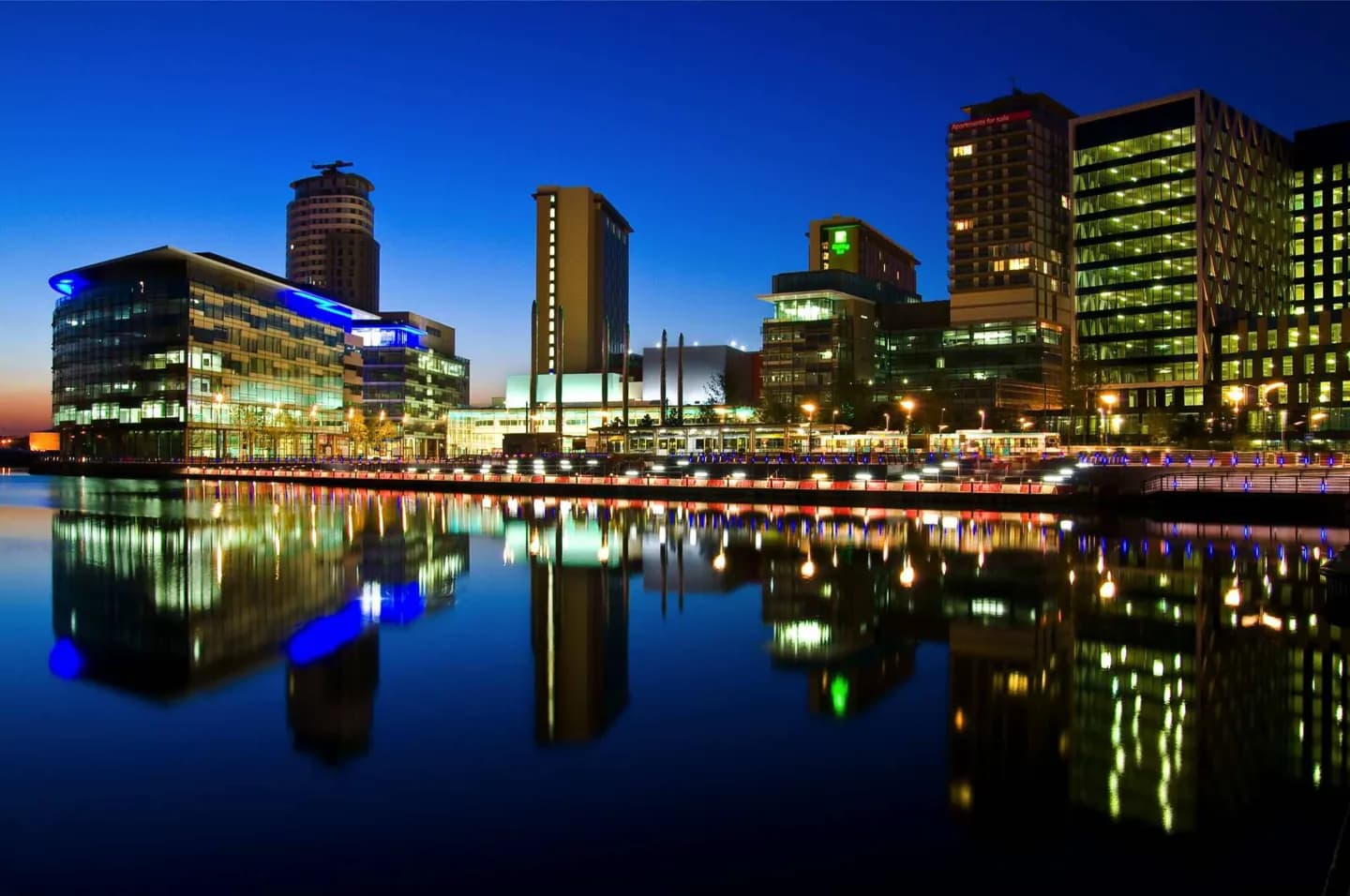
Salford’s proximity to Manchester can hide its separate civic story. The Irwell marks the relationship between the two centres, while Peel Park and Salford Museum and Art Gallery offer a compact cultural focus. Salford Quays is another part of the city, but merits its own waterfront outing rather than being folded into one vague stop.
What to look for
- River Irwell boundary with Manchester.
- Peel Park.
- Salford Museum and Art Gallery quarter.
The full story
Salford developed beside a bend in the River Irwell, the waterway that still provides a clear visual boundary with Manchester. Its civic history is older than many visitors expect: medieval Salford had borough status long before the industrial growth that came to define the wider conurbation. In the nineteenth century, new civic and cultural spaces changed what residents could use and see. Peel Park grew from the former Lark Hill estate, and Salford Museum and Art Gallery opened alongside the public library tradition associated with the area. Those places make a useful way to read the city on foot today: the park, museum and river offer a sequence of open space, civic culture and geography. Salford’s modern waterfront at the Quays tells a different story, built around the former docks. Treating these quarters separately makes the size and variety of Salford easier to understand.
Useful to know
- Choose a specific Salford quarter before setting out; the city is too broad for a single point visit.
- Pair Peel Park with Salford Museum and Art Gallery for a focused central Salford walk.
- Plan Salford Quays as a separate waterfront area with its own attractions.
Your next visit
Estimated · Declared scenario and planning estimates; no live opening, weather, queue or booking service.
Outdoor visit · 30–45 min
World planning estimate; admission, opening, visit duration and access need checking.