Chapter 1 / Manchester
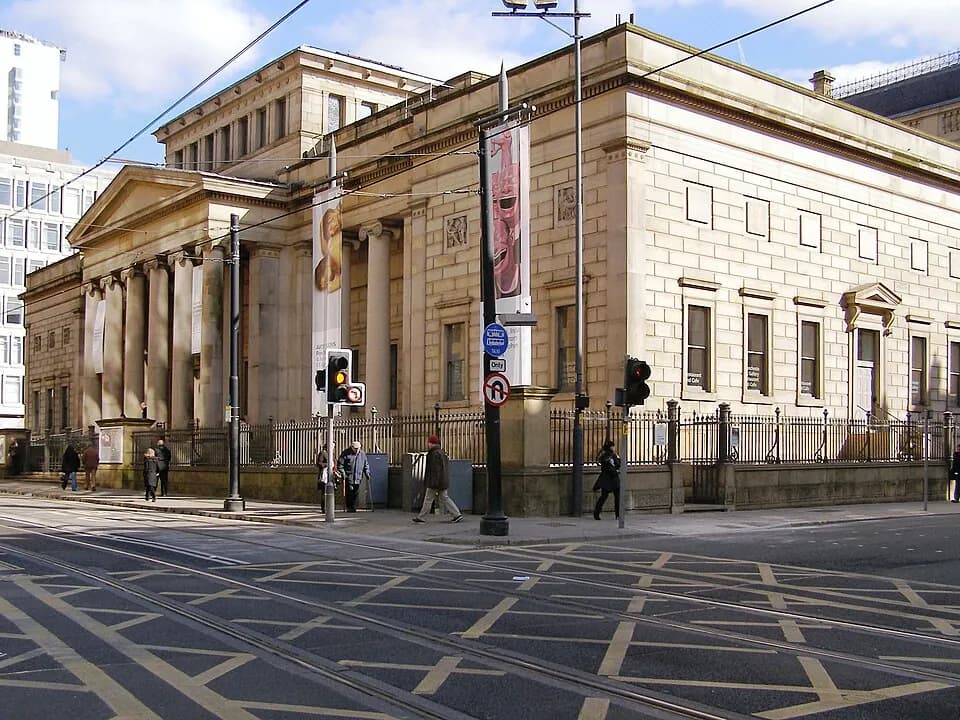
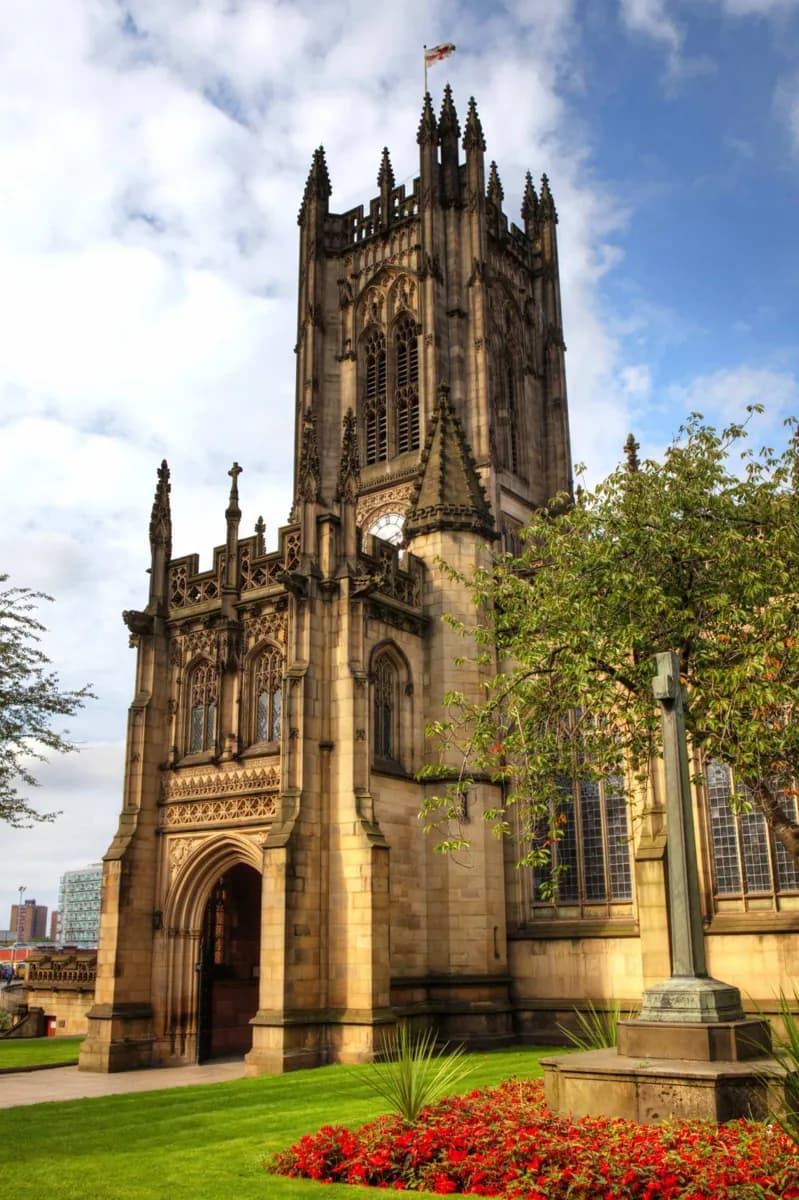
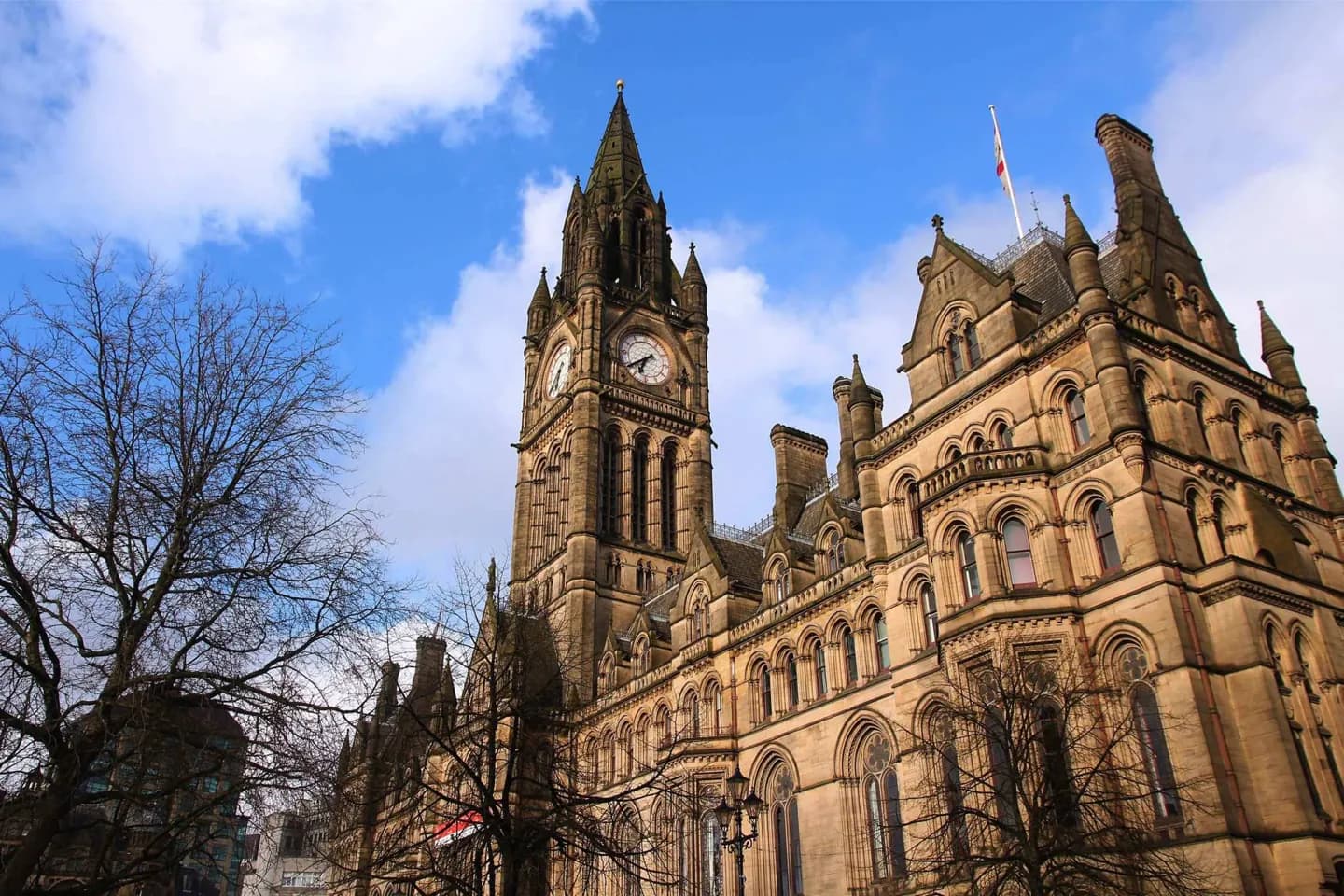
Manchester Town Hall.
Start with Manchester Town Hall. Let a detail decide which thread you follow next.
Pause here. What detail would you keep from this place?
Outdoor walks and façade observations. Interior admission is not included.
The full story
Alfred Waterhouse’s Gothic town hall anchors Albert Square. Go for its imposing exterior and clock tower; the interior is affected by restoration, so plan this as a street-side stop.
The building makes Manchester’s Victorian civic confidence visible in stone. Its medieval-looking outline hides a design shaped by nineteenth-century needs for light, heating and ventilation. From Albert Square, compare the disciplined Gothic facade with the more elaborate Albert Memorial nearby; there is plenty to read in the exterior even when you cannot enter.
Manchester commissioned a new town hall as its nineteenth-century industrial growth demanded a larger civic home. Alfred Waterhouse completed the building in 1877, choosing a Gothic language that gave the council a recognisable public monument. Look beyond the medieval effect: the building incorporated gas lighting, warm-air heating and carefully placed windows to make a dense municipal building workable. Ornamental openings admitted fresh air, while skylights and borrowed light helped illuminate rooms deeper within the plan. That combination of historic appearance and contemporary engineering is the point of the exterior stop. The tall clock tower announces the town hall across the centre, while the consistent stone colour and controlled carving give its long frontage a different rhythm from the Albert Memorial facing it. Ford Madox Brown’s murals and Manchester bee mosaics belong to the interior story, but access depends on the restoration project; the public square is the reliable place to understand the building’s role in the city.
- Waterhouse’s Gothic facade and clock tower rise above Albert Square.
- Look for the restrained, uniform stonework beneath the medieval-style outline.
- The Albert Memorial across the square makes a useful architectural contrast.
View the exterior from the accessible part of Albert Square; restoration works may change sightlines.
Pair this short stop with the Albert Memorial rather than planning an interior tour.
What is pulling you next?
Another door into this story