
Why go
The church and square show an older layer of the city centre than the shopping streets around them. Its restrained classical form and later stained glass make a useful contrast with Manchester's grander Victorian civic buildings. The square makes that contrast easy to appreciate on foot.
What to look for
- The church's classical exterior anchors St Ann’s Square.
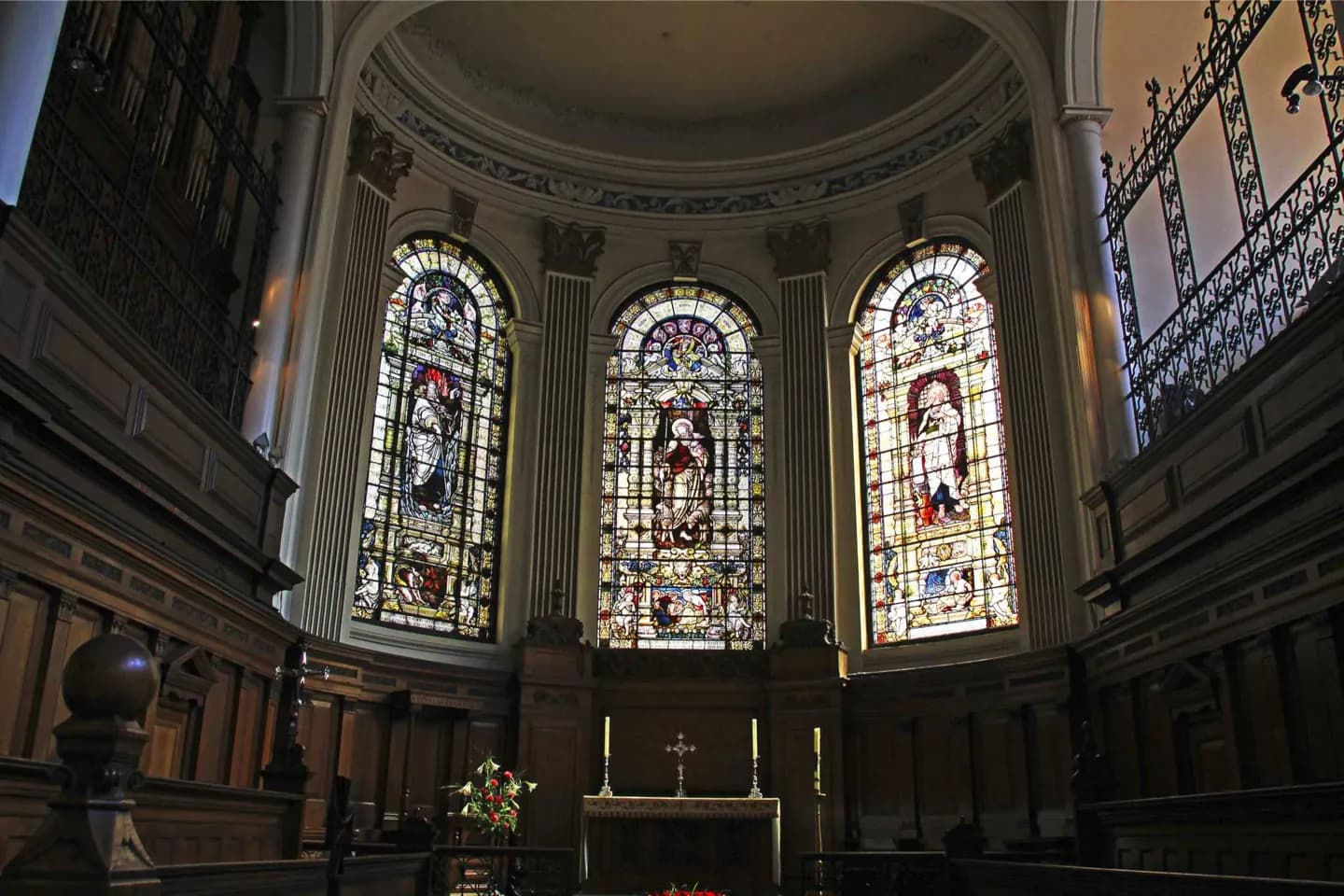
- Stained-glass windows add colour inside the early eighteenth-century building.
The full story
St Ann's Church was consecrated in 1712, when Manchester was still much smaller than the industrial city it would become. The ground around it had been known as Acres Field; it became St Ann's Square, giving the church a prominent setting that survives in the city centre. The building's classical design and stone exterior offer a different architectural language from the Gothic and industrial landmarks elsewhere in Manchester. Its interior was originally plain, with later stained glass adding detail in the nineteenth century. The church's name also recalls Lady Ann Bland, its patron, alongside St Anne. From the square, the building helps visitors imagine an earlier Manchester of fields, markets and parish life. Inside, the accumulated changes show how a place of worship can keep its basic form while its decoration and urban surroundings change around it.
Useful to know
- Look at the church from the square before deciding whether to enter.
- Check church visitor arrangements if seeing the interior is central to your plan.
- Respect services and quiet use of the building.
Your next visit
Estimated · Declared scenario and planning estimates; no live opening, weather, queue or booking service.
Outdoor visit · 30–45 min
World planning estimate; admission, opening, visit duration and access need checking.