
Why go
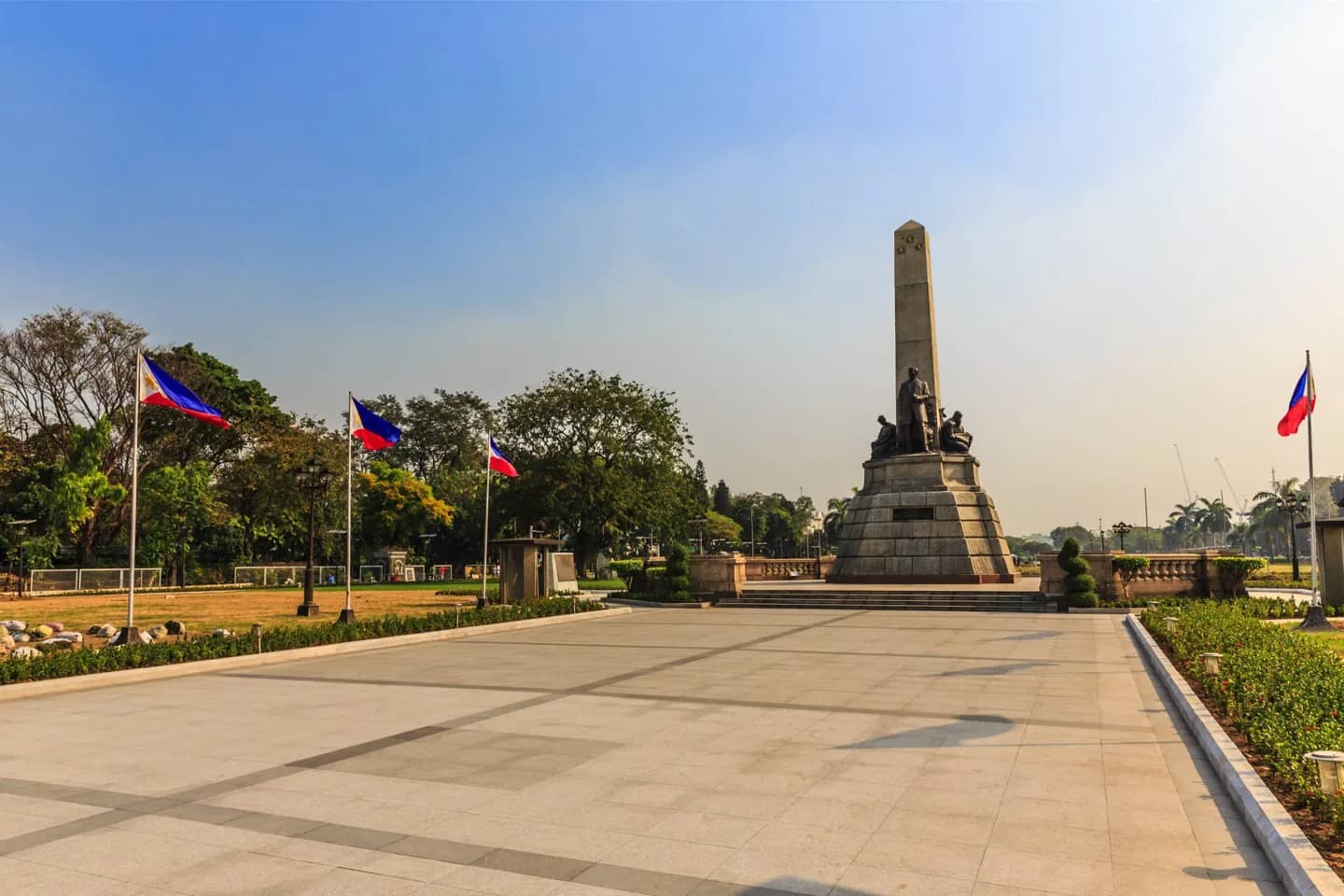
The monument gives a clear historical anchor to a walk across Rizal Park: Rizal was executed in this area in 1896, and the memorial became a national point of remembrance. Its bronze figure, obelisk and ceremonial guard reward a closer look than a passing photo from the road.
What to look for
- Rizal's bronze figure holding a book beneath the obelisk.
- The three stars incorporated into the monument.
- The Marine Corps honor guard at the memorial.
The full story
José Rizal's execution at Bagumbayan in 1896 made this part of Manila central to the story of Philippine nationhood. The monument, planned and built in the early twentieth century, gives that memory a physical focus within Luneta. Its composition brings together a bronze figure holding a book, an obelisk and stars, with a ceremonial guard reinforcing the site's national role. The book is a useful detail to notice: Rizal's writing was as important to his public legacy as the events of his final days. A visit gains depth by seeing the memorial in relation to the surrounding park rather than treating it as an isolated statue. Paco Park, where Rizal was first buried, offers another part of the same story elsewhere in Manila.
Useful to know
- Approach on foot through Rizal Park for a closer view of the sculptural details.
- Respect any guarded or restricted perimeter around the memorial.
Your next visit
Estimated · Declared scenario and planning estimates; no live opening, weather, queue or booking service.
Outdoor visit · 30–45 min
World planning estimate; admission, opening, visit duration and access need checking.