Chapter 1 / Manila
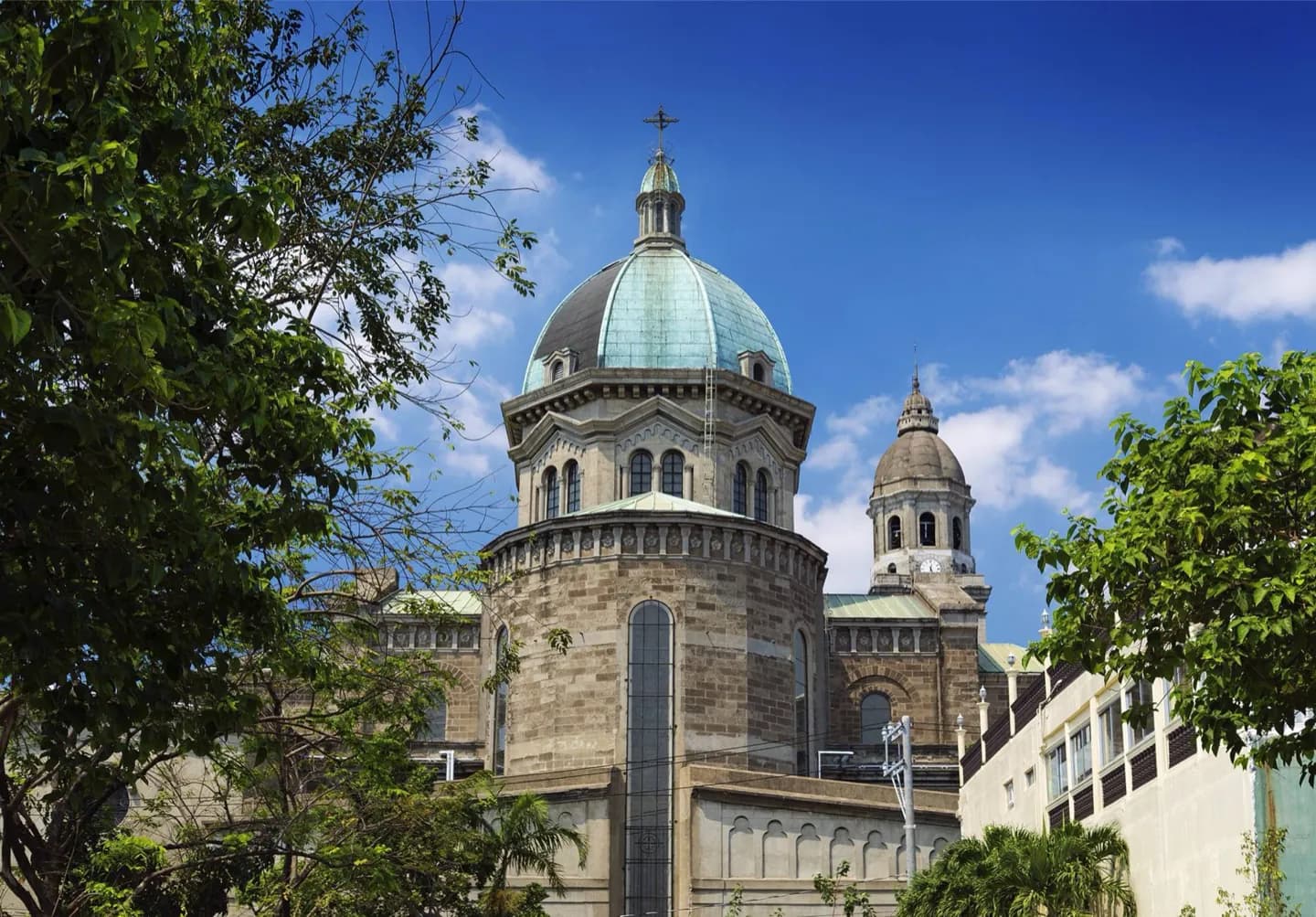
Manila Cathedral.
Start with Manila Cathedral. Let a detail decide which thread you follow next.
Pause here. What detail would you keep from this place?
Outdoor walks and façade observations. Interior admission is not included.
The full story
The cathedral faces Plaza de Roma at the heart of Intramuros. Stop for its postwar architecture and role as an active place of worship; interior access depends on church activity.
Its prominent position on Plaza de Roma makes the cathedral a natural anchor for an Intramuros walk. The present building also shows how Manila's religious landmarks were rebuilt after wartime destruction. The exterior can be appreciated from the square; enter only when visitor access is appropriate and worship is undisturbed.
Manila Cathedral has long held a central position in Intramuros, facing the civic space of Plaza de Roma. Its current form is part of the walled city's postwar rebuilding, so the facade should be read alongside nearby walls and streets that survived, changed or were restored in different ways. The cathedral is also an active religious institution, officially the Minor Basilica of the Immaculate Conception. Pope Paul VI celebrated Mass here in 1970, and its later basilica title reflects a continuing role beyond architectural history. From the plaza, notice how the church commands the square; inside, if access is open, remember that this remains a space for prayer and liturgy. The contrast with its busy public square is part of the experience of the place.
- The cathedral facade across Plaza de Roma.
- A postwar church on the site of Manila's longstanding cathedral.
- The interior when public access and church activity permit.
View the facade from Plaza de Roma as part of an Intramuros walk.
Check the cathedral's current guidance before planning an interior visit; Mass times are for worship.
What is pulling you next?
Another door into this story