
Why go
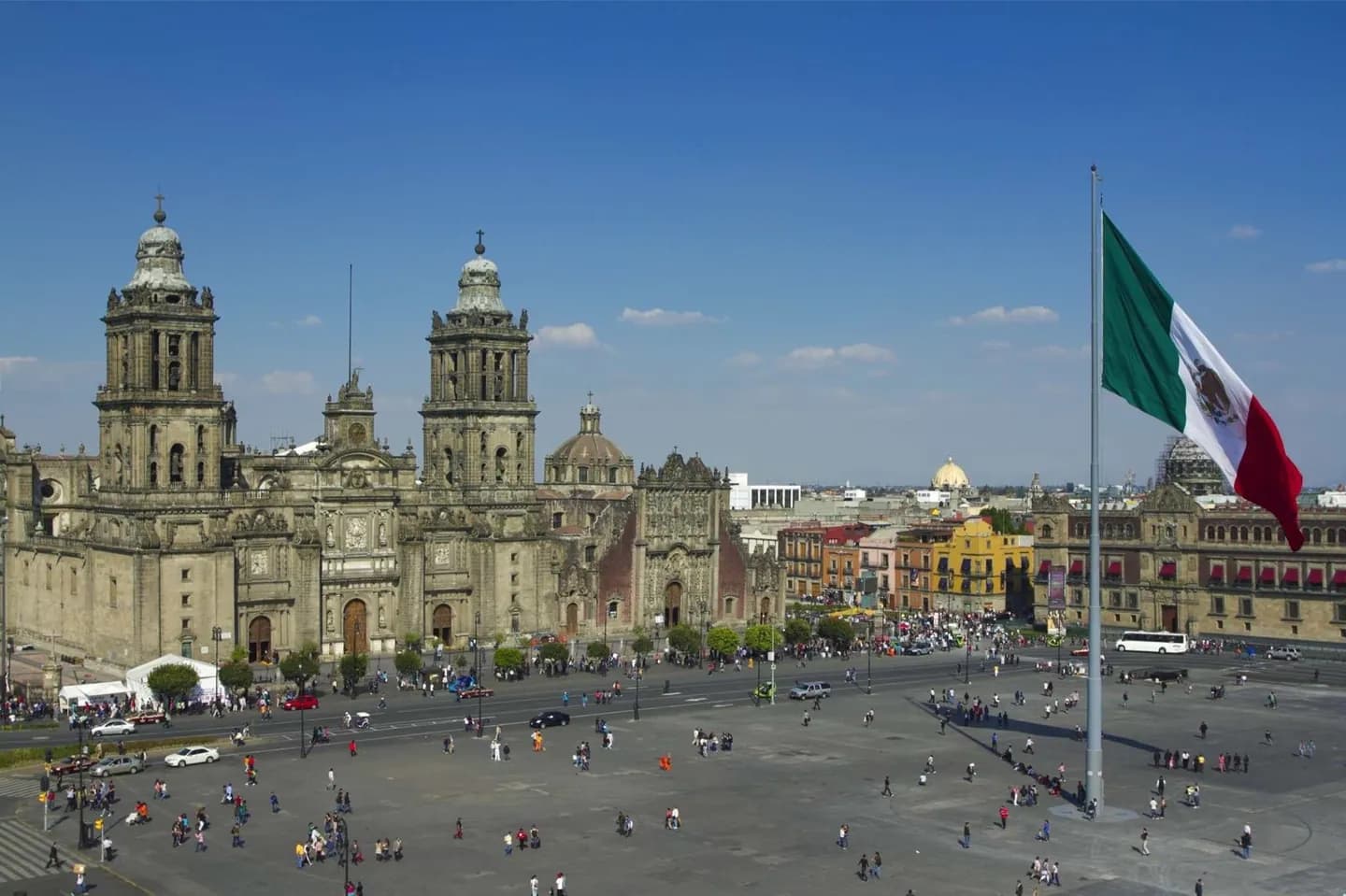
in all directions for a number of blocks with its farthest extent being west to the Alameda Central The Zocalo is the largest plaza in Latin America and the second largest in the world after Moscow’s Red Square. It can hold up to nearly 100,000 people. Overview This section of the city has just over nine square km.
What to look for
- Notice how Historic Center relates to the surrounding streets and skyline.
- Look for surviving details that reveal the site's principal historical layer.
The full story
Mexico City's historic core and occupies 668 blocks. It contains 9,000 buildings, 1,550 of which have been declared of historical importance. Most of these historic buildings were constructed between the XVI and XX centuries. It is divided into two zones for preservation purposes. Zone A encompasses the pre-hispanic city and its expansion from the Viceroy period until Independence. Zone B covers the areas all other constructions to the end of the 19th century that are considered indispensable to the preservation of the area's architectural and cultural heritage. This is where the Spaniards began to build what is now modern Mexico City in the 16th century on the ruins of the conquered Tenochtitlan, capital of the Aztec Empire. As the center of the ancient Aztec Empire and the seat of power for the Spanish colony of New Spain, the Centro Historico contains most of the city’s historic sites from both eras as well as a large number of museums. This has made it a World Heritage Site. History What is now the historic downtown of.
Useful to know
- Allow enough time to see Historic Center and its immediate setting without rushing.
- Check current official access information before entering any managed interior.
Your next visit
Estimated · Declared scenario and planning estimates; no live opening, weather, queue or booking service.
Outdoor visit · 30–45 min
World planning estimate; admission, opening, visit duration and access need checking.