
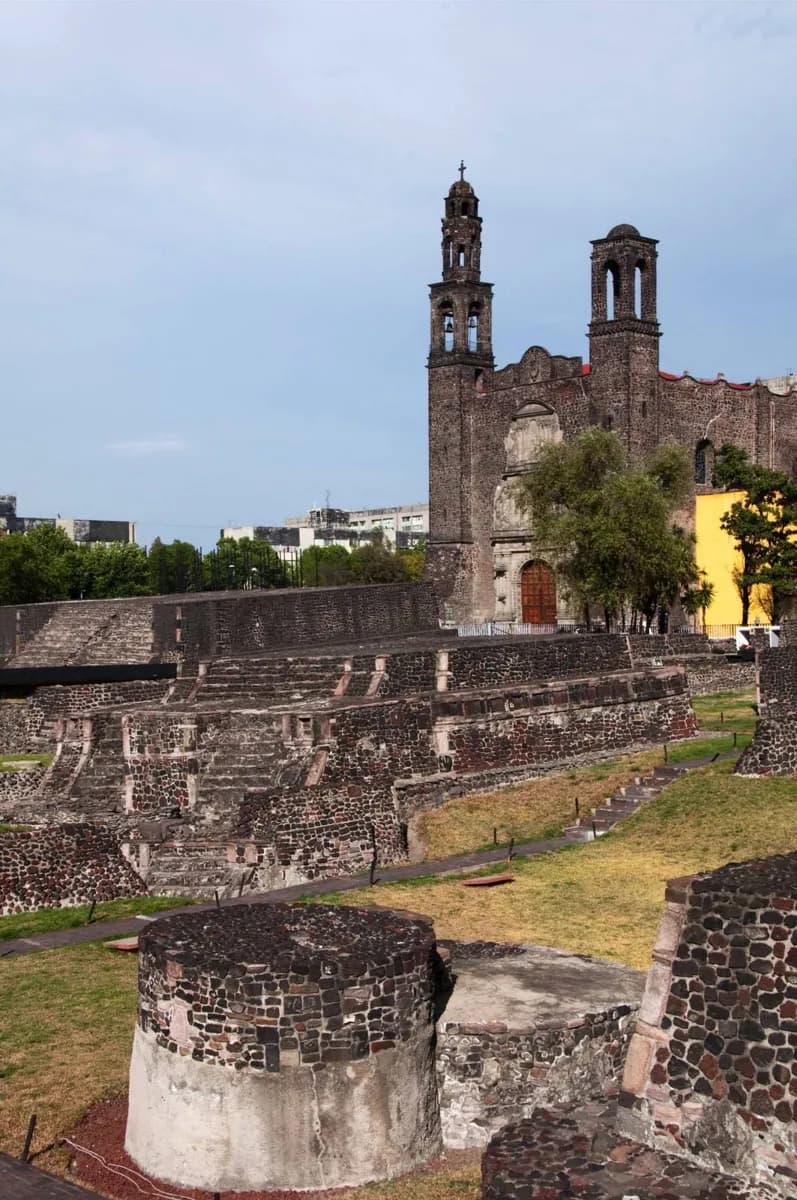
Why go
Aztec temples and is flanked by the Catholic church of Santiago Tlatelolco and a massive housing complex built in 1964. The former headquarters of the Secretariat of Foreign Affairs (foreign ministry) also stands on the southern edge of the square. This headquarters now are a memorial museum called Memorial 68 to remember the 1968 Mexican student demonstrations and.
What to look for
- Notice how Plaza de las Tres Culturas relates to the surrounding streets and skyline.
- Look for surviving details that reveal the site's principal historical layer.
The full story
the Tlatelolco Massacre victims and survivors. The name Three Cultures is in recognition of the three periods of Mexican history reflected by those buildings: pre-Columbian, Spanish colonial, and the independent mestizo nation. Leon Trotsky House Museum belongs to the layered story of the Valley of Mexico. Its architecture, landscape, collections, or civic role reflects changes that unfolded across pre-Hispanic, colonial, modern, and contemporary periods. Looking closely at materials, spatial relationships, and neighboring landmarks makes that history easier to read. The visit also shows how Mexico City continues to reuse important public places rather than treating them as isolated monuments. Approaching through the surrounding district gives the site a geographic frame and helps explain why it became part of established routes through the capital. This context is especially useful when combining several nearby stops, because each contributes a different scale and perspective to the same urban story.
Useful to know
- Allow enough time to see Plaza de las Tres Culturas and its immediate setting without rushing.
- Check current official access information before entering any managed interior.
Your next visit
Estimated · Declared scenario and planning estimates; no live opening, weather, queue or booking service.
Outdoor visit · 30–45 min
World planning estimate; admission, opening, visit duration and access need checking.