
Why go
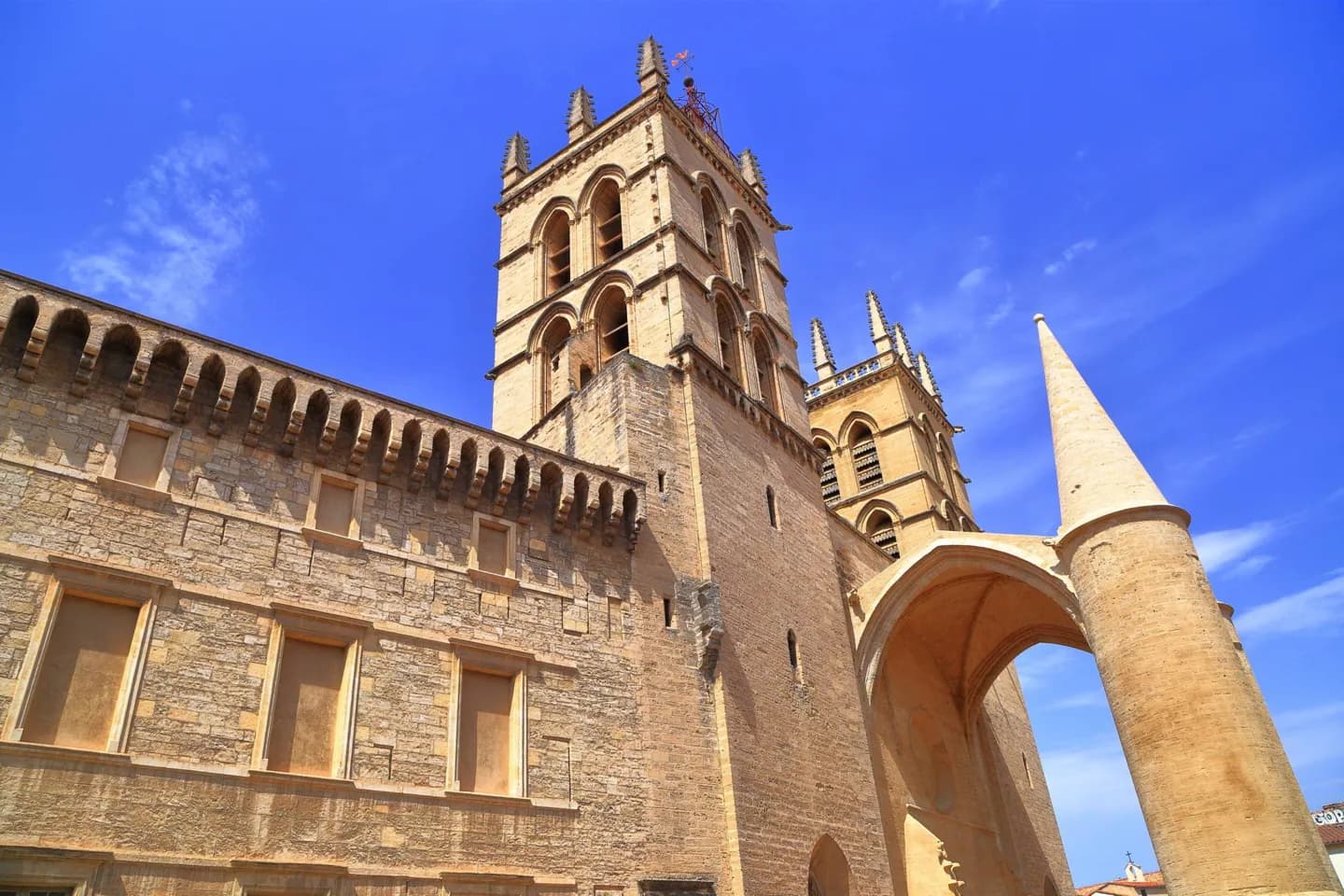
Begin with Place de la Comédie and the Écusson to understand the old city's scale. The cathedral and medical faculty point to a long academic history; Antigone, east of the centre, shows how the city expanded through deliberate modern design. These contrasts give a useful frame for choosing a route.
The full story
Montpellier grew inland from the Mediterranean rather than around a seafront. The historic Écusson remains its core, with narrow streets and landmarks from different centuries close enough to connect on foot. Its medical teaching tradition began in the medieval period and still shapes how visitors read the area around Saint-Pierre Cathedral and the old faculty. Place de la Comédie provides a broad civic counterpoint to those tighter streets. Farther east, Ricardo Bofill's Antigone uses large, repeated classical forms on a planned axis toward the Lez. A first walk can therefore move through several layers of the city without treating them as separate destinations. The terrain rises and falls, especially around the old centre and Peyrou, so a short map distance does not always mean a level walk.