
Chapter 1 / Montpellier
Place de la Comédie.
Start with Place de la Comédie. Let a detail decide which thread you follow next.
Pause here. What detail would you keep from this place?
Outdoor walks and façade observations. Interior admission is not included.
The full story
Montpellier’s broad pedestrian square is the easiest place to read the city centre at a glance: an oval space framed by nineteenth-century facades, the opera house and the Three Graces fountain.
Come for the scale of the square and its links to the surrounding city. The Opéra Comédie anchors one end, while the Esplanade Charles-de-Gaulle continues from the northeast corner. It works as a short architectural stop or a starting point before the nearby Musée Fabre.
Place de la Comédie took shape as the city spread beyond its old fortifications. Its name comes from the theatre on the square, an institution that survived fires and rebuilding before the present opera house opened in the late nineteenth century. The arrival of the main railway station a short distance south also helped make the square a central meeting point. That history is visible in the way several routes feed into one large pedestrian space. Stand by the Three Graces fountain and turn slowly: the opera house, the curved line of facades and the opening toward Esplanade Charles-de-Gaulle each point to a different part of Montpellier. The fountain and theatre are more useful markers than the square’s size alone.
- The Three Graces fountain stands near the centre of the oval square.
- The Opéra Comédie facade faces the pedestrian space.
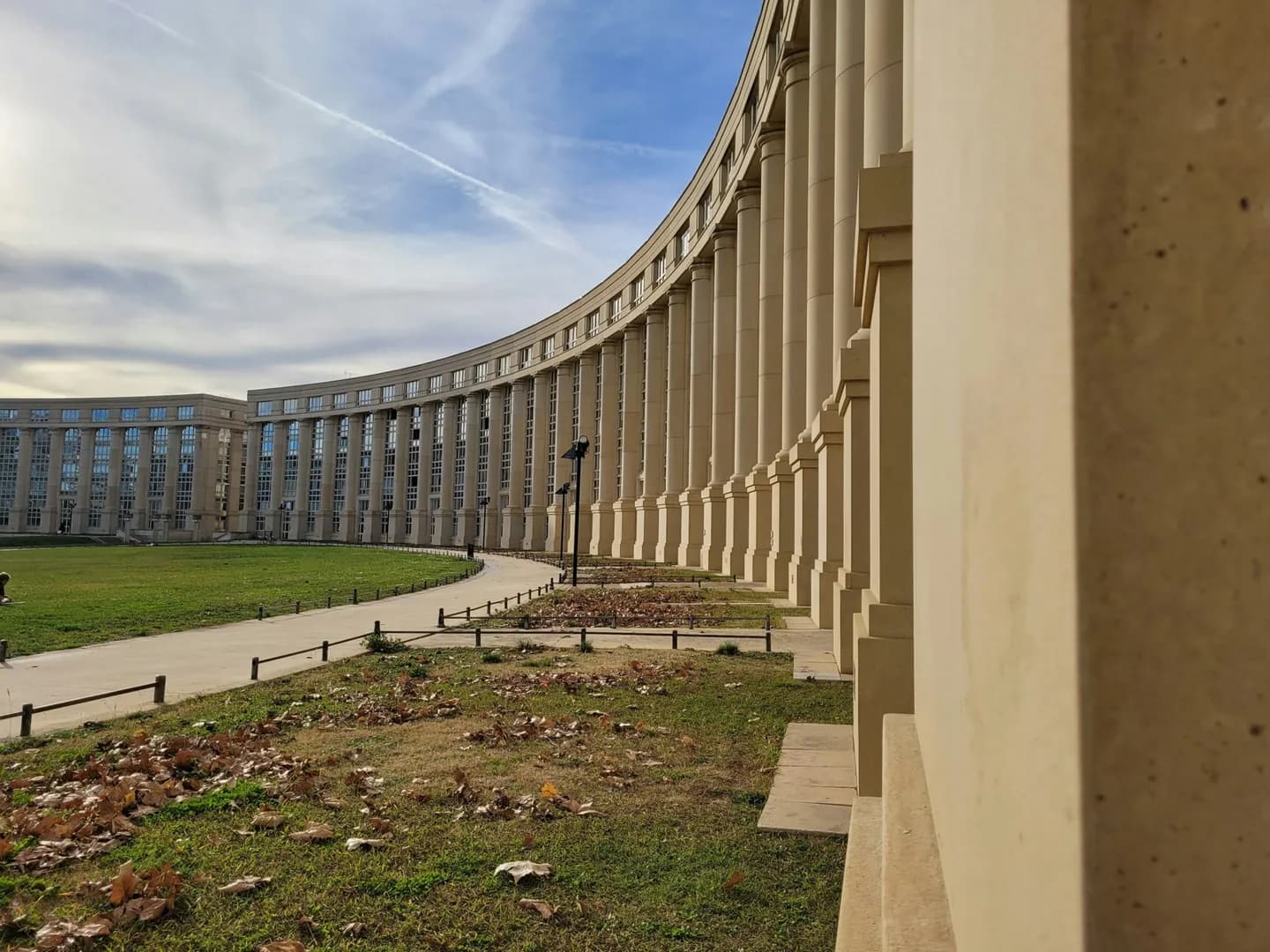
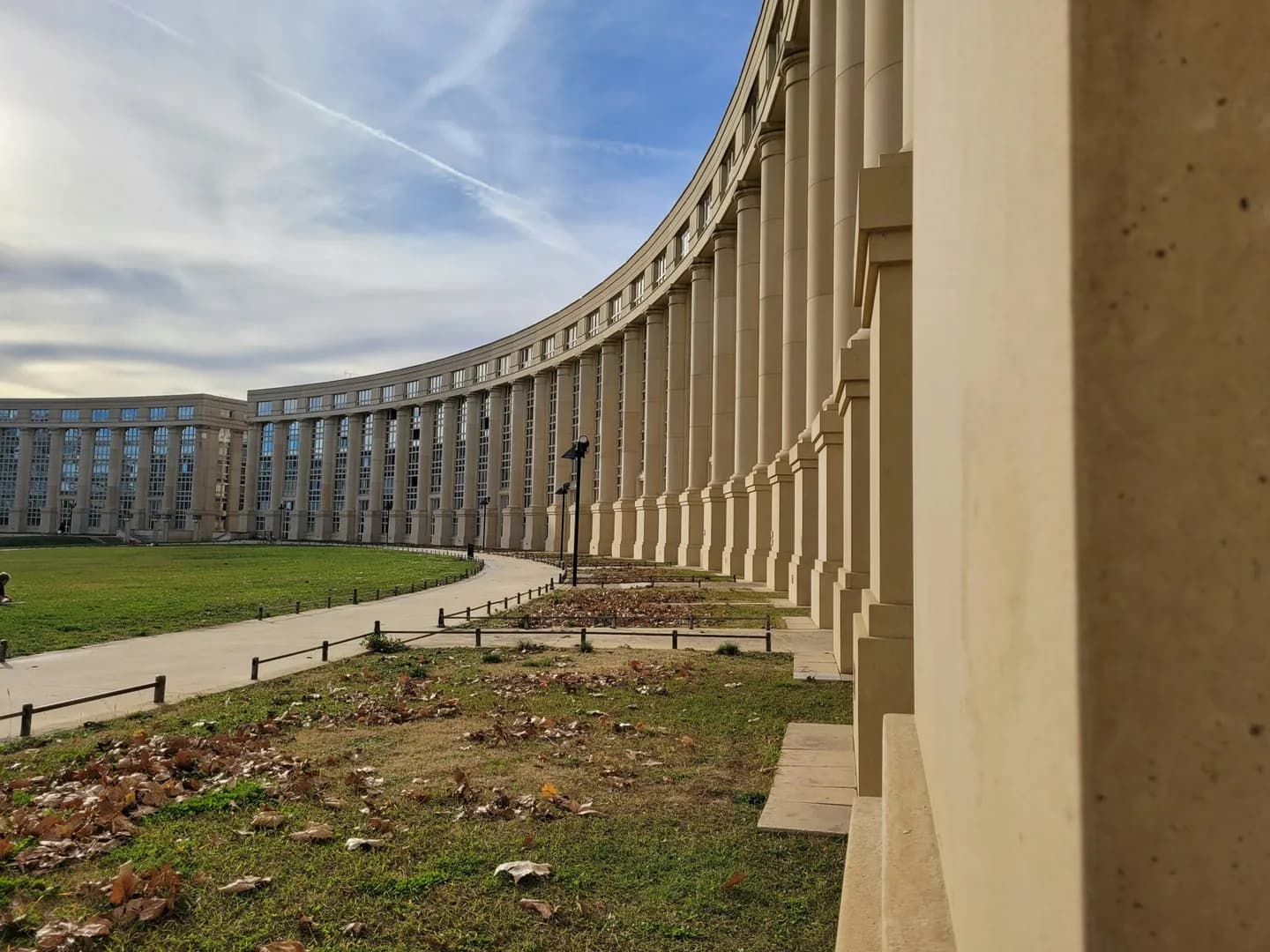
- Nineteenth-century facades trace the square’s curved edge.
Walk from the square into Esplanade Charles-de-Gaulle if you are heading toward Musée Fabre.
Give yourself a circuit around the oval rather than seeing only the fountain from one side.
What is pulling you next?
Another door into this story