
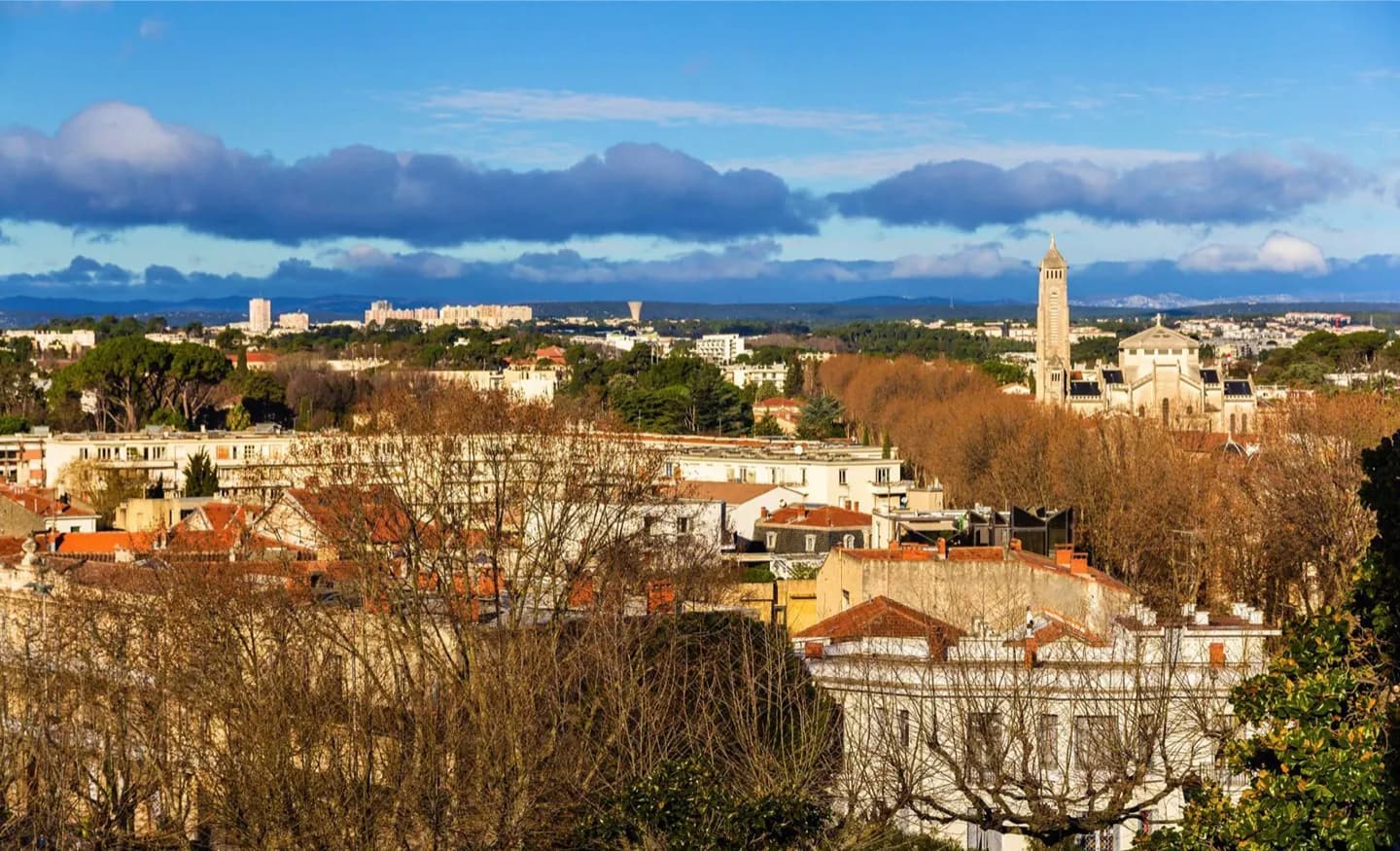
Why go
If the historic centre feels like the whole city, a walk to Antigone changes that impression. Its planned scale and repeated façades show the ambition of the redevelopment era, while the Corum marks another modern addition near the centre of town.
The full story
Montpellier developed industry during the nineteenth century, then grew sharply in the decades after the Second World War. One important change came in the 1960s, when French settlers from Algeria moved to the city after Algerian independence. Later redevelopment brought conspicuous new urban forms. The Corum added a large cultural complex near the centre, while Antigone extended the city eastward with a planned sequence of streets and squares. Ricardo Bofill's classical vocabulary in Antigone is intentionally much larger and more regular than the older Écusson. That contrast is the clearest visitor-facing result of the period: rather than looking for one surviving monument, follow the transition in street width, façades and public space as you leave the historic core. The difference becomes especially clear when a route crosses from the small lanes near Comédie into Antigone's repeated forms.