
Why go
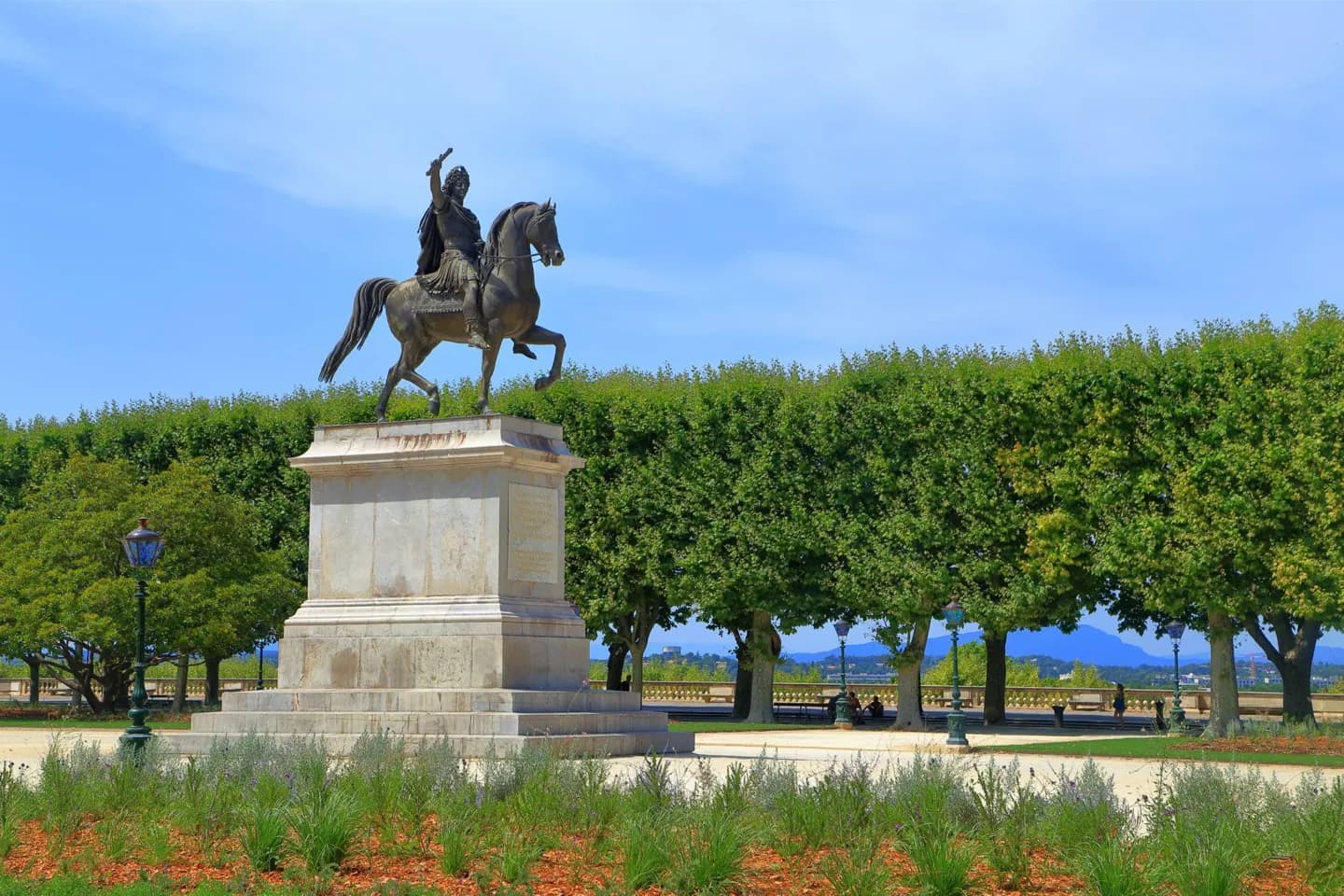
Understanding the landscape helps explain why the Écusson can feel compact but uneven, and why Peyrou serves as a natural viewpoint. The coast is a separate outing, while the Lez and newer eastern districts show another side of the city's setting.
The full story
Montpellier is an inland city close to the Mediterranean, built on uneven ground near the River Lez. The historic centre occupies hills, with streets that can change level quickly over a short distance. Some old lanes are narrow, adding to the contrast with the broader public spaces at Place de la Comédie and Antigone. The Place du Peyrou sits on high ground and gives the western side of a centre walk a clear sense of arrival. The city has a Mediterranean climate, with hot, relatively dry summers and milder, wetter winters. That broad pattern matters more to a visitor than old temperature records: exposed squares and garden paths feel different from shaded old streets in heat or rain. The nearby coast can be part of a wider stay, but Montpellier itself is not a beachfront city. Plan the centre and the shore as distinct experiences.