
Why go
Start here to understand why a visit can shift so quickly from the ordered civic core to earlier layers of Delhi. Edwin Lutyens and Herbert Baker planned much of New Delhi under British rule; places such as Jantar Mantar and Lodhi Gardens show that the area was never an empty slate.
The full story
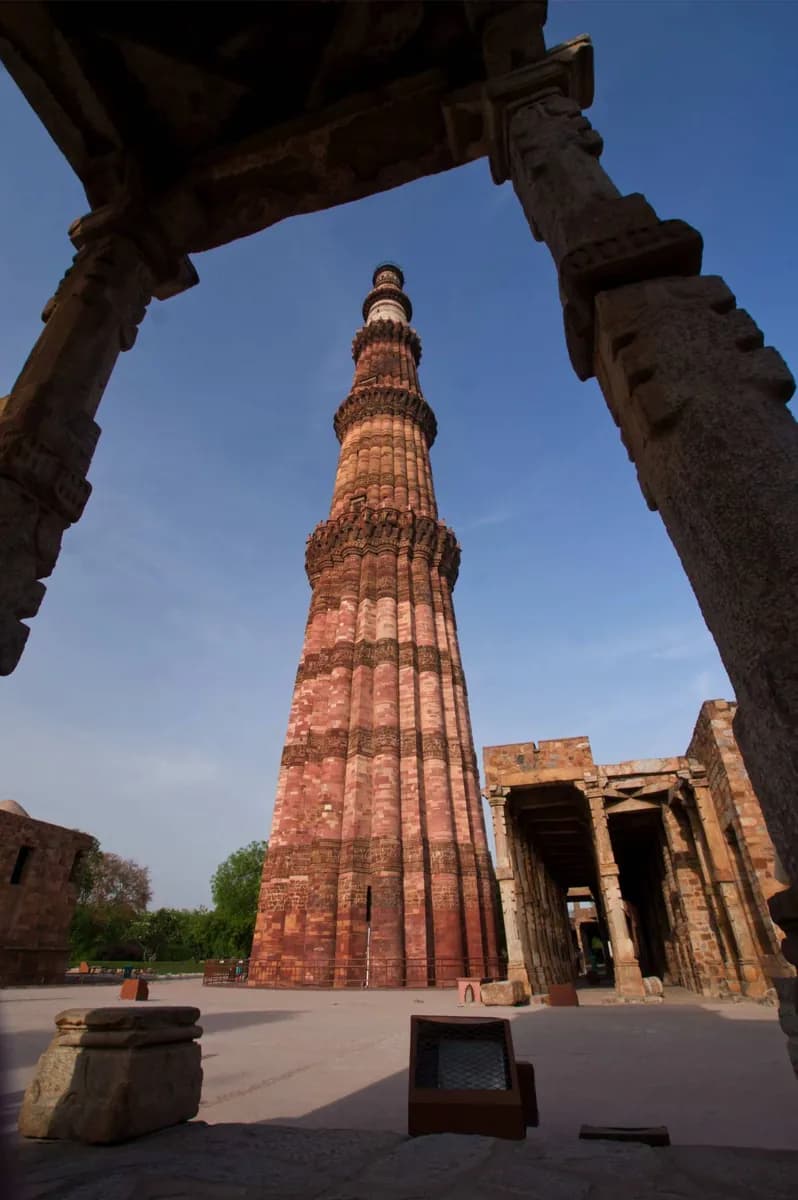
New Delhi was laid out south of Shah Jahan’s Old Delhi as the seat of British India’s government. Edwin Lutyens and Herbert Baker shaped its central administrative district, with broad avenues and formal building groups expressing imperial power. The planned capital opened in 1931, but Delhi’s history did not begin with that plan. Earlier structures remained in and around the new district, including the astronomical instruments at Jantar Mantar and the tombs and gardens at Lodhi Gardens. After independence in 1947, the same civic landscape became the setting for India’s national institutions. These layers explain why a day around the government precinct feels unlike a walk through Chandni Chowk or a visit to the Qutb complex. The name “New Delhi” refers to the capital district; many attractions marketed as Delhi sights lie elsewhere in the much larger metropolis.
Useful to know
- Pair the civic core with nearby Jantar Mantar or Lodhi Gardens if you want older history in the same broad area.