
Why go
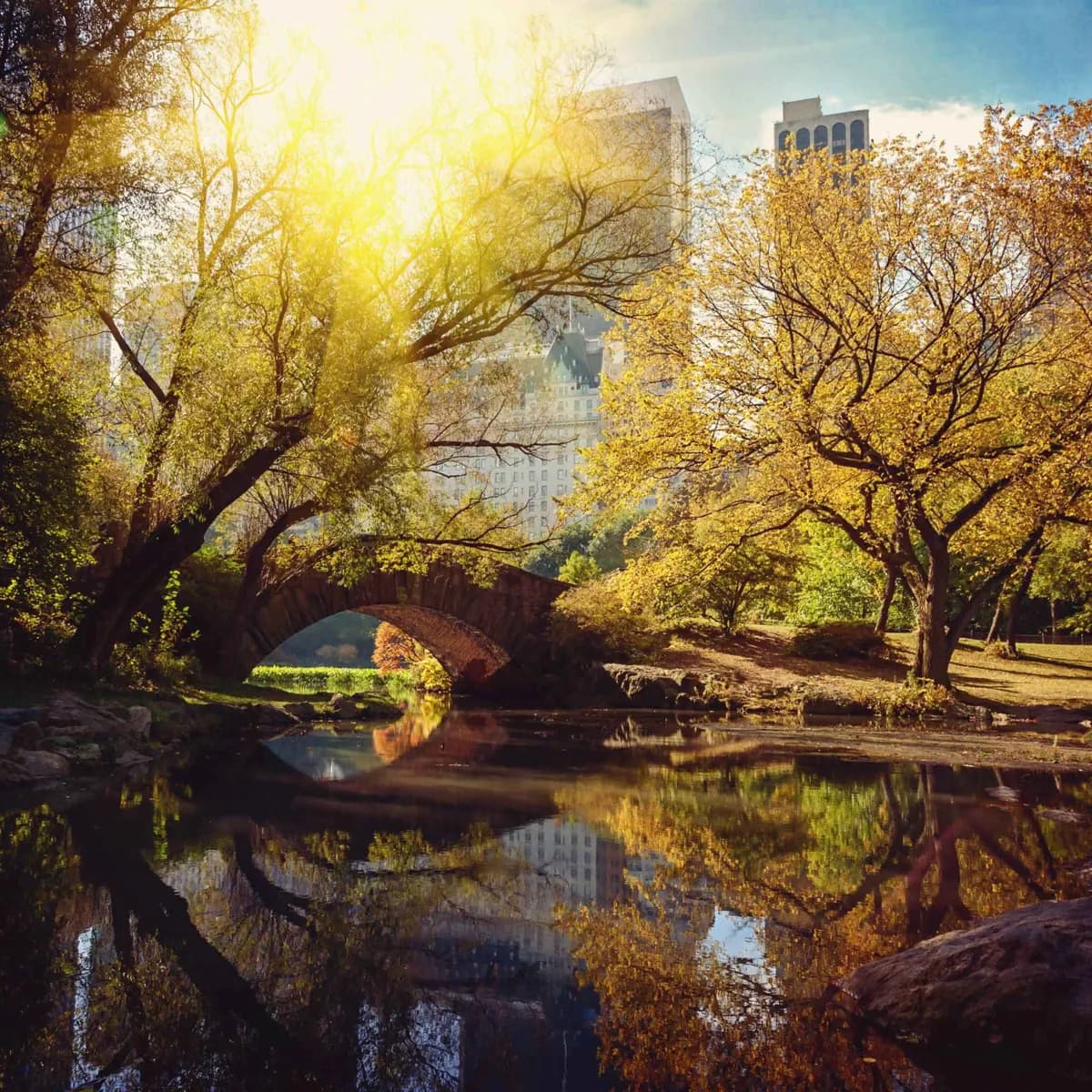
The park’s appeal comes from changing landscapes rather than a single centerpiece. Formal spaces around Bethesda Terrace lead toward the Lake and the winding Ramble, while entrances connect back to the city’s grid. This variety makes a selected walk more satisfying than treating the entire park as a quick shortcut between distant landmarks.
What to look for
- Bethesda Terrace contrasts with the naturalistic woodland around the Lake.
- The Ramble’s winding paths interrupt Manhattan’s regular street pattern.
- The park extends between Fifth Avenue and Central Park West from 59th to 110th Streets.
The full story
Central Park grew out of a city that was expanding rapidly northward. New Yorkers sought open space as population and building density increased, but a large public park had not been included in the original Manhattan street plan of 1811. The state eventually selected land for the project, and an 1857 competition led to Frederick Law Olmsted and Calvert Vaux’s winning Greensward Plan. Construction began in 1858, and the first area opened that winter. Work continued through the Civil War, with the park reaching its present extent in 1873. The result was designed scenery, not countryside preserved unchanged within the city. Water, rocky ground, planting and paths were organized into contrasting experiences. That distinction helps explain why the formal lakefront and apparently untamed Ramble work together: each belongs to the same deliberate attempt to give a growing city a varied public landscape.
Useful to know
- Choose a south, middle or north park focus before combining it with other stops.
- Use a Conservancy map to connect the Lake and Ramble or to find the correct museum-side exit.
Your next visit
Estimated · Declared scenario and planning estimates; no live opening, weather, queue or booking service.
Outdoor visit · 30–45 min
World planning estimate; admission, opening, visit duration and access need checking.