
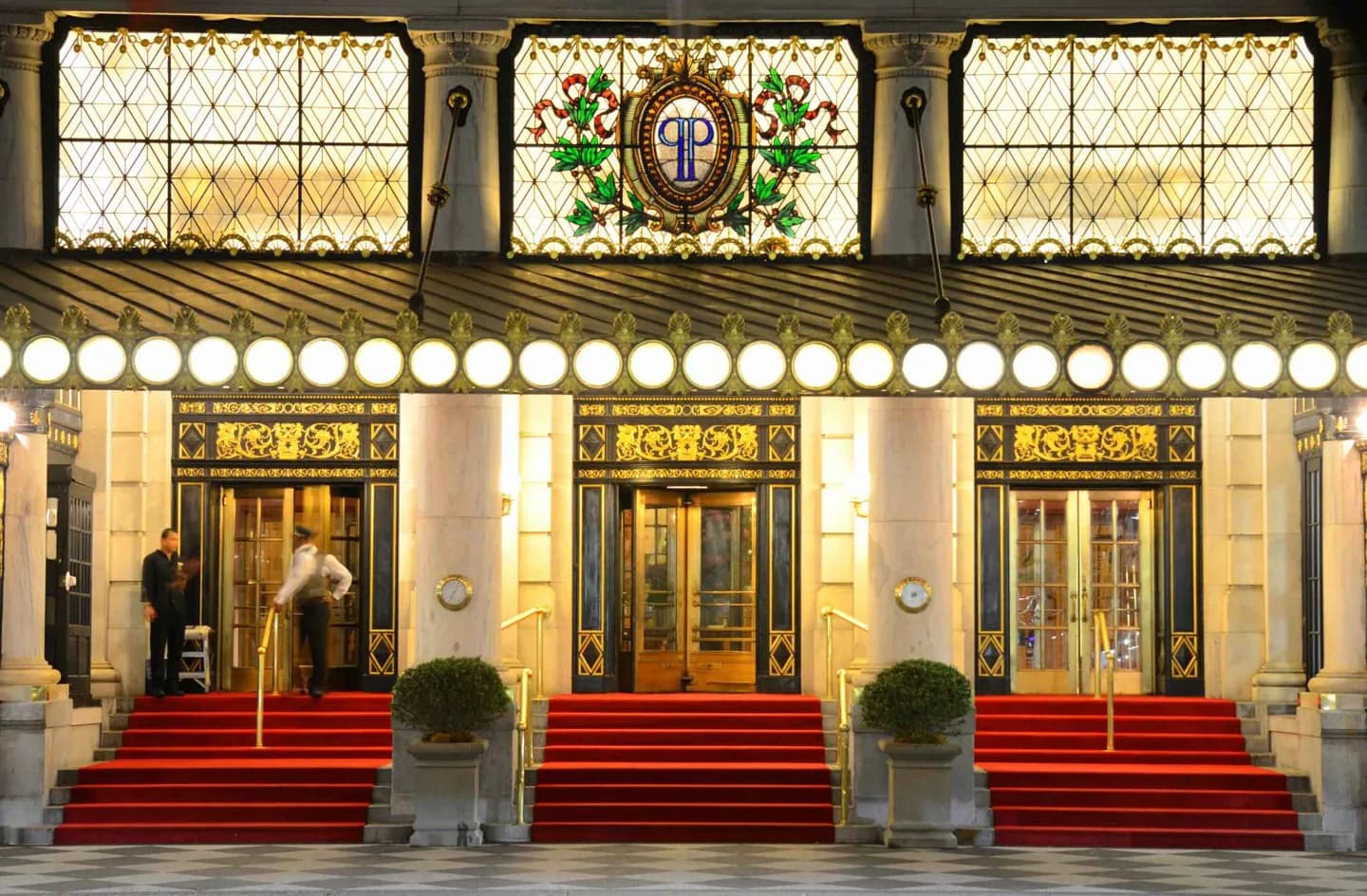
Why go
The exterior anchors the meeting of Fifth Avenue and Central Park, while named dining and event spaces preserve the hotel’s association with New York social life. The Palm Court’s stained-glass ceiling gives a planned visit a concrete architectural focus. This is most useful as a chosen hotel experience or an exterior stop beside the plaza.
What to look for
- The French Renaissance château-style exterior faces the park’s southeast corner.
- The Palm Court has a restored stained-glass ceiling.
- Grand Army Plaza frames the hotel’s Fifth Avenue entrance.
The full story
The present Plaza opened in 1907 as the second hotel of that name on the site. Henry Janeway Hardenbergh designed the French Renaissance château-style building, placing an elaborate European architectural image at a prominent Manhattan corner. Its name came from the plaza outside, binding the hotel’s identity to the city space between Fifth Avenue and the park. The hotel became a setting for events far beyond overnight stays. The Beatles stayed here during their first United States visit in 1964, and Truman Capote held his Black and White Ball in the Grand Ballroom in 1966. In 1985, finance ministers met here and signed the Plaza Accord. Those different uses help explain the building’s cultural visibility. Its dining rooms and event spaces have their own histories and purposes, so recognizing their names adds context without assuming that every historic room is available for casual exploration.
Useful to know
- Combine an exterior look with the Pulitzer Fountain and Sherman monument across the plaza.
- Confirm the particular dining venue or event before making an interior visit the main purpose.
Your next visit
Estimated · Declared scenario and planning estimates; no live opening, weather, queue or booking service.
Outdoor visit · 30–45 min
World planning estimate; admission, opening, visit duration and access need checking.