
Why go
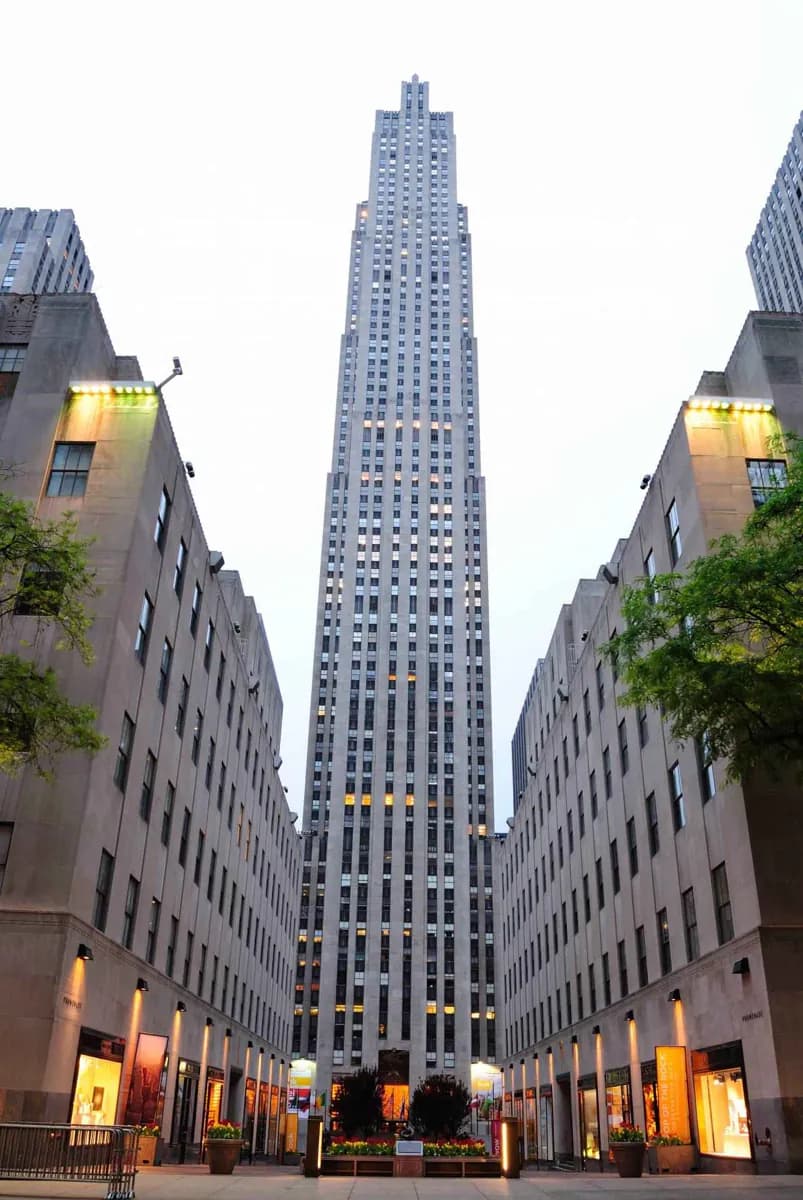
The concentration of Art Deco buildings makes the center more coherent than a collection of unrelated Midtown stops. Top of the Rock and Radio City Music Hall offer different experiences within the same development, while public art adds interest to a walk at ground level. The outdoor complex can be worthwhile without adding every attraction.
What to look for
- Art Deco buildings form the core of the Rockefeller Center development.
- Public art is part of the complex’s ground-level experience.
The full story
The project began with a plan for a Metropolitan Opera house on land leased from Columbia University. After the 1929 stock market crash and delays in that proposal, John D. Rockefeller Jr. proceeded with a commercial development instead. The original fourteen Art Deco buildings were constructed during the 1930s, with Raymond Hood leading the architectural team. That change of purpose helps explain the center’s blend of business, broadcasting and entertainment. Rather than one cultural building, it became a coordinated group with several reasons to visit. The Rockefeller name was initially unwelcome to its financier but was adopted partly for its value in attracting tenants. Looking across the buildings together reveals the scale of that private undertaking. Radio City and the tower at 30 Rockefeller Plaza belong to the same history, even though they offer very different experiences today.
Useful to know
- Select the observation deck or Music Hall as an anchor, then explore the surrounding complex.
- Pair the eastern side with St. Patrick’s Cathedral across Fifth Avenue.
Your next visit
Estimated · Declared scenario and planning estimates; no live opening, weather, queue or booking service.
Outdoor visit · 30–45 min
World planning estimate; admission, opening, visit duration and access need checking.