
Why go
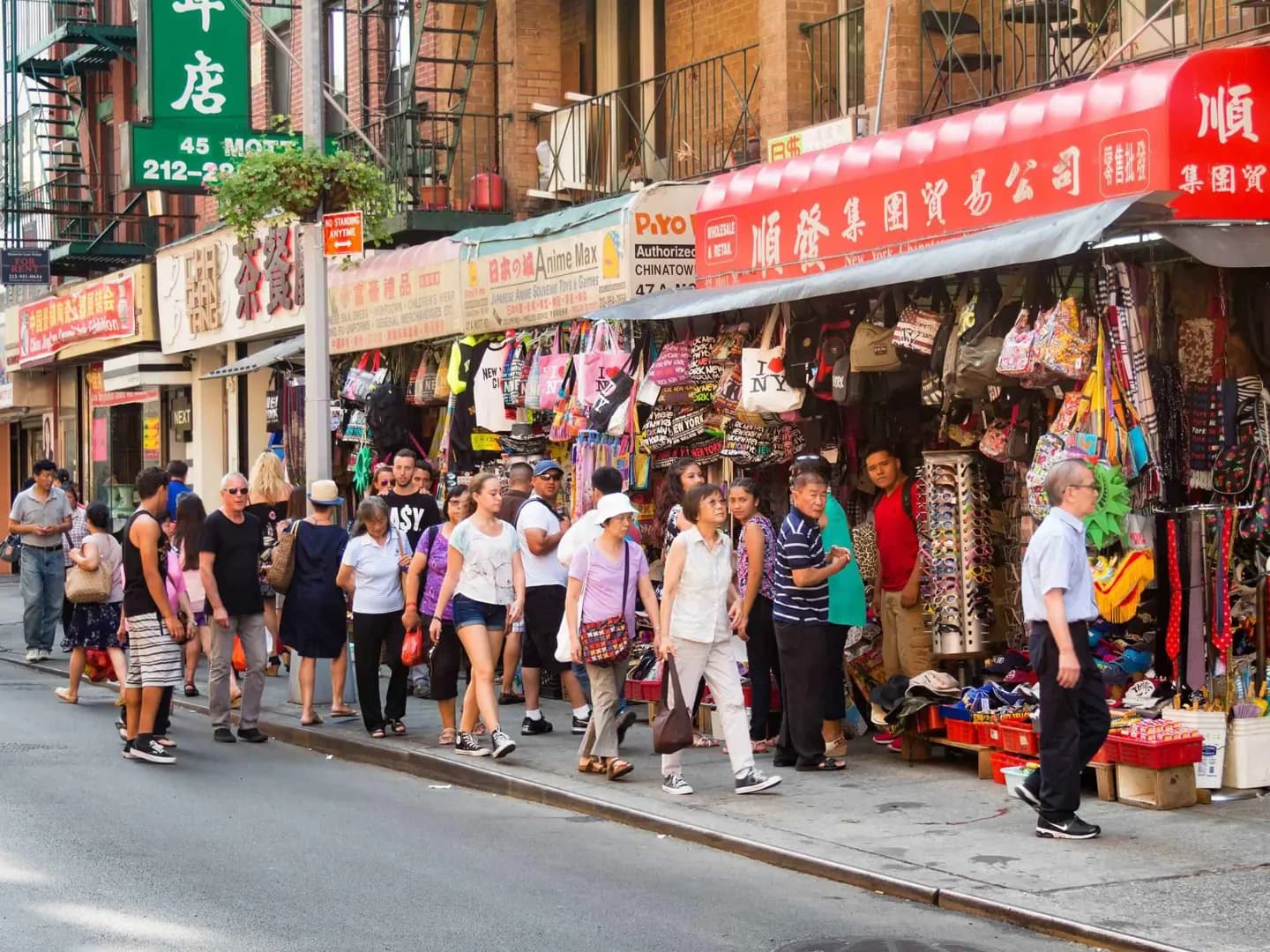
The district is a living residential and commercial neighborhood, so its interest comes from streets and individual establishments rather than a single entrance. Grand Street, East Broadway and Allen Street help orient the area’s overlapping edges. A walk can connect food and market browsing with the different neighborhood histories immediately north and east.
What to look for
- Markets and eateries share the streets with residential and community uses.
- East Broadway forms part of the district’s southeastern geography.
The full story
Manhattan’s Chinatown has never been the whole of Chinese New York. Chinese communities also developed in Brooklyn and Queens, including Sunset Park and Elmhurst. That wider geography matters: this older Lower Manhattan enclave represents one part of a much larger citywide community, not a complete picture of Chinese life in the city. Its own history contains different migration and language patterns. Cantonese speakers predominated historically, while large numbers of Fuzhounese-speaking immigrants arrived during the 1980s and 1990s. The area associated with Little Fuzhou developed a distinct identity within the broader district. Chinatown’s edges are also approximate and overlap neighboring areas, especially Little Italy. Those changes make a street walk more useful than searching for a single boundary: the neighborhood’s identity has grown through migration, commerce and the continued use of adjacent blocks.
Useful to know
- Choose individual food or market stops before relying on their opening times.
- Combine a street walk with Little Italy to the north or the Lower East Side to the east.
Your next visit
Estimated · Declared scenario and planning estimates; no live opening, weather, queue or booking service.
Outdoor visit · 30–45 min
World planning estimate; admission, opening, visit duration and access need checking.