
Why go
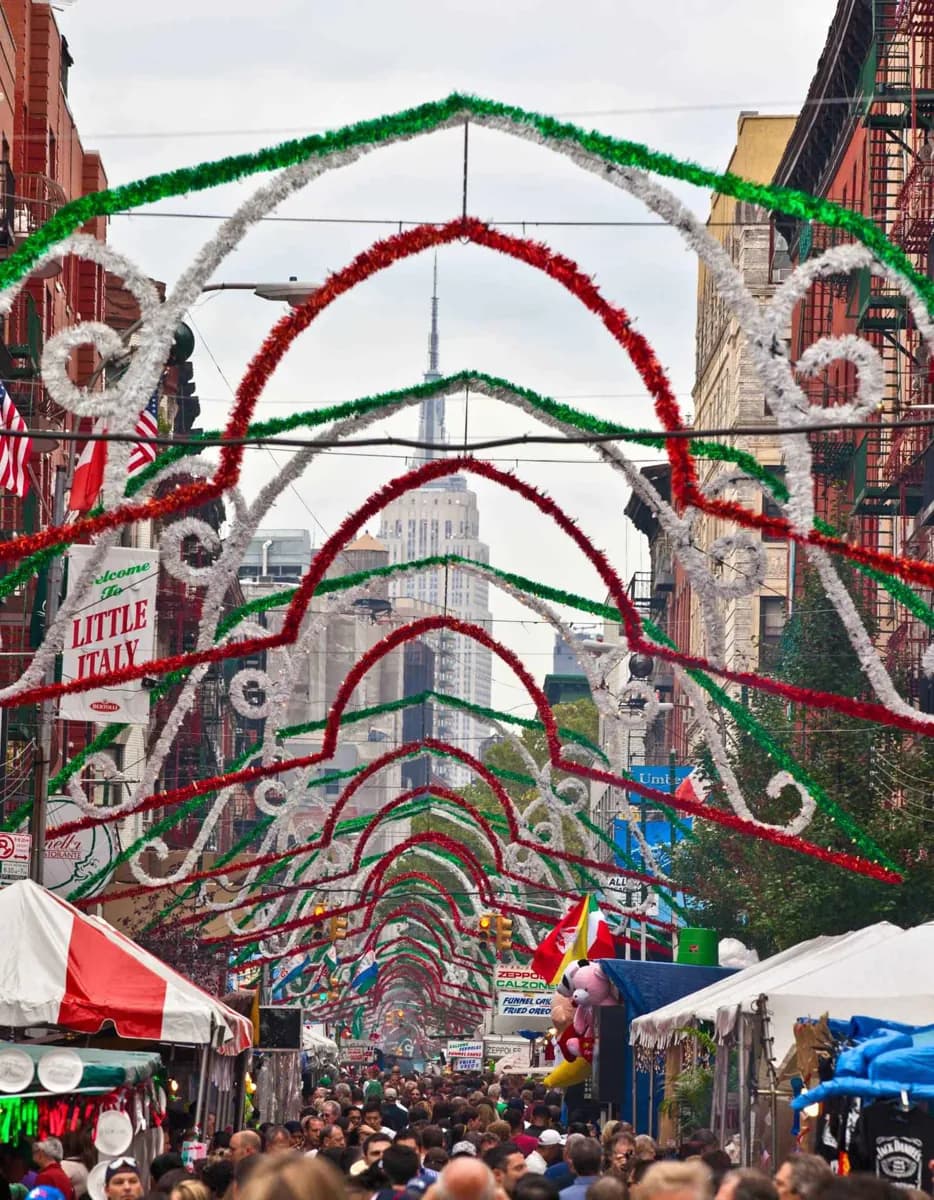
The surviving commercial core is smaller than the historic immigrant neighborhood, so expectations should match the few blocks rather than an expansive district. Mulberry Street provides the clear walking anchor. Nearby Chinatown and Nolita make the area useful for comparing how adjacent neighborhoods retain, share and reshape cultural identities.
What to look for
- Mulberry Street forms the compact district’s central spine.
- Italian stores and restaurants preserve the area’s commercial identity.
The full story
Large-scale Italian immigration in the late nineteenth century established a dense community around Mulberry Street. Homes, businesses, language and social institutions helped give the area a recognizable Italian identity. The historic neighborhood extended farther than the compact commercial core encountered by visitors today, and it was not New York’s only major Italian settlement. After World War II, many residents moved to Brooklyn, Staten Island, Long Island and New Jersey. Chinatown expanded from the south, while the northern blocks developed a separate Nolita identity. These changes explain why the surviving district can feel concentrated around a familiar street rather than spread across all its former territory. Its cultural presence also traveled through film: Mean Streets used the neighborhood as a setting, while The Godfather associated it with a fictional family. Those images are cultural interpretations rather than a description of the neighborhood’s entire history.
Useful to know
- Build a short Mulberry Street stop into a walk through neighboring districts.
- Check individual establishments or event arrangements before making them the purpose of the visit.
Your next visit
Estimated · Declared scenario and planning estimates; no live opening, weather, queue or booking service.
Outdoor visit · 30–45 min
World planning estimate; admission, opening, visit duration and access need checking.