
Why go
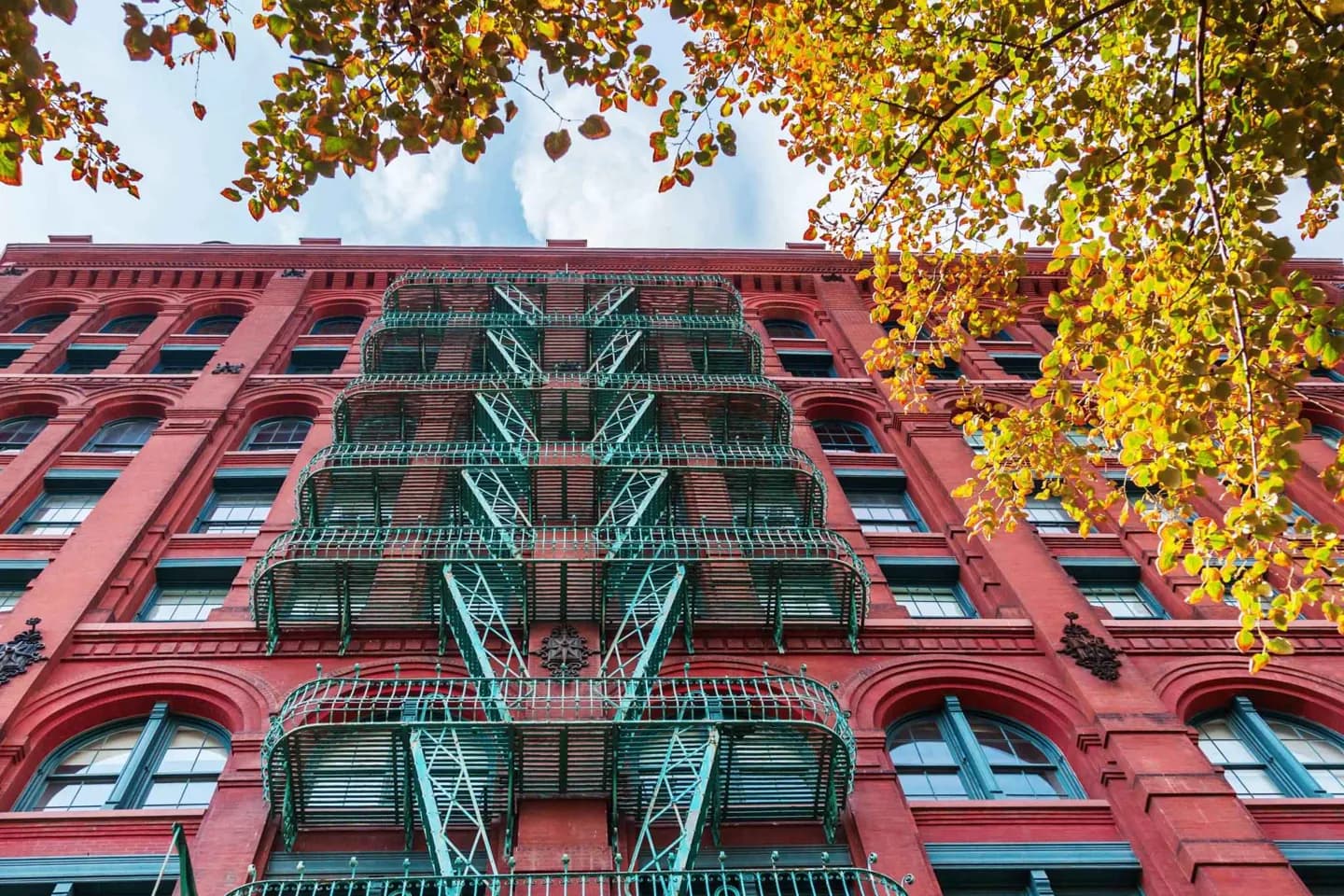
The former loft district offers a coherent architectural walk within a larger commercial neighborhood. Broadway, Prince Street and Spring Street provide retail reference points, while many side streets retain Belgian-block paving. Pairing the façades with that street texture makes the visit more specific than a general shopping stop.
What to look for
- Cast-iron architectural elements define much of the historic district.
- Belgian-block paving survives on many side streets.
The full story
The name SoHo means south of Houston Street and grew from an urban planning study of the South Houston industrial area. Its compact naming pattern later influenced labels such as NoHo, Nolita and NoMad. The name captures one stage in a neighborhood whose uses changed from earlier landholdings to industry, artists’ lofts, galleries and retail. Cast iron made the district’s façades distinctive, but its apparent strength did not make it immune to fire. Heat could buckle the material, and cold firefighting water could cause cracking. A late-nineteenth-century building rule required masonry backing for cast-iron fronts. That history helps explain why these buildings should be read as engineered structures as well as decorative surfaces. The historic district’s protection preserves a substantial group of them, while their changing occupants show how the architecture outlasted the activities that first filled the interiors.
Useful to know
- Look at the upper façades as well as the ground-floor shops.
- Combine the eastern side with neighboring Nolita across Lafayette Street.
Your next visit
Estimated · Declared scenario and planning estimates; no live opening, weather, queue or booking service.
Outdoor visit · 30–45 min
World planning estimate; admission, opening, visit duration and access need checking.