
Why go
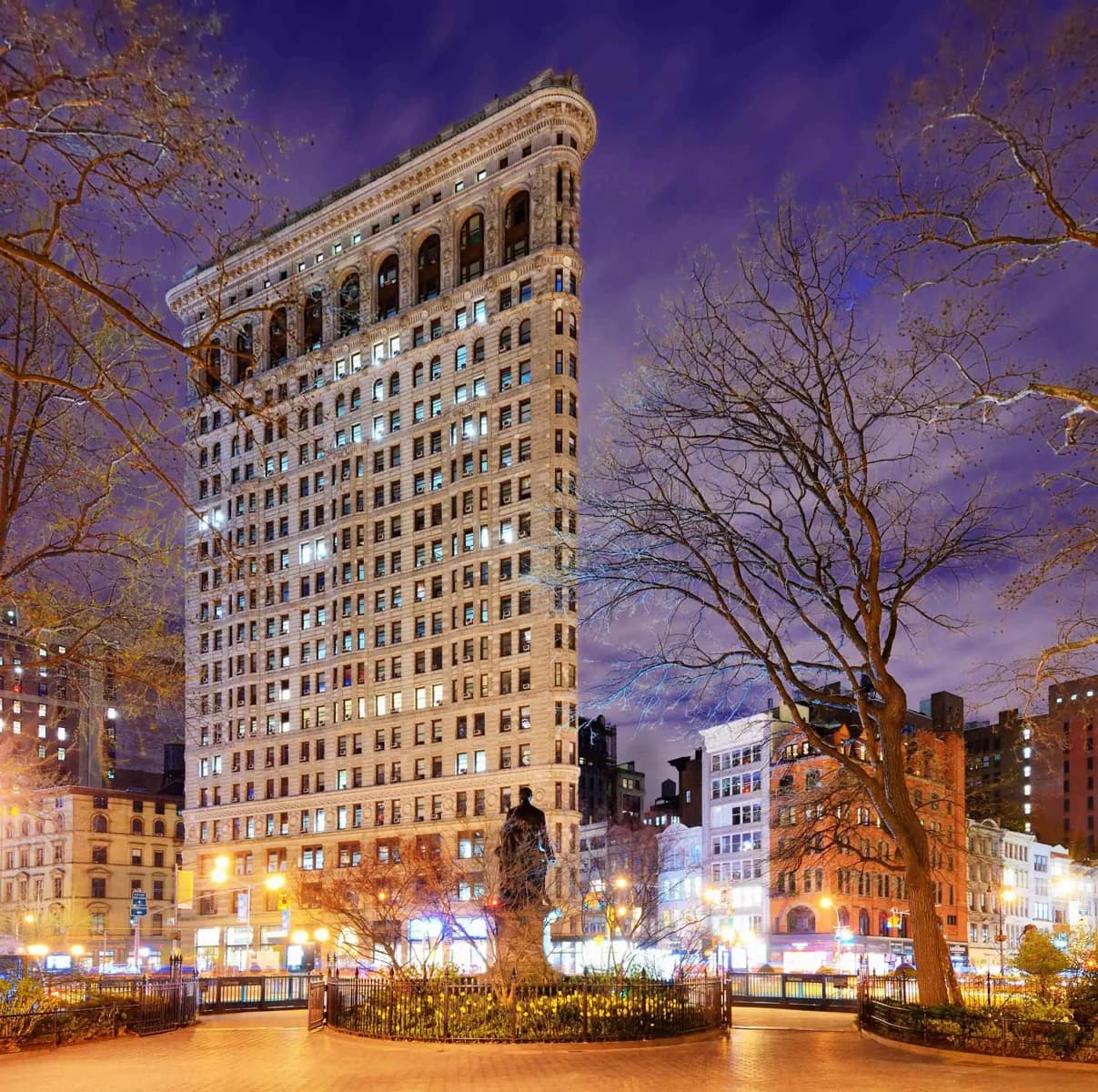
The park makes the surrounding streets easier to read: Fifth Avenue and Broadway cross beside it, while Madison Avenue begins at its southeast corner. The Flatiron Building, Met Life Tower and New York Life Building provide different architectural reference points. A stop here combines resting space with a view of how this part of Manhattan grew.
What to look for
- Fifth Avenue and Broadway meet along the park’s western edge.
- The surrounding skyline includes the Flatiron Building and Met Life Tower.
The full story
Madison Square Park opened to the public in 1847, but this patch of Manhattan had already served several very different purposes. It had been a potter’s field, and a much larger tract was set aside in the early nineteenth century for military facilities and drilling. As the city expanded north, the area became a place of arrival and departure: Madison Cottage at Fifth Avenue and 23rd Street served travelers approaching or leaving the city. The square also explains a familiar sporting name. Earlier Madison Square Garden arenas stood northeast of the park until 1925; the present arena is elsewhere. NoMad, meanwhile, means north of Madison Square Park. These names preserve the park’s role as a geographic landmark, even after the activities that helped establish its reputation moved on.
Useful to know
- Pair the park with a walk around the nearby building exteriors.
- Use paths and seating as the basis of a visit rather than relying on lawn access.
Your next visit
Estimated · Declared scenario and planning estimates; no live opening, weather, queue or booking service.
Outdoor visit · 10–15 min
Public-space walk and exterior observation only; no interior, garden, tower or ticketed admission included. Durations and walking are estimates. Check temporary restrictions and park or market opening times.
Outdoor visit · 30–45 min
World planning estimate; admission, opening, visit duration and access need checking.