
Why go
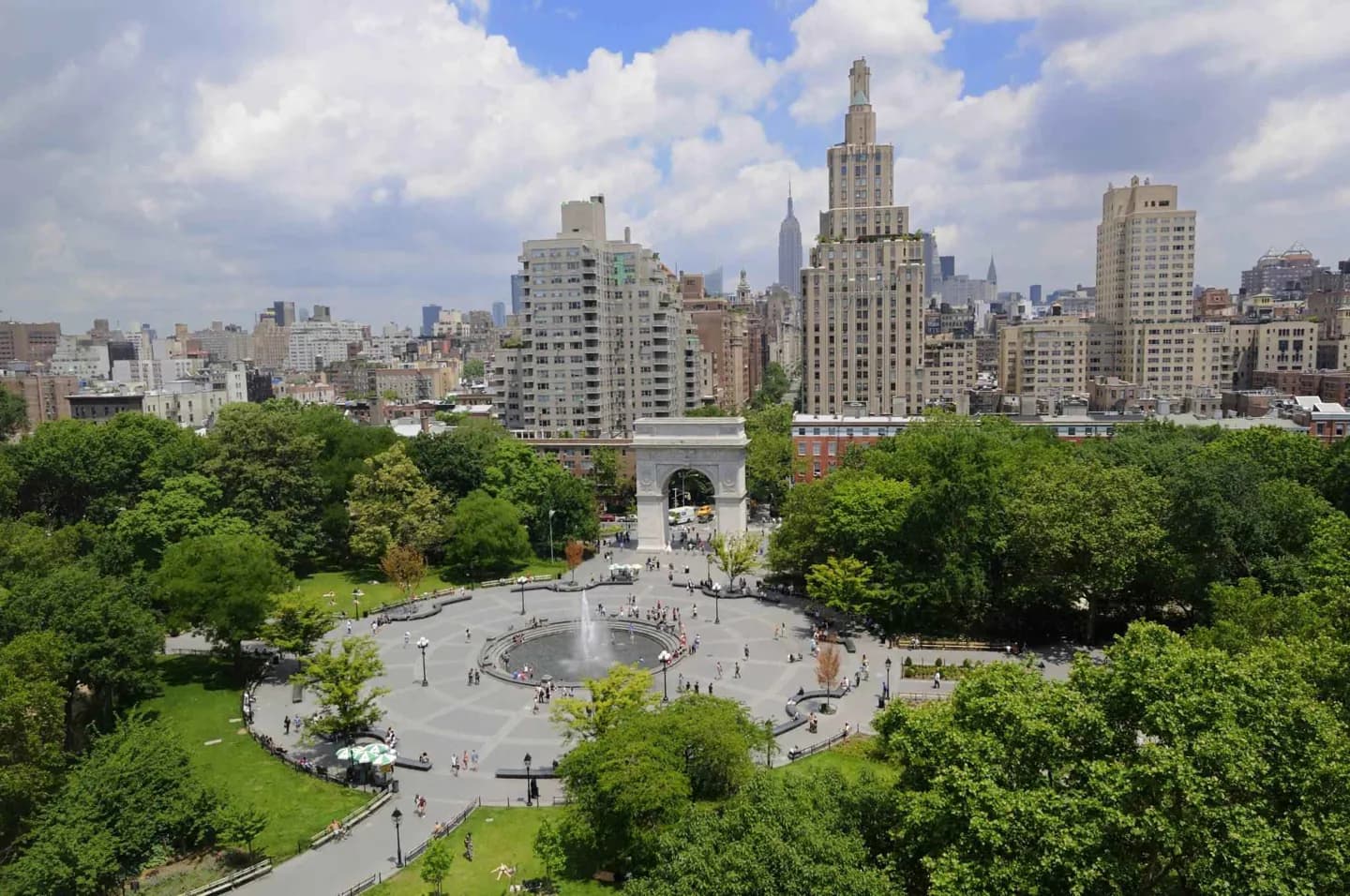
The square connects the Flatiron District, Greenwich Village and the East Village rather than belonging to one simple neighborhood experience. Inside, the George Washington statue gives a historical focus; around the edges, the changing streetscape places it within everyday city movement. It is useful as both a short pause and a transition between nearby walks.
What to look for
- Henry Kirke Brown’s equestrian George Washington statue was unveiled in 1856.
- Broadway changes direction as it passes the square.
The full story
Union Square’s name describes the meeting of Broadway and the former Bowery Road, now Fourth Avenue. It originally referred to the union of two major streets, rather than the United States or organized labor. Its later history nevertheless gave it strong civic and political associations, including gatherings by socialist and communist groups and labor disputes in nearby department stores during the Depression. The square also changed with the city’s infrastructure and growth. A fountain received water from the Croton Aqueduct after its completion in 1842, and paving and planting followed as affluent houses filled the surrounding streets. Adapted brick rowhouses at 862–866 Broadway survive from that earlier phase. The Washington monument depicts his return to the city on Evacuation Day in 1783. These layers make a public meeting place out of what began as a road junction.
Useful to know
- Use the square to connect a Flatiron walk with Greenwich Village or the East Village.
- Check the current Greenmarket calendar if the market is the reason for stopping.
Your next visit
Estimated · Declared scenario and planning estimates; no live opening, weather, queue or booking service.
Outdoor visit · 30–45 min
World planning estimate; admission, opening, visit duration and access need checking.